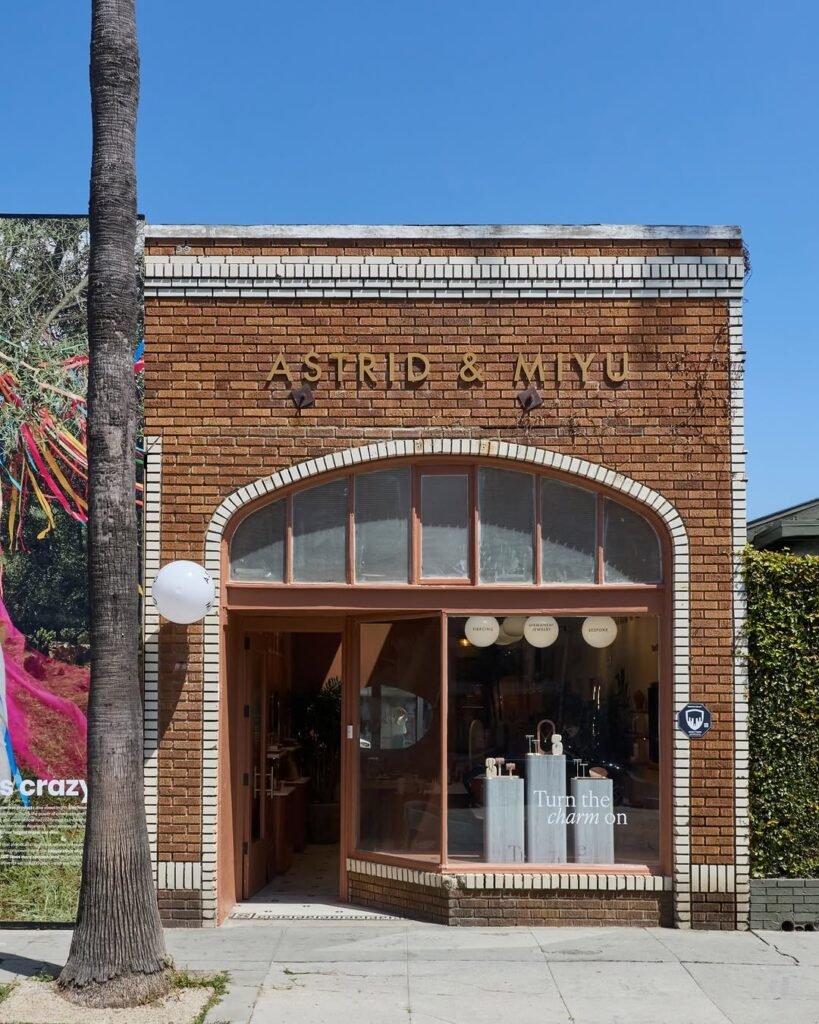
London jewellery brand Astrid & Miyu has officially landed in Los Angeles with the opening of its first West Coast store on Abbot Kinney Boulevard, and the space feels exactly how you would expect the brand to exist in real life. Warm, curated, slightly playful and heavily focused on experience over traditional luxury retail codes.
Over the last few years, Astrid & Miyu has built a loyal following through its layered jewellery styling, permanent bracelets, piercing services and highly recognisable social-first aesthetic. But what makes the LA opening interesting is not just the expansion itself. It is how clearly the brand understands the kind of retail environments modern customers actually want to spend time in.
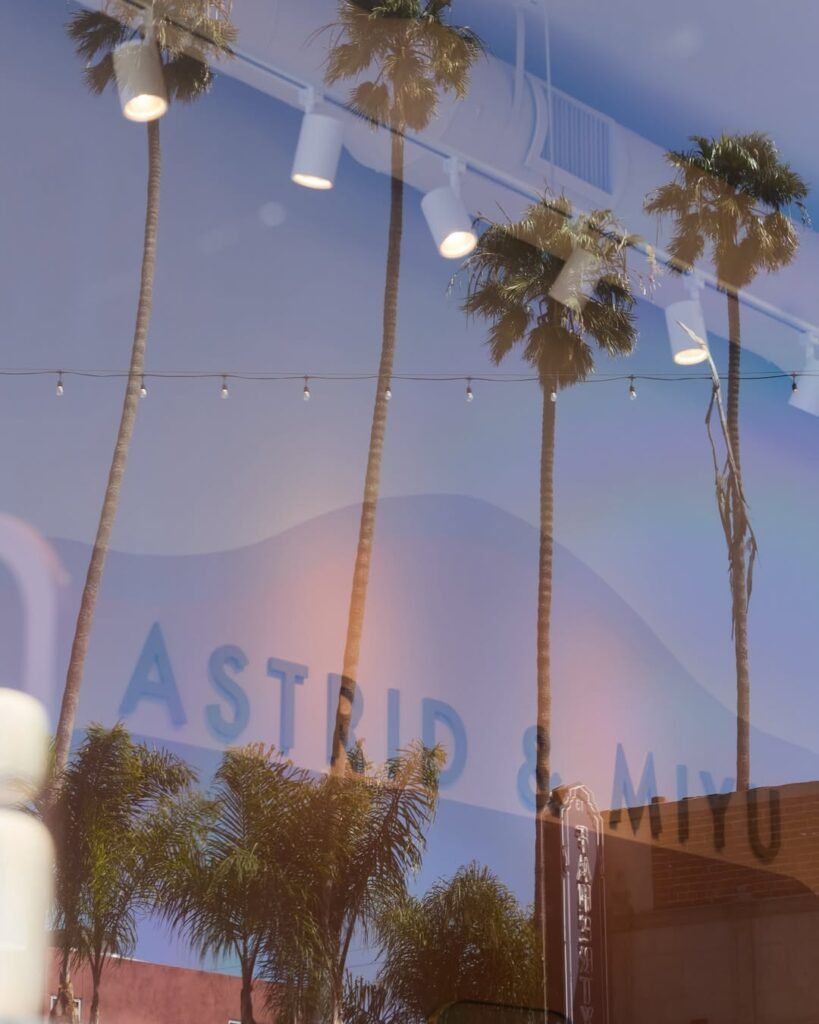
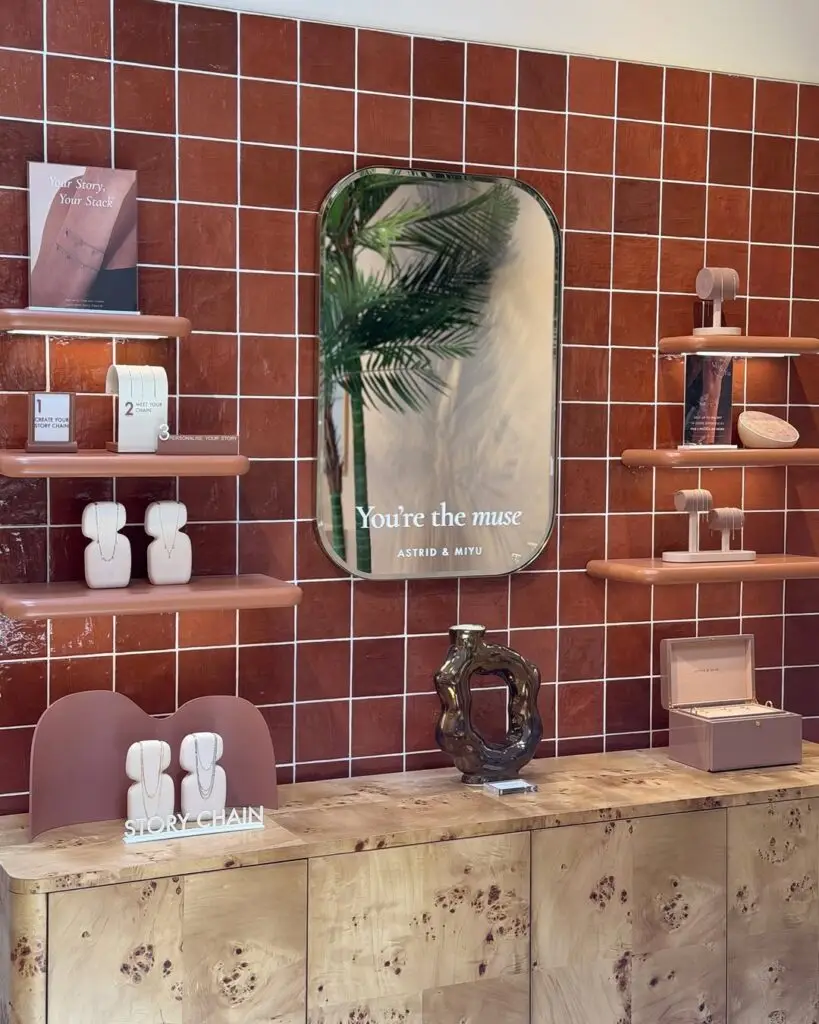
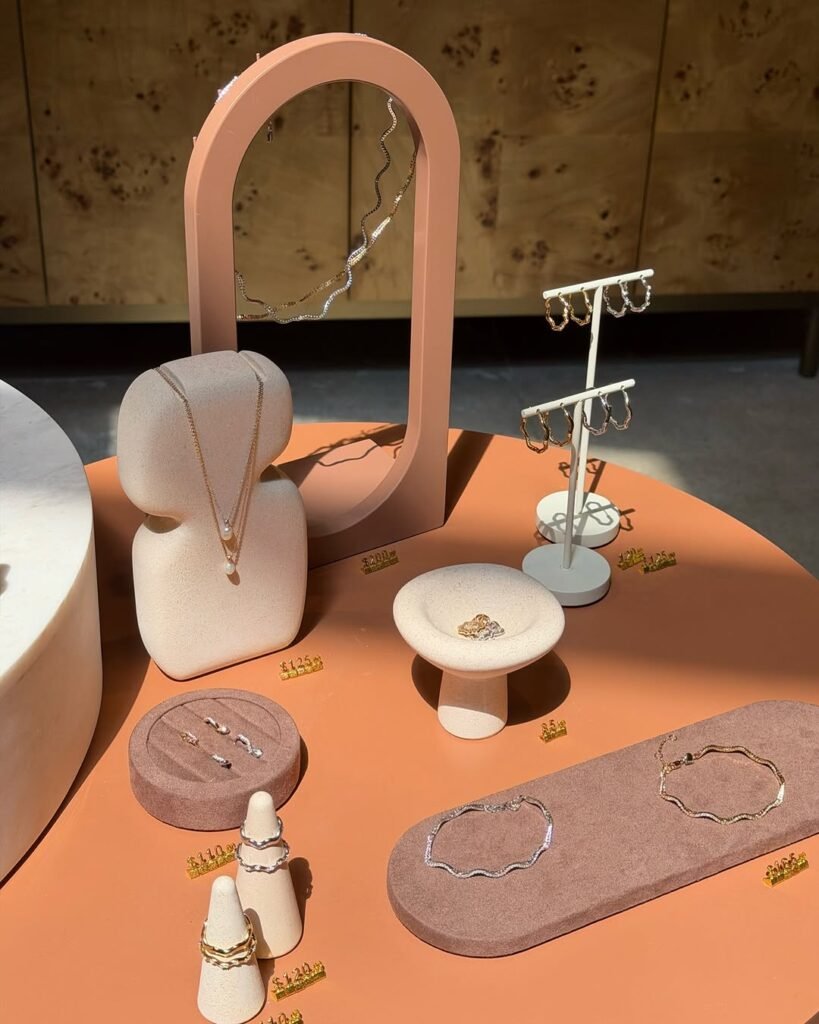
The Abbot Kinney location does not rely on intimidating luxury interiors or over-designed theatrics. Instead, the store leans into a softer, more lifestyle-driven approach that feels naturally aligned with both the brand and the neighbourhood surrounding it. Terracotta walls, blush-toned displays, rounded silhouettes, burl wood finishes and sculptural jewellery forms create a space that feels calm, tactile and approachable while still maintaining a premium edge.
There is a strong residential influence throughout the store design. The curved marble tables, soft lighting and muted colour palette make the boutique feel more like a beautifully styled home than a transactional retail space. That balance matters because customers are no longer looking for stores that simply display products. They want spaces that feel personal, interactive and emotionally connected to the brand lifestyle being sold to them.
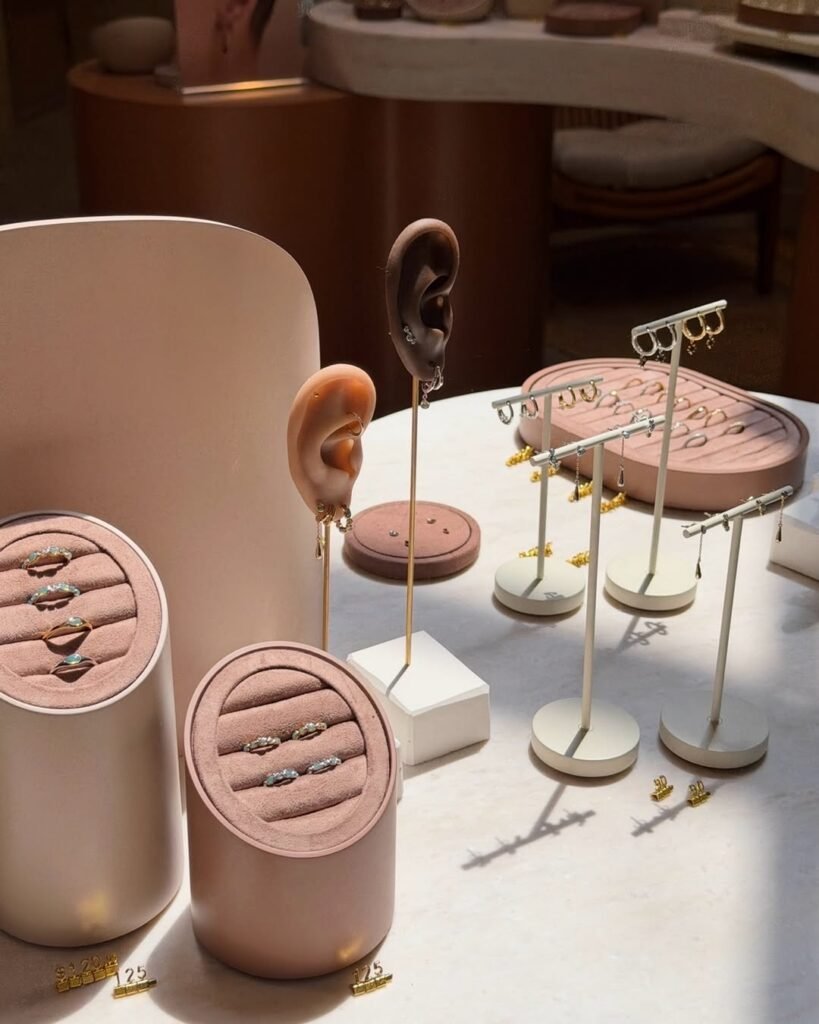
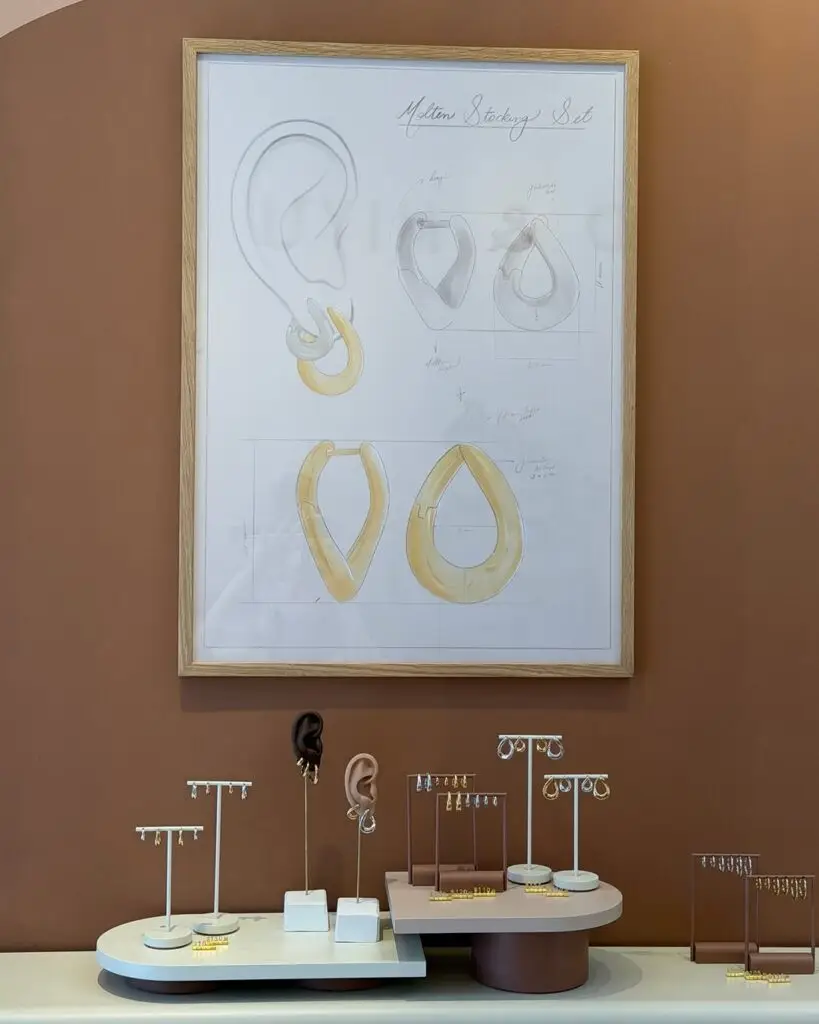
The jewellery itself becomes part of the visual merchandising story rather than the only focal point. Oversized ear sculptures, framed design sketches and layered product styling help reinforce the brand’s emphasis on self-expression and individuality. Even the mirrors featuring phrases like “You’re the muse” are designed for participation, naturally encouraging customer interaction and social sharing without feeling overly manufactured for Instagram.
What Astrid & Miyu understands particularly well is that modern jewellery retail is no longer only about the product. It is about rituals, experiences and identity. Services like piercings, welded bracelets and charm personalisation transform the store into somewhere customers return to repeatedly rather than visit once for a purchase. That shift changes the role of the physical store entirely. It becomes part retail space, part beauty service and part social experience.
The LA opening also feels strategically placed at a time when brands are increasingly looking for physical retail locations that function as cultural touchpoints rather than just sales channels. Abbot Kinney has become known for attracting brands that understand the value of atmosphere and community, particularly those targeting younger consumers who want a brand experience that feels visually immersive but still relaxed.
What keeps the Astrid & Miyu store successful visually is its restraint. The interiors never feel cluttered or overly trend-driven despite being highly aesthetic. There is enough warmth and texture to make the space feel inviting, while the clean product presentation keeps the jewellery elevated and easy to shop. The balance between softness and structure mirrors the jewellery itself, which is delicate but designed for everyday wear and layering.
There is also something refreshing about seeing a jewellery brand create a physical environment that feels optimistic and human rather than cold and hyper-minimal. The space reflects the emotional side of shopping jewellery. It captures the feeling of gifting, memory-making, self-expression and personal style in a way that feels accessible rather than exclusive.
As retail continues moving toward experience-led environments, Astrid & Miyu’s Los Angeles debut feels like a strong example of how brands can translate a digital identity into a physical space without losing authenticity. The store does not scream for attention, but it understands exactly who its customer is and how they want to feel inside the space.
And in a retail landscape where so many stores still feel transactional, that emotional connection is becoming the most valuable design choice of all.