Most Western brands in China are still exporting. The most interesting ones have started translating, and Levi’s just made the strongest case for what that actually looks like.
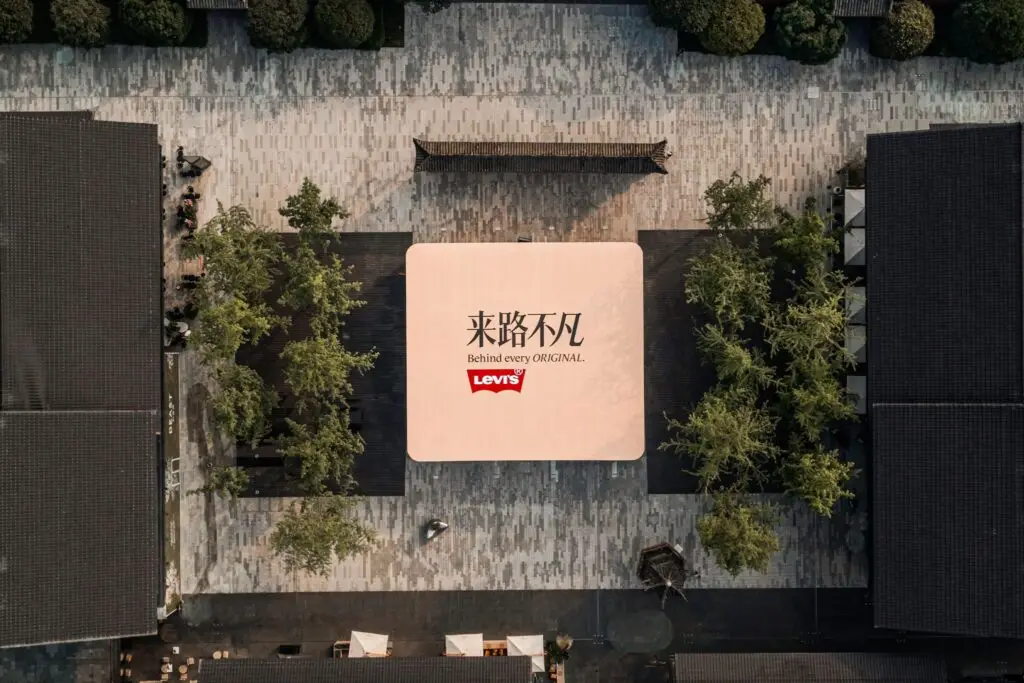
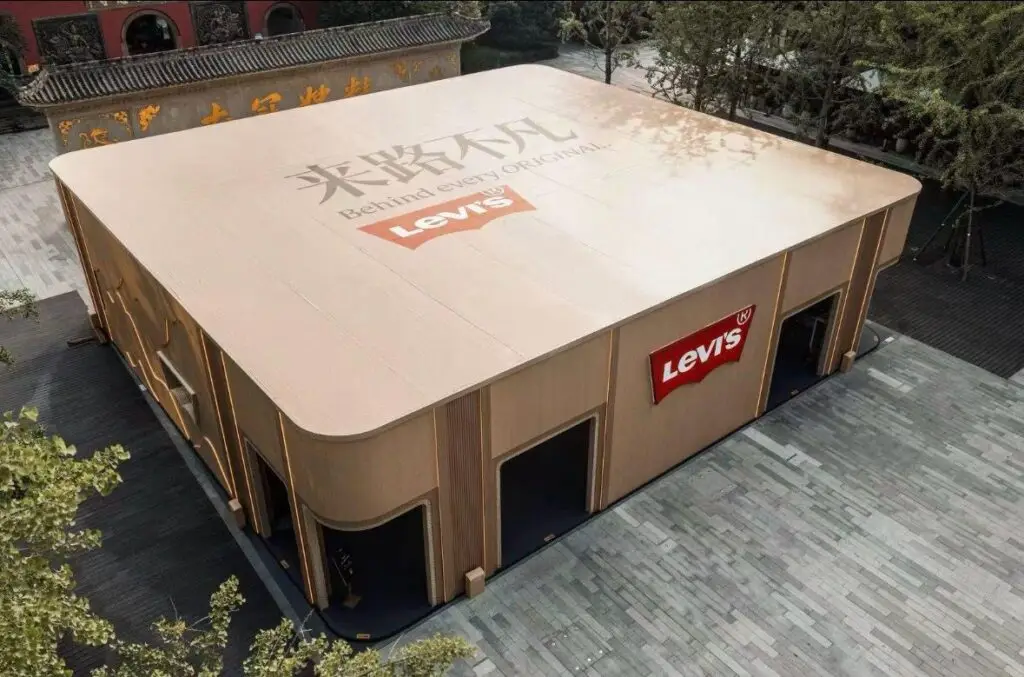
The “Behind every Original 来路不凡” pop-up at Sino-Ocean Taikoo Li is a peach-toned cube the size of a small building, set against grey tile roofs, gingko trees and the painted eaves of an adjacent temple. The contrast is the first piece of writing. A modern, soft-cornered box in a heritage square, the red Levi’s batwing facing out, entry arches inviting people in like the open doors of a courtyard house. Even before anyone steps inside, the building has decided to be a guest, not a colonist.
Inside, the activation works as a series of rooms, but the spine of the entire space is the artist commission. Levi’s invited a roster of young Chinese artists and creative studios to reinterpret denim through Sichuan tradition, with three named works on display. 布LUE is a giant blue-and-white porcelain plate dragon, hand-stitched from recycled jeans and patchworked offcuts, presented on a wooden stand like a museum antique. 青藍共脈 reads as a meditation on the shared blue palette of Ming dynasty ceramics and indigo-dyed cotton. 牛仔織語 turns denim scraps into bamboo-framed chairs, woven panels and patchwork seats, set beside real stalks of bamboo and pebble beds. Even the welcome desk carries embroidered denim pandas dancing across a needlework rendering of the temple opposite. The point lands without anyone saying it: this is American workwear seen through Sichuan eyes, not imposed on them.
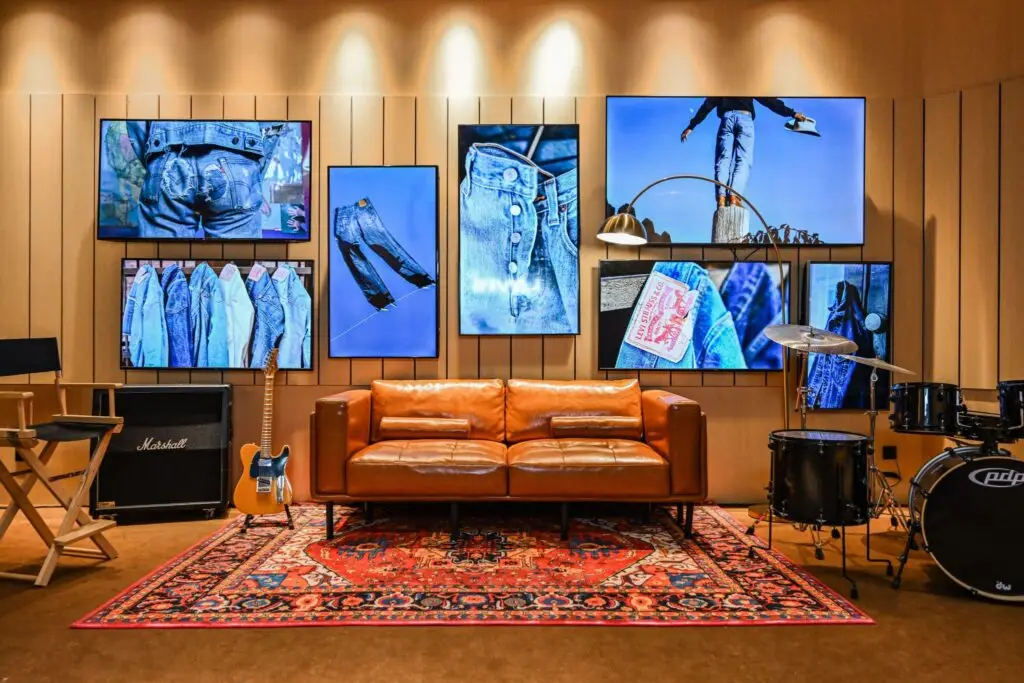
The rest of the activation arranges itself around that spine. A denim time corridor walks visitors through more than 150 years of 501 history, the patents, the labels, the campaigns from the cowboy era through the Brad Pitt and Nick Kamen years. A dedicated wing showcases the actual stage looks Levi’s global ambassador ROSÉ wore on her tour, displayed on plinths under spotlights like museum objects, alongside a one-to-one recreation of her campaign film set. The tan leather sofa, the Marshall amp, the Telecaster, the drum kit, even the Persian rug, are all reproduced so visitors can sit inside the photograph. An immersive booth lets you put on headphones, hear her voiceover, then print a personalised photo strip on the way out.
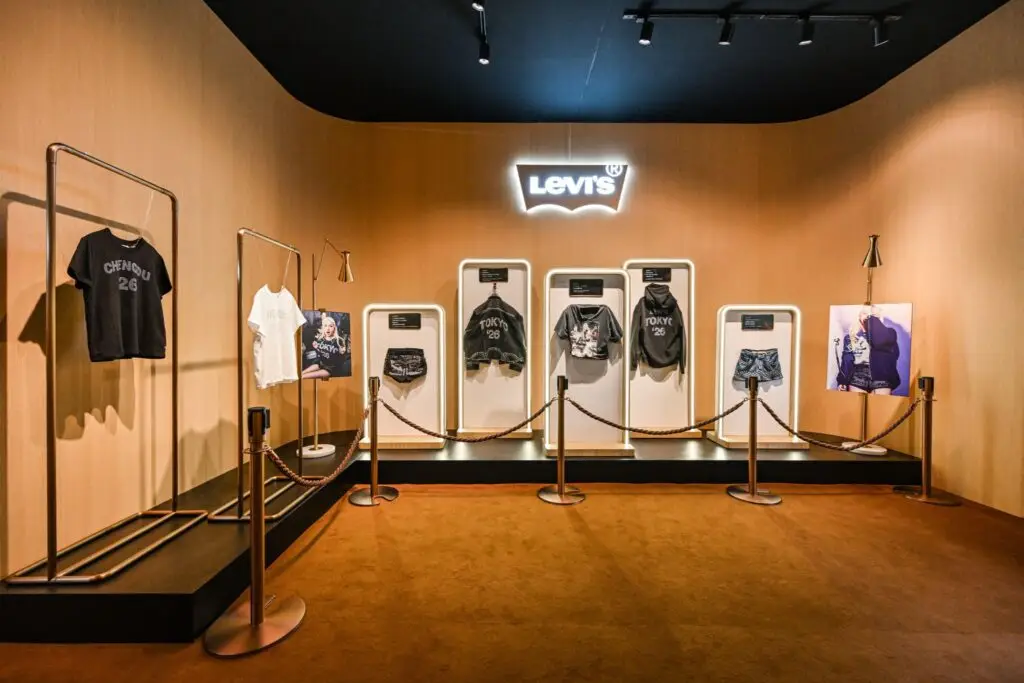
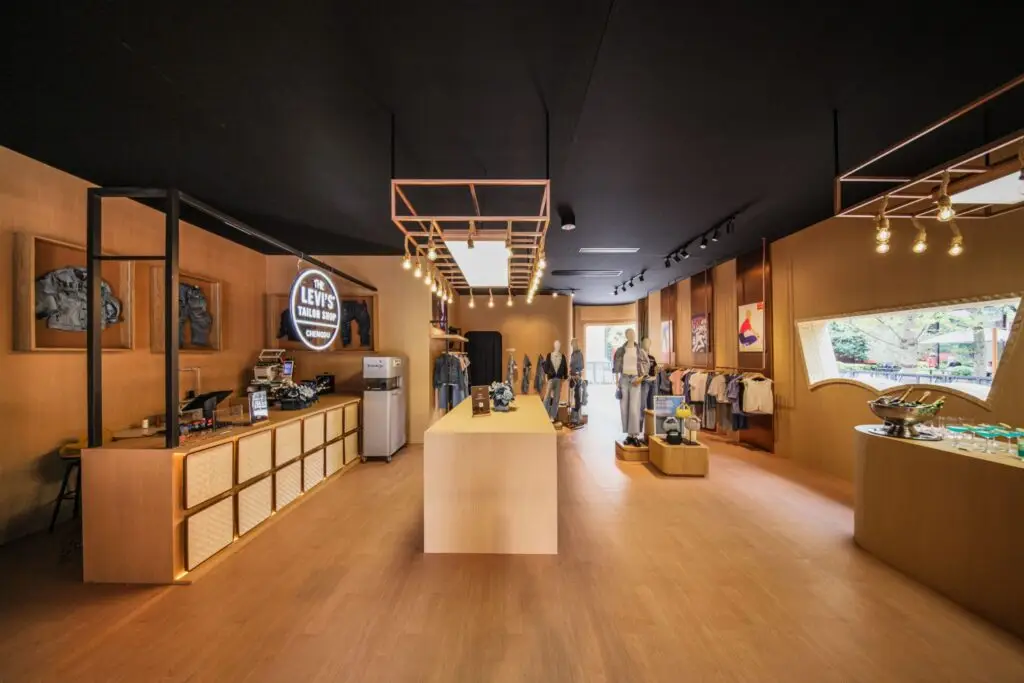
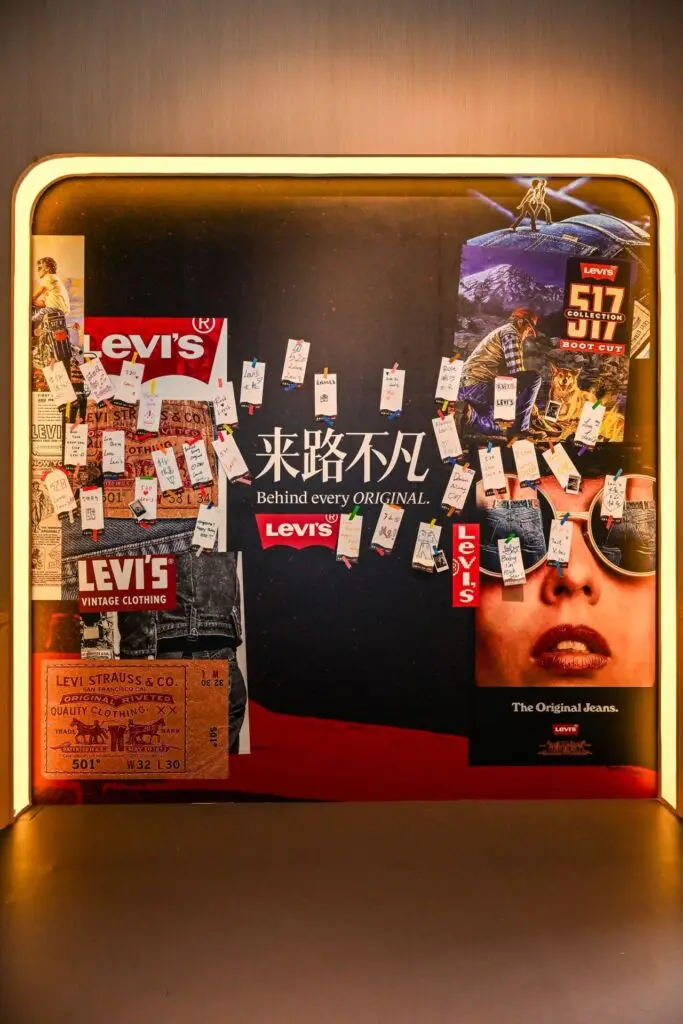
There is also a working Tailor Shop, fully equipped with laser engraving, foil heat-press and embroidery machines, where customers can customise their own piece. Beside it sits a curated capsule of archive references, vintage clothing reproductions and the rhinestone-studded TOKYO ’26 and CHENGDU ’26 graphics that tie the local edition to a wider Asia rollout. A wall invites visitors to write their own original declarations onto denim tags and pin them up. The gift, when it comes, is a canvas tote with a bamboo handle, a wooden box, a porcelain teacup and a folding fan. Nothing about it is generic.
What makes the whole thing work is the tagline doing double duty. “来路不凡” literally means “the path you came from is extraordinary.” Stretched onto “Behind every Original,” it becomes a piece of bilingual wordplay that praises both the brand’s American roots and every individual Chinese wearer’s own backstory. It is the rare global campaign line that gains meaning when it crosses a border, instead of losing it.
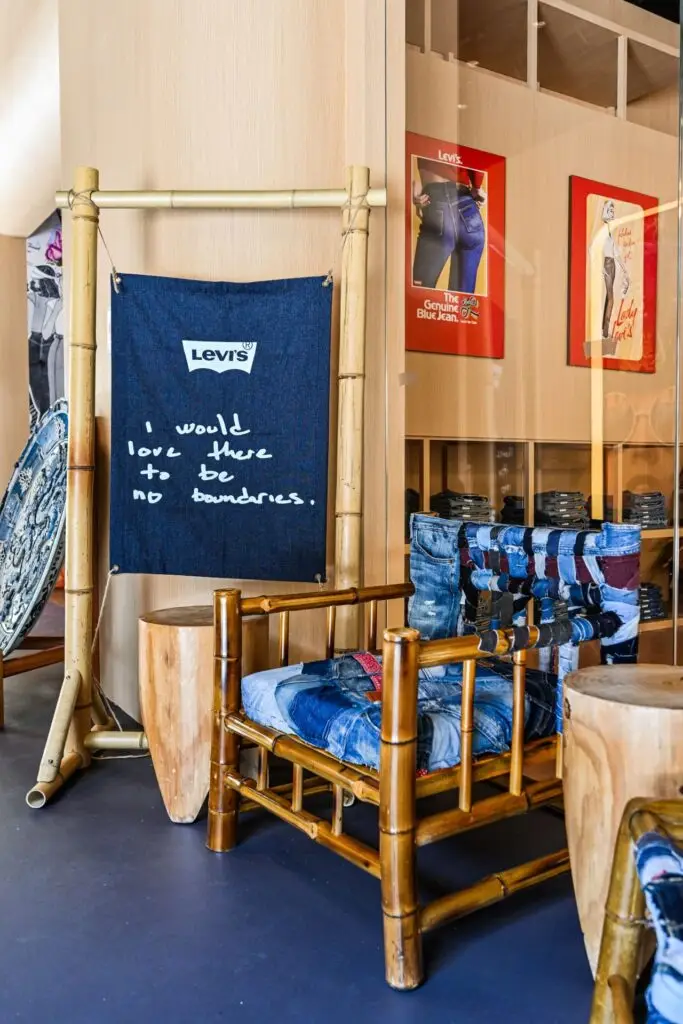
There is a wider shift underneath this. For years the dominant playbook for Western brands in China was to import the global flagship aesthetic and hope local cultural cues would land as homage. The most interesting houses are now doing the opposite. They are commissioning local artists, choosing regional rather than national references, and letting the host city show them how to be there. Levi’s has been quietly heading this way for two seasons, and Chengdu is the most fully realised version yet.
Every original has a backstory. This pop-up’s backstory is that someone in the Levi’s marketing team chose translation over export. That is the part worth wearing.
For more of the experiences worth crossing a city for, The Creatives Crush posts a new one every day.