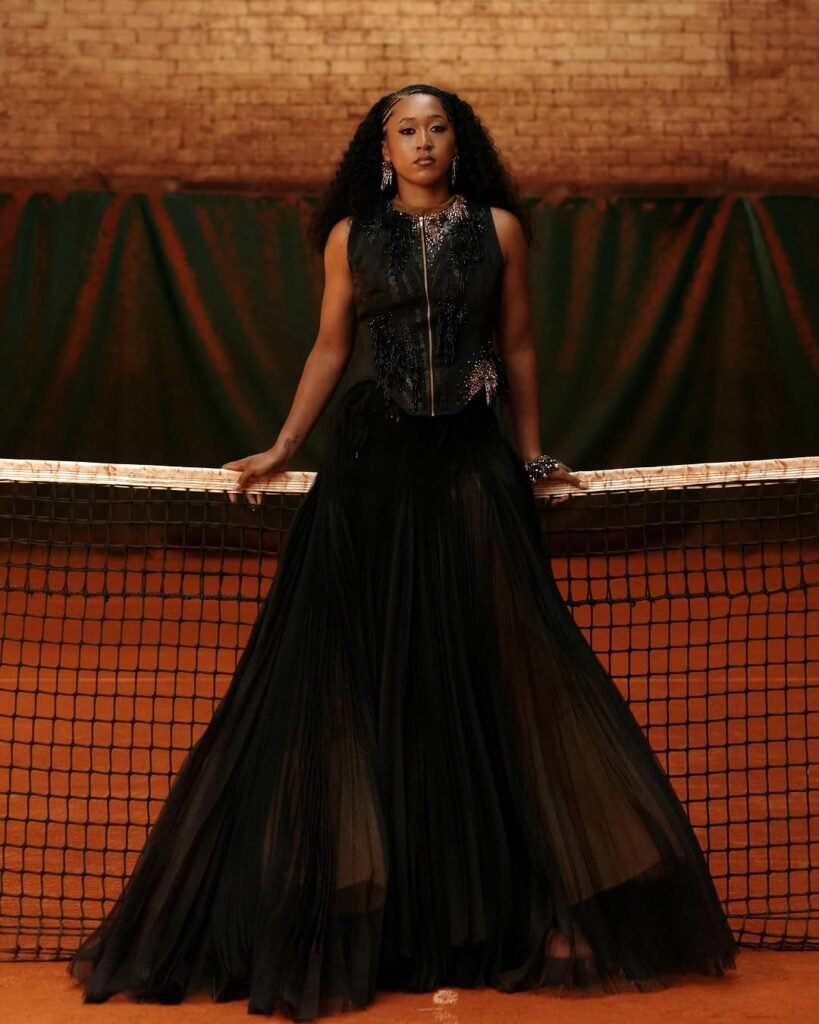
Paris is the only city in the world where a tennis player can walk onto a competition court wearing a black beaded corset and a cascading tulle skirt layered over a gold sequined dress, and the story isn’t about the match. It’s that she belongs here.
Naomi Osaka stepped onto the Roland Garros clay for her first-round match wearing a look designed by Swiss couturier Kevin Germanier: a structured zip-front corset with hundreds of hand-applied crystals, fringed detailing, a pleated semi-sheer tulle skirt that skimmed the red clay, and underneath it all, a gold sequined Nike dress that glittered so brightly in the afternoon sun she genuinely worried the umpire might ban it. She had two backup dresses on standby. She didn’t need them.
The silhouette evokes the Eiffel Tower: the dark outer layers echo its iron structure, the gold dress underneath is the tower lit at night. It’s the kind of conceptual detail that sounds overwrought on paper and looks completely right on court.
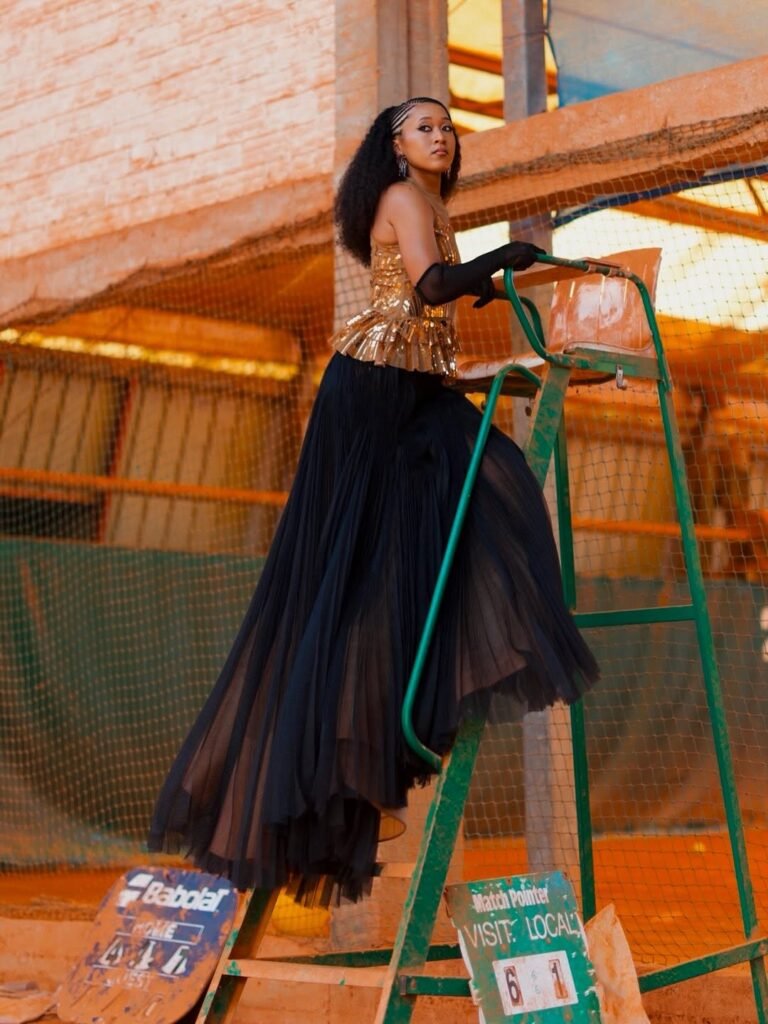
This was the first of three looks Osaka wore across her opening rounds, each one a new layer, each one built from actual Nike competition pieces that Germanier deconstructed and rebuilt into something new. Round two brought an oversized gold jacket and a cream Victorian bustle-inspired skirt. Round three: gold tulle, balletic, a different kind of drama. Snap fasteners and elastics meant she could move from couture to match-ready in seconds. She won all three.
Osaka has been building toward this for years. She cites Venus and Serena Williams as her starting point, the athletes who proved that what you wear to the court can communicate something as clearly as anything you say in a press conference. “I don’t talk a lot,” she said. “That way I can talk through my clothes.” She attended the Met Gala this season, slotted between the Madrid and Rome Opens. She collaborates directly with couturiers on the construction of every piece.
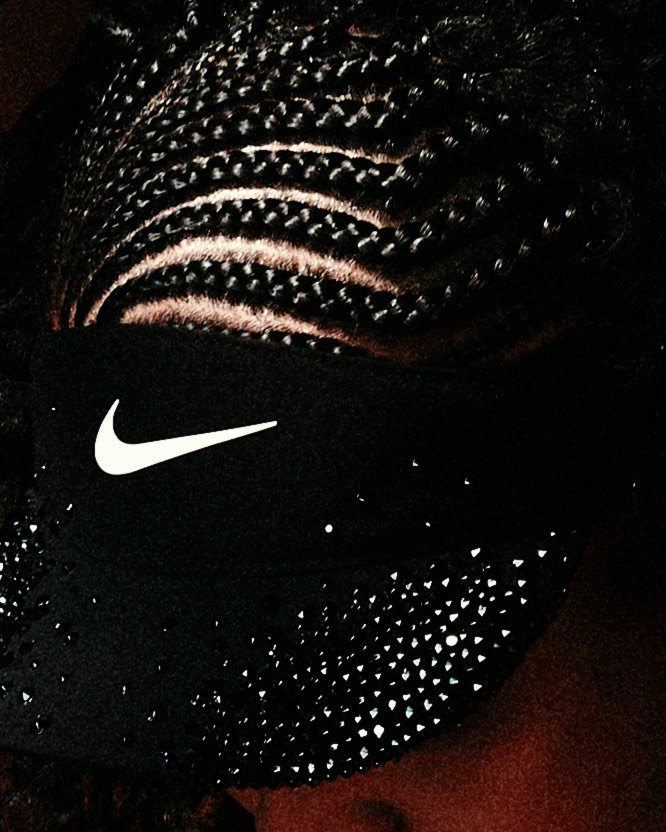
But Roland Garros is where it lands with particular force, because Paris is doing half the work. The French Open sits inside the fashion capital of the world, and Nike has built its brief around that fact. The walk-on moment at a Grand Slam in Paris carries a weight it wouldn’t carry at the Australian Open, brilliant as Osaka’s Robert Wun jellyfish look was in Melbourne. Paris, specifically, where the relationship between sport and couture has always felt less like a collision and more like a long-standing arrangement.
The Outlander Studios campaign, shot on clay with photography by Mister Fifou, leans into this completely. The images are dark and atmospheric, lit in terracotta warmth, Osaka commanding the frame in a way that makes the net and the umpire’s chair look like set design. It doesn’t look like an athlete campaign. It looks like a fashion story that happens to have a tennis court in it.
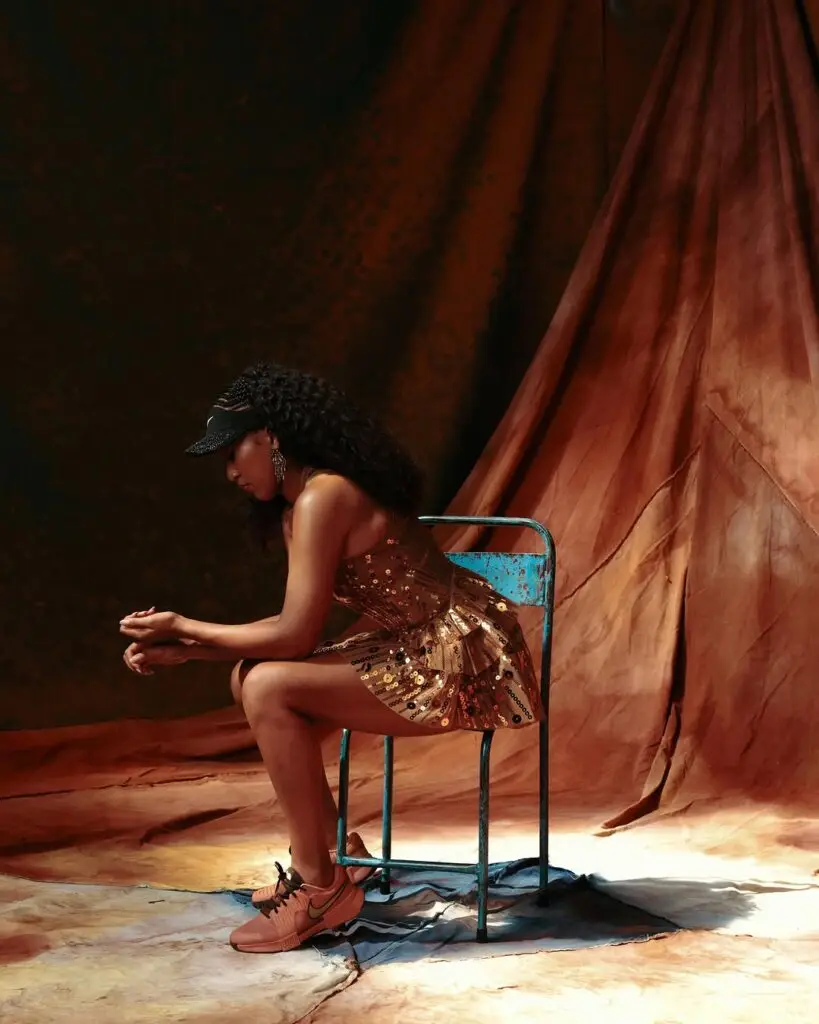
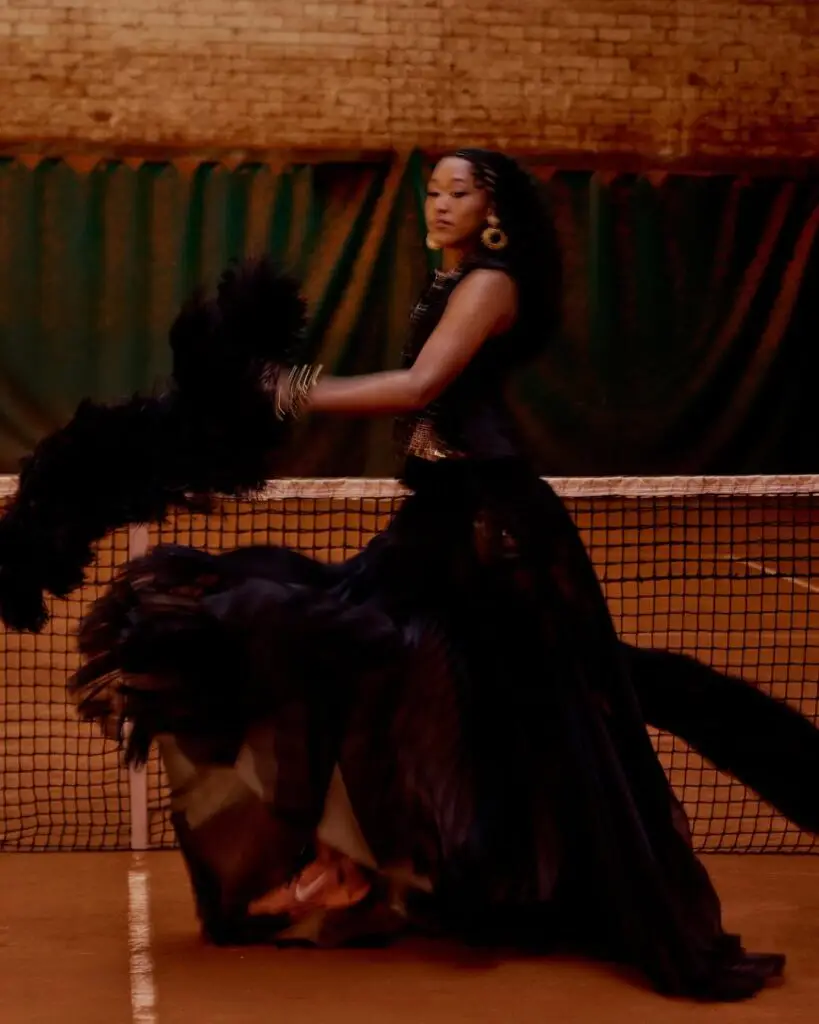
What Nike got right is the question of authorship. Osaka holds the creative brief. Nike provides the dress she plays in, the infrastructure, the platform, and then steps back. The result is a cultural moment neither could produce alone, reaching well beyond sport media into fashion, culture and the conversation about what athlete partnerships can actually do.
The walk-on is now its own event, with its own media cycle and its own audience, covered independently of whether Osaka wins or loses. She built that over years of consistent creative investment, one Grand Slam at a time. Nike had the sense to get behind it and stay out of the way.
Paris gave it the right stage. She gives it everything else.