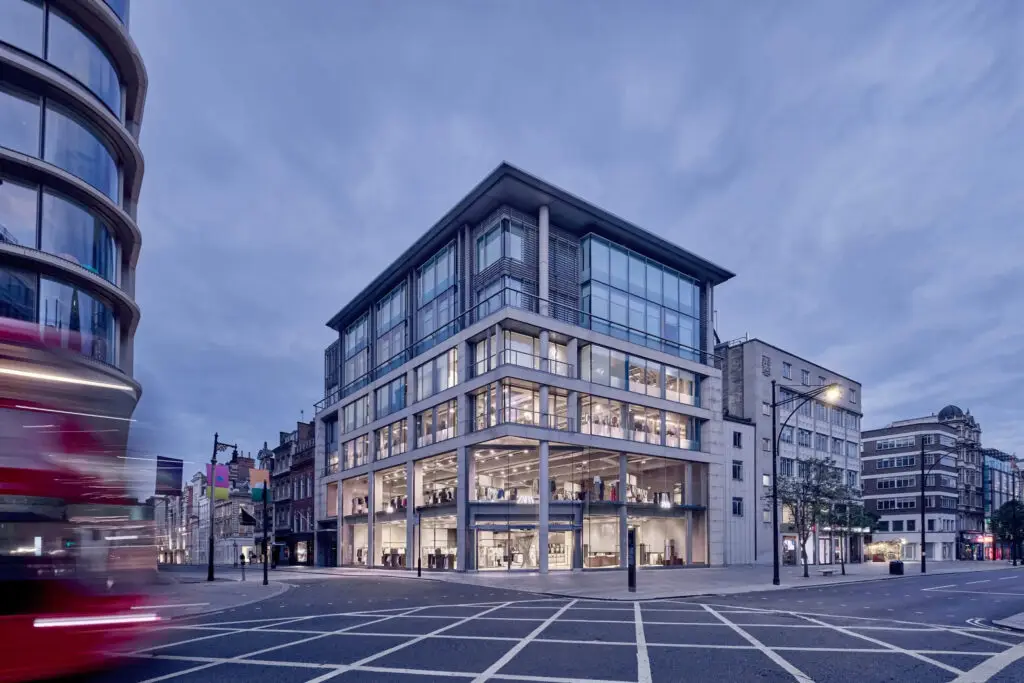
Zara is now selling atmosphere as much as clothing, and that single shift is the most telling thing to happen in mass-market retail this season. The brand has reopened its enlarged Bond Street flagship across four floors and 32,000 square feet, and while the press materials lead with technology and square footage, the real story is what the building feels like to stand inside.
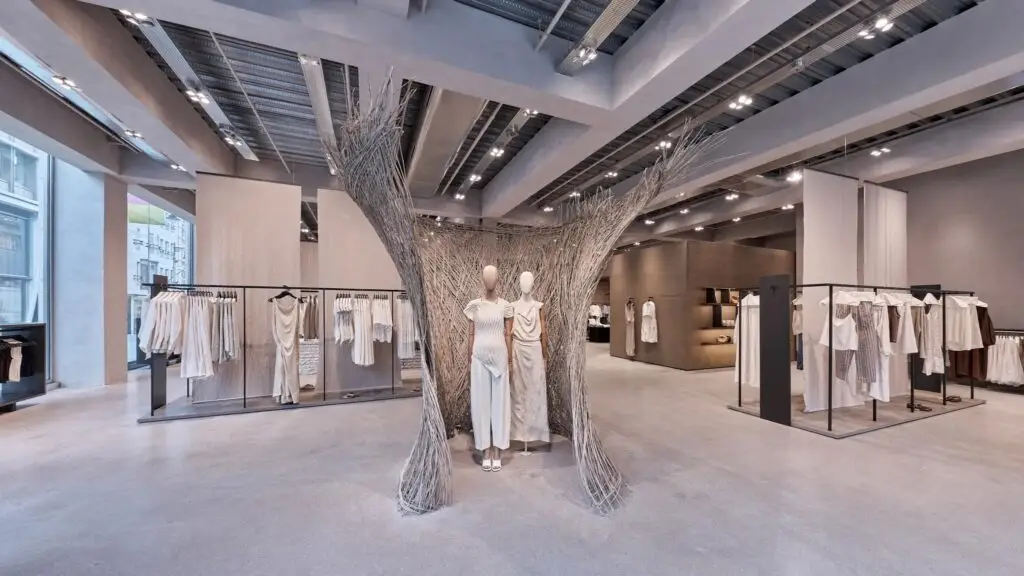
It announces itself at the entrance, where a nest-like wooden structure cradles a group of mannequins. It is a domestic gesture, a quiet nod to fashion’s drift toward understatement, and it sets the register for everything above it. This is a store that wants you to slow down.
The materials carry that intention. Galvanised metal and stainless steel are set against oak and pine, a deliberate balance between warehouse and home, while a single mineral floor runs through all four levels to hold the building together as one continuous space. Elevated ceilings and a reworked glass façade pull daylight deep into the floor plates, softening the industrial bones with something closer to warmth. Designed by Zara’s in-house Architecture Studio, it is the clearest expression yet of the company’s latest global concept.
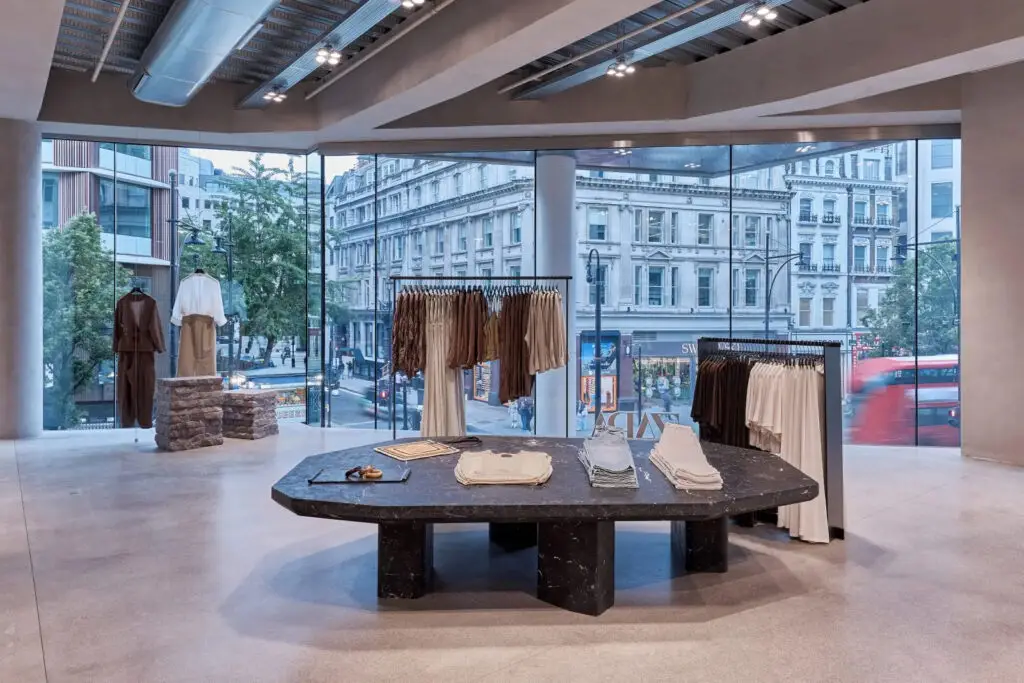
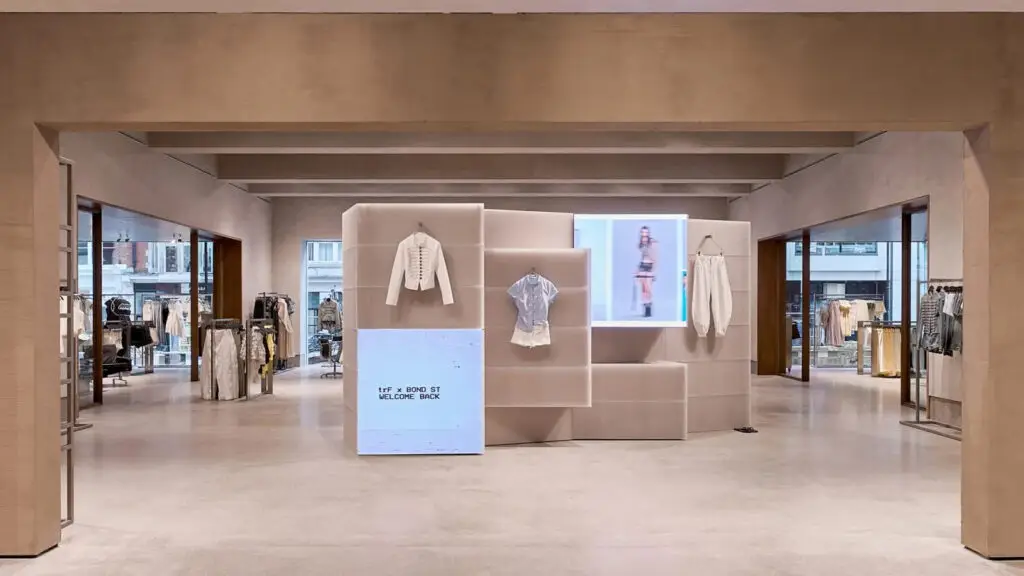
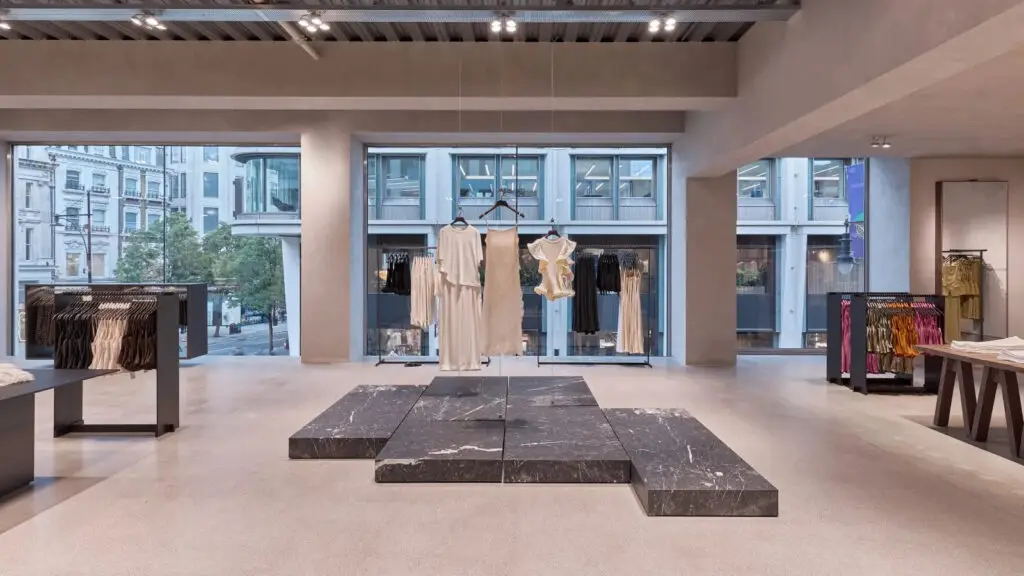
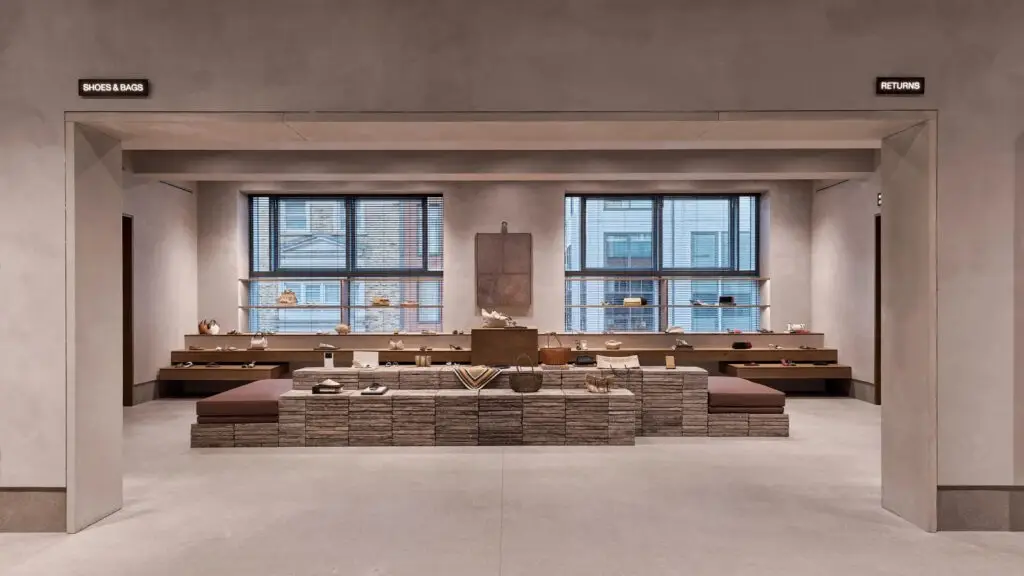
Each floor reads as its own world. Menswear is arranged around a vintage Land Rover Santana, parked like a centrepiece, beside a lounge furnished with a marble chess set, a pool table and neatly stacked design books. It is less shop floor than members’ club, and it asks to be photographed. The womenswear floor takes a softer line, leaning on vanities and framed pictures, the furniture of a home dressing room. The children’s floor warms further still, into wood, soft textiles and a dedicated room for the newborn collections, where a collaboration with the British label Caramel gives the space a considered, family-oriented mood.
The commercial intelligence sits in how lightly the technology is worn. Real-time stock visibility, collection of online orders within two hours, automated returns and a quiet personalisation service that engraves text into selected leather bags are all present, yet none of it dominates. The machinery stays in the background while the atmosphere does the selling. That restraint is the point. A decade ago, fast fashion announced its modernity through screens and self-checkout theatre. Here the technology is plumbing, and the experience is architecture.
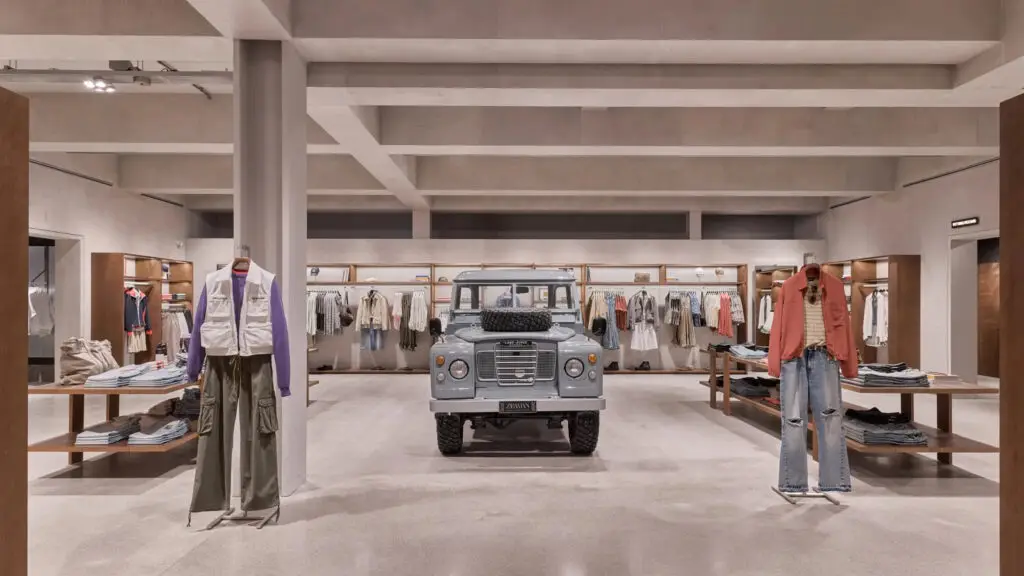
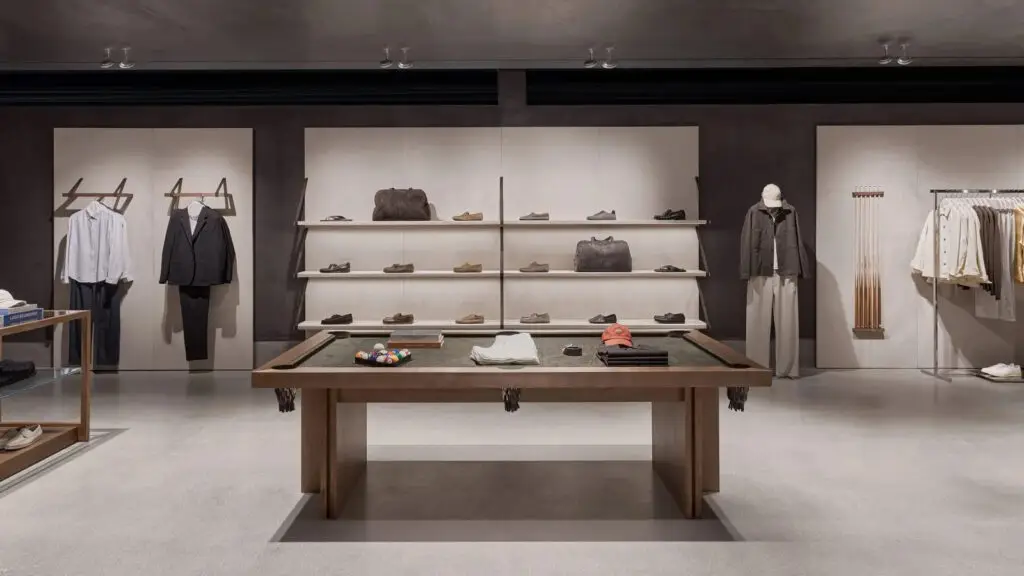
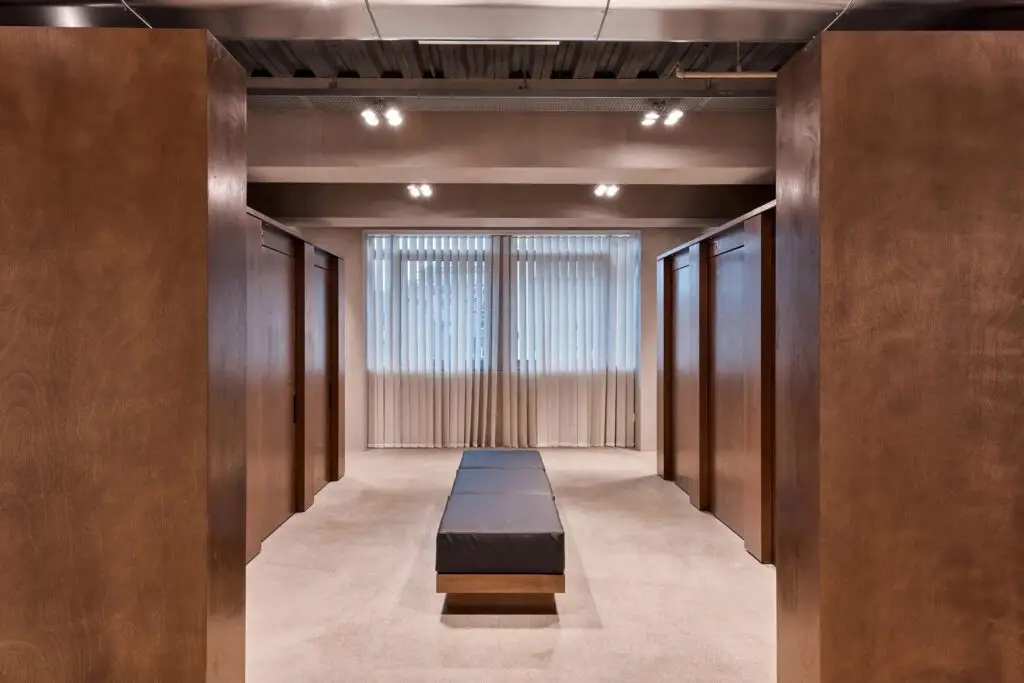
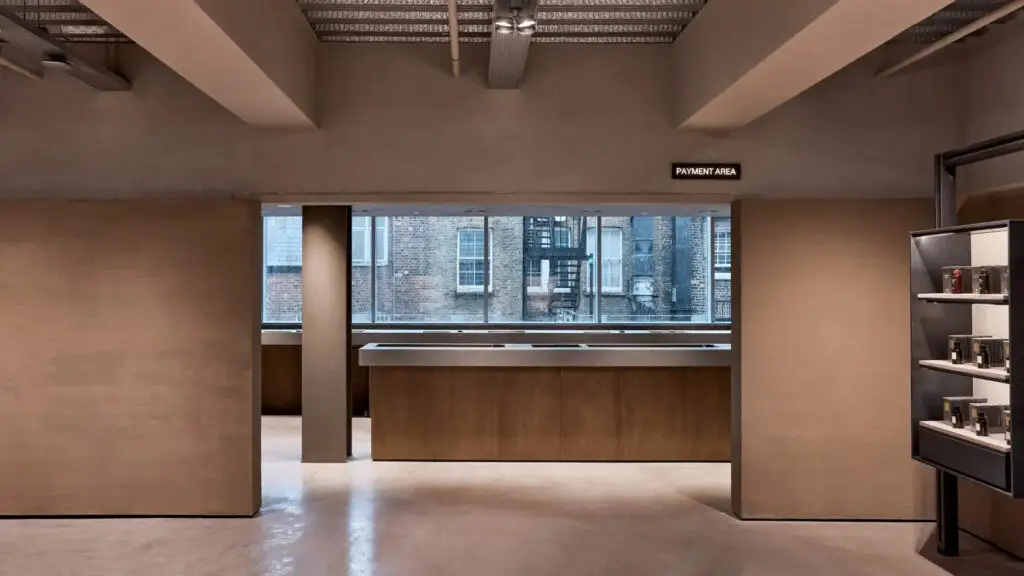
We keep returning to one observation. The price tags didn’t move. The room around them did. For years, the dwell-time store, the kind of space designed to be lingered in instead of moved through, was a luxury strategy, the reason a flagship on a grand avenue felt different from the same brand in a shopping centre. Zara has taken that idea and industrialised it at high-street scale, building the sense of occasion that used to justify a higher price into a store where the prices are unchanged.
The refurbishment resets more than the look of the place. It resets the expectation. If a mid-market brand can deliver a Land Rover in the menswear hall and a nest at the door, the experiential floor stops being a differentiator at the top of the market and becomes a baseline across it. The pressure travels in both directions. Luxury can no longer assume that atmosphere alone signals its tier, and the rest of the high street now has a far more expensive benchmark to answer.
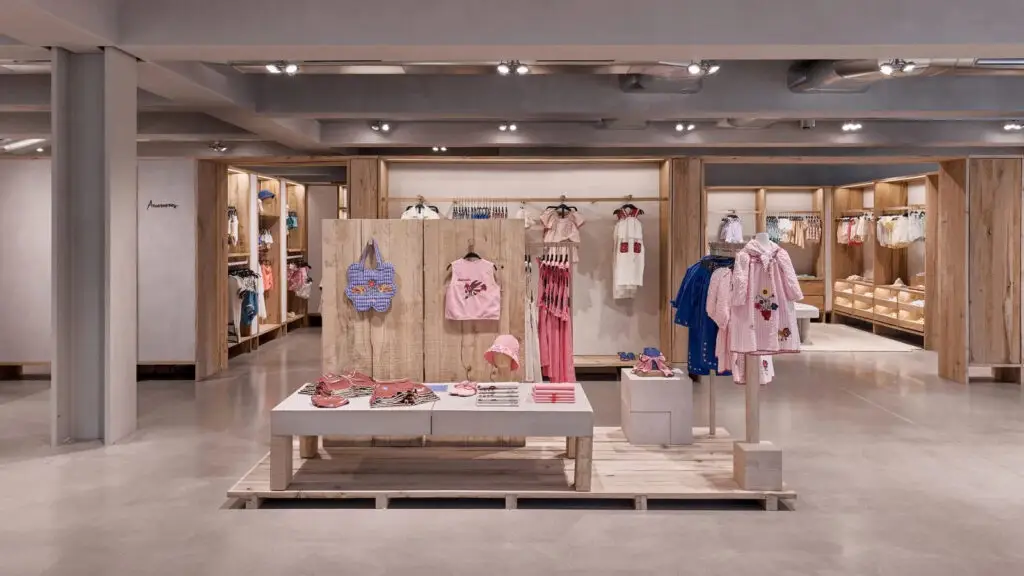
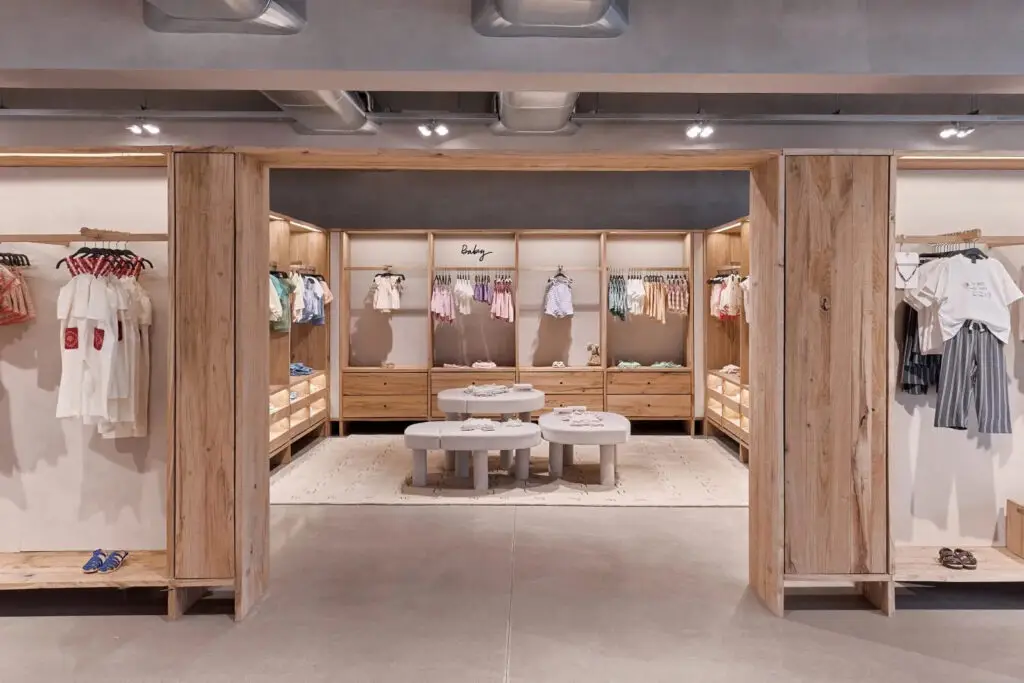
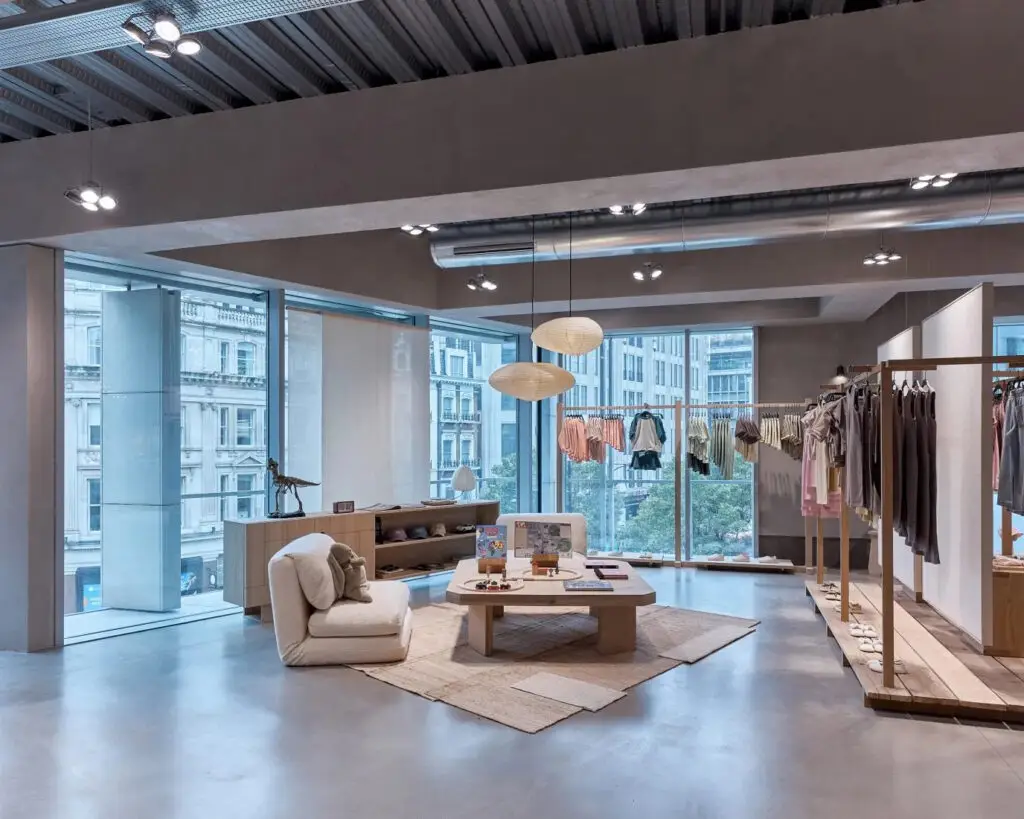
It also reframes what a Zara store is for. The vanities, the chess set, the coffee poured for guests, the framed pictures, these are not selling clothes so much as selling a version of a life, and inviting you to try it on along with the denim. The garment becomes one element in a fuller picture, and the building does the persuading.
None of this happens by accident, and none of it is cheap, even for a group with Inditex’s scale behind it. The bet is that time spent inside converts into loyalty and spend, and that a store worth visiting is the most durable asset a brand can hold in a market where so much shopping has moved to a screen. On the evidence of Bond Street, it is a confident bet, and a beautifully resolved one.
The most interesting brand experiences are rarely the loudest, and this one rewards a second look.