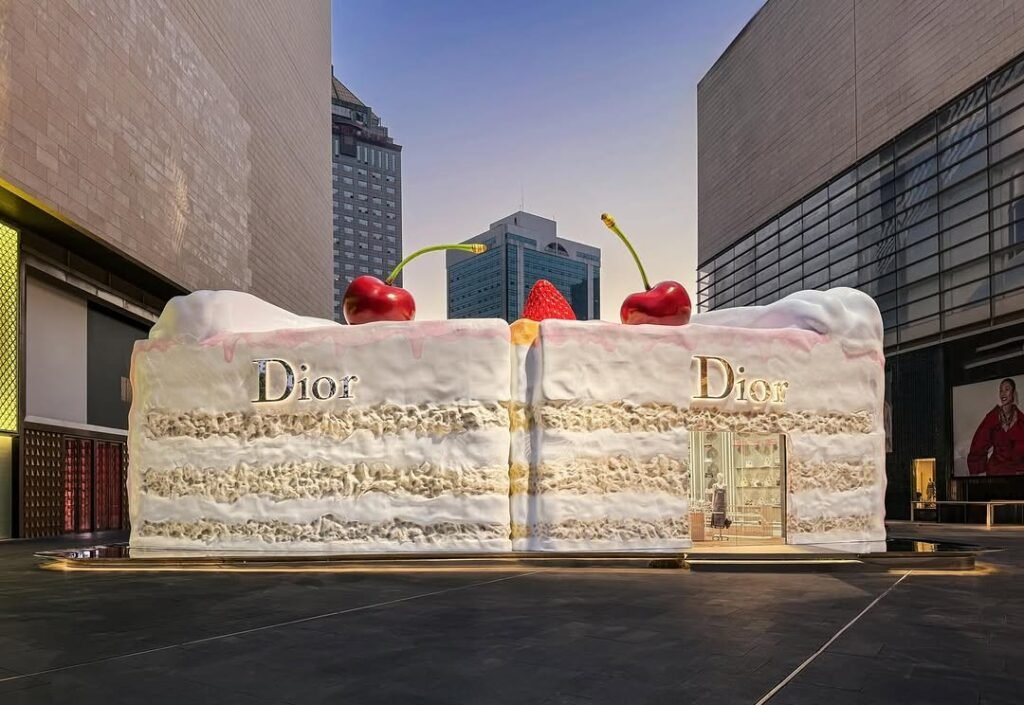
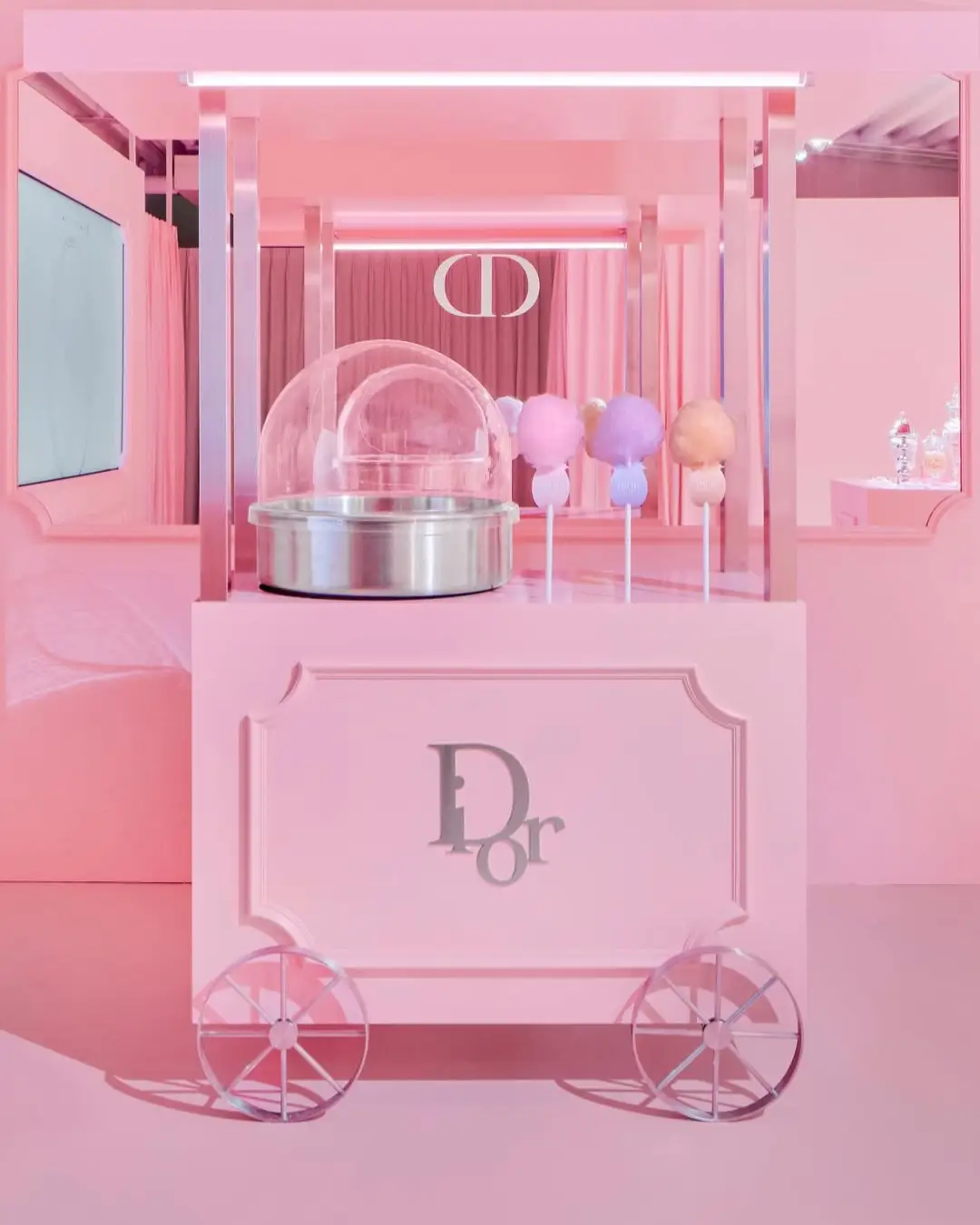
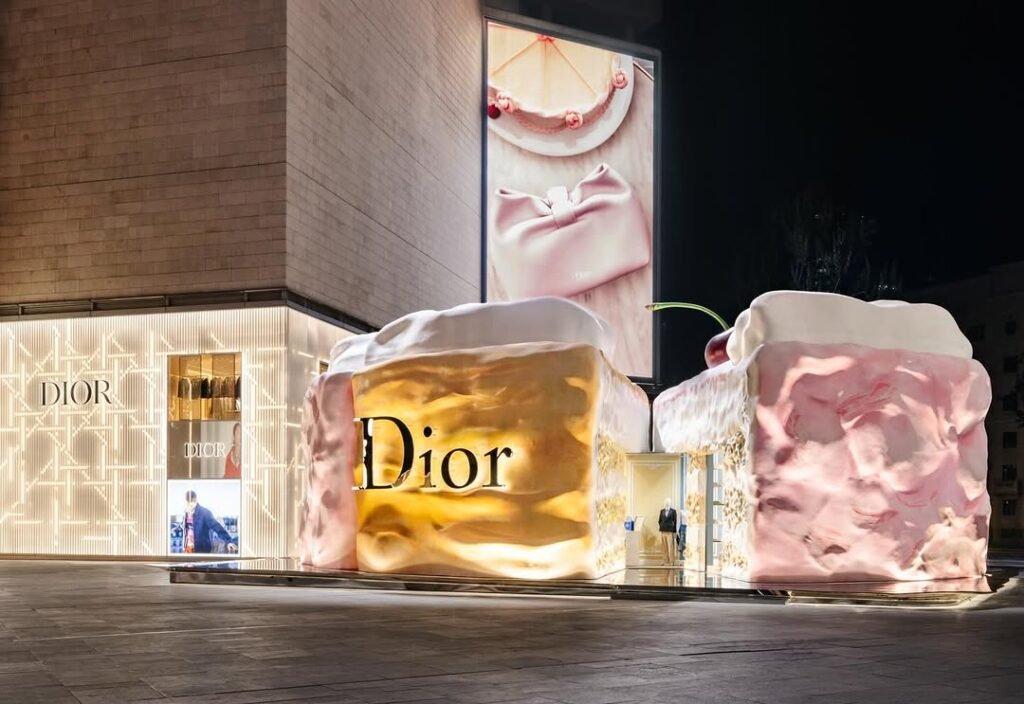
To mark the arrival of Jonathan Anderson’s Fall 2026 collection in stores, Dior has staged immersive pop-ups and boutique takeovers across global markets, each built around a single concept: the cake. At Nanjing’s Deji Plaza, that concept reaches its most spectacular expression.
The exterior structure is two monumental shortcake slices positioned side by side, their sponge layers, cream filling and glazed surfaces rendered in precise sculptural detail. Oversized cherries and a strawberry crown the top. The Dior logo is set into the side. The entry door is built directly into the cake structure itself, sitting on a mirrored base that reflects the installation back across the plaza. It is a work of considerable architectural ambition, and it stops people in their tracks.
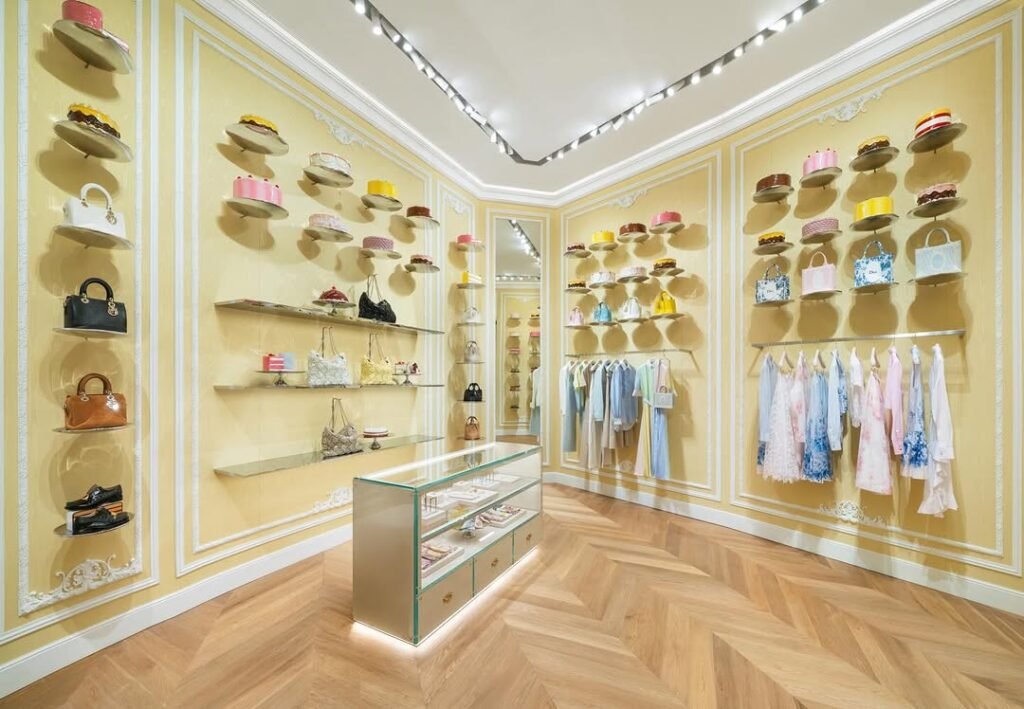
Inside, the interiors draw on the codes of Versailles, with Haussmann-style mouldings, moiré wall treatments and herringbone parquet flooring across multiple rooms. The colour palette shifts from sage green to duck egg blue to soft butter yellow as visitors move through the space, each room maintaining the same formal elegance while offering a different visual register.
Throughout every room, handcrafted cakes in glass and ceramic, made by artisans, are presented as the primary display objects. Whole cakes sit on individual pedestals. Cake slices are arranged under glass domes on display tables. The Lady Dior, the Dior Book Tote, micro bags and small leather goods are positioned among them, the product and the artisan objects occupying the same visual and physical hierarchy. The effect is deliberate. Anderson’s Fall 2026 collection, with its balance of precision and playfulness, finds its spatial equivalent in rooms where haute couture sits comfortably alongside a glazed ceramic layer cake.
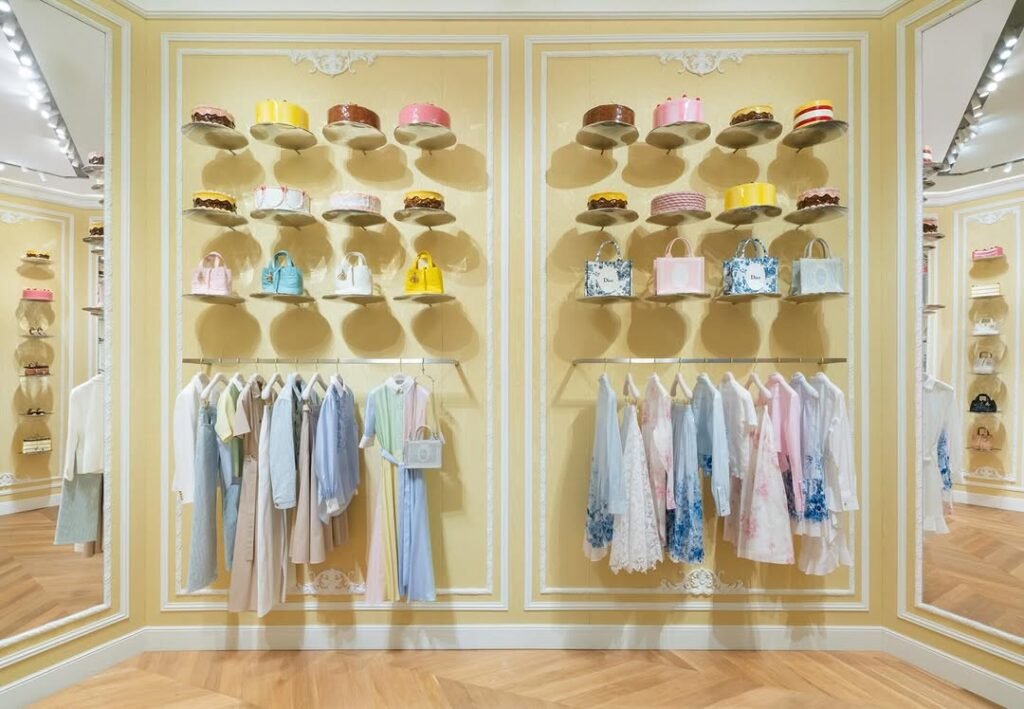
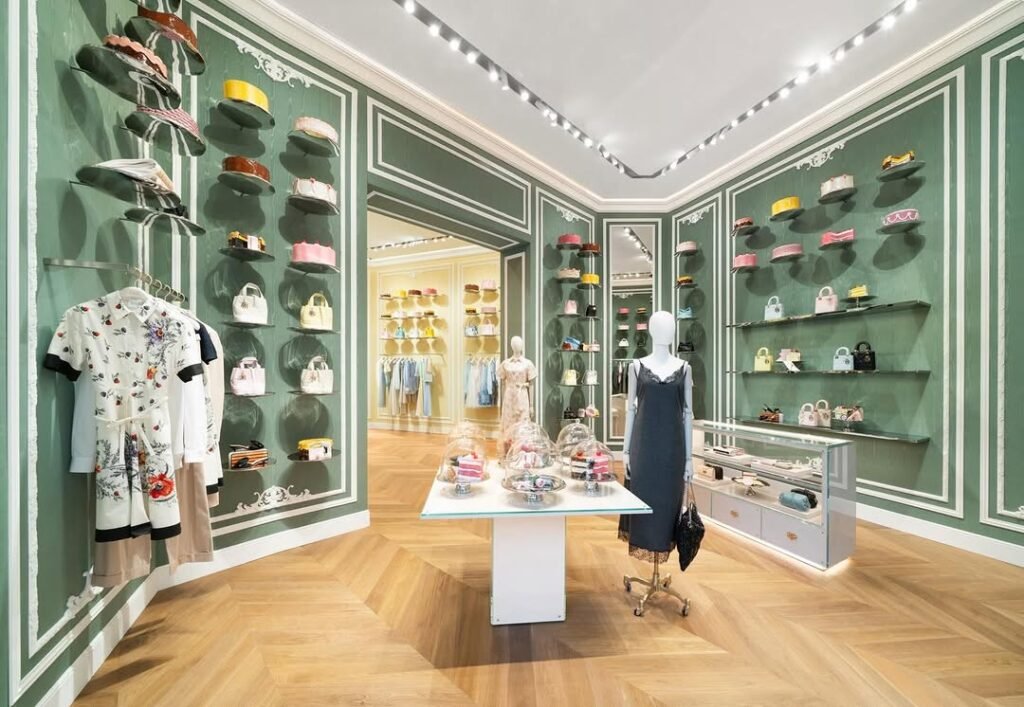
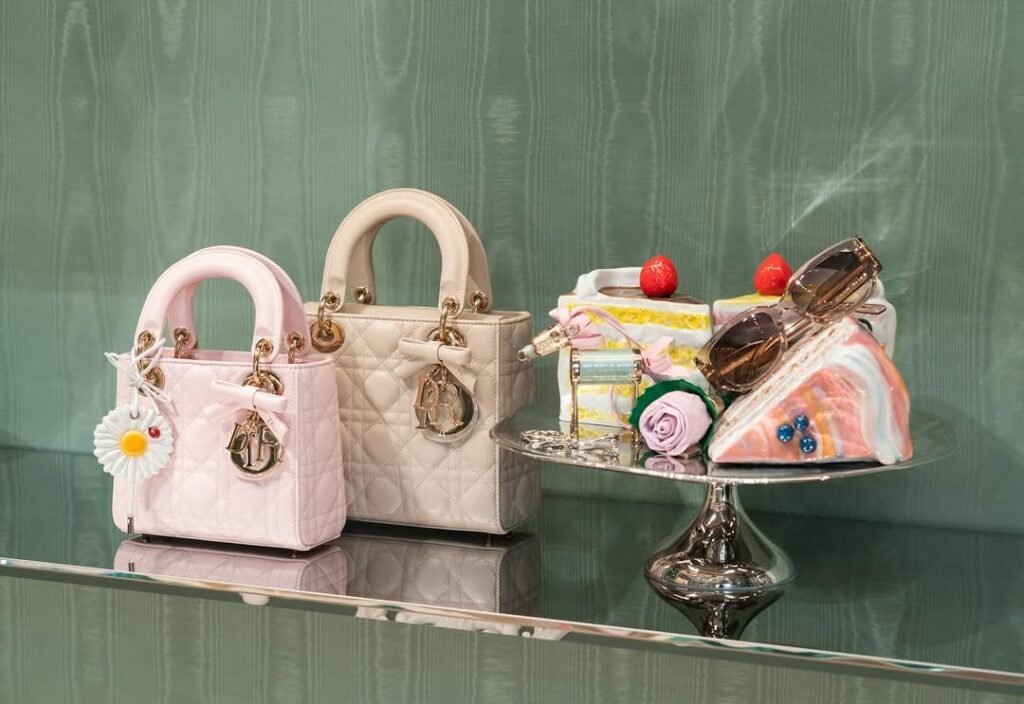
The craftsmanship behind each ceramic and glass piece is significant. The detail in the glazing, the sugar-work textures, the sculptural accuracy of each fruit and layer, represents a considerable investment in artisanal production that mirrors the standard Dior applies to its own maison savoir-faire. The pop-up format, rather than communicating product through conventional retail logic, asks visitors to experience the collection’s sensibility through the entire environment it inhabits.
For Anderson, whose tenure at Loewe established a consistent visual language around the relationship between luxury goods and unexpected cultural references, the Nanjing pop-up represents a coherent extension of that thinking into the Dior context. The collection arrives in stores not through a conventional retail moment but through an environment that articulates its point of view completely.