Some shoes accumulate cultural weight that their original designers could not have anticipated. The Isabel Marant Bekett, first introduced in 2011, is one of them. Over a decade after its debut, it resurfaced on TikTok and resale platforms as part of a broader wave of indie sleaze nostalgia, sought out by a generation that encountered it second-hand rather than first. Demand spiked 630 percent. It ranked among Lyst’s hottest products globally. The shoe had travelled from one cultural moment into another entirely.
The question of how a brand responds to that kind of resurgence matters. It would have been straightforward to simply restock and remarket. Instead, Isabel Marant took over Kith Tokyo with an installation built entirely around the Bekett, and the result says something considered about how to honour a legacy without being trapped by it.
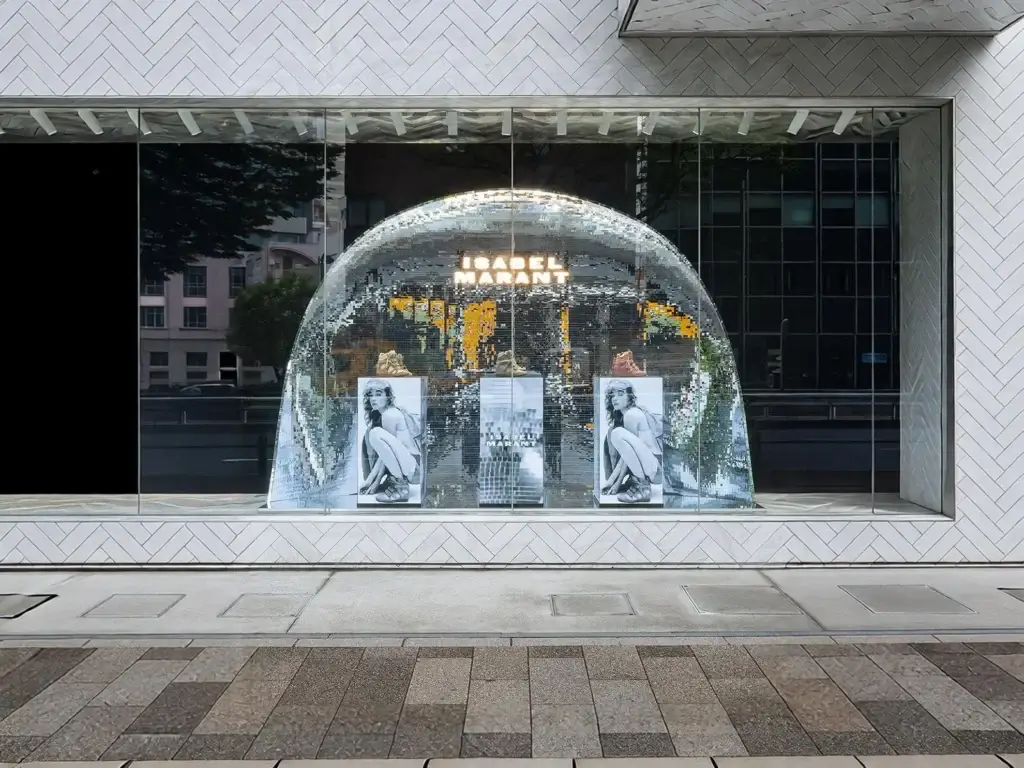
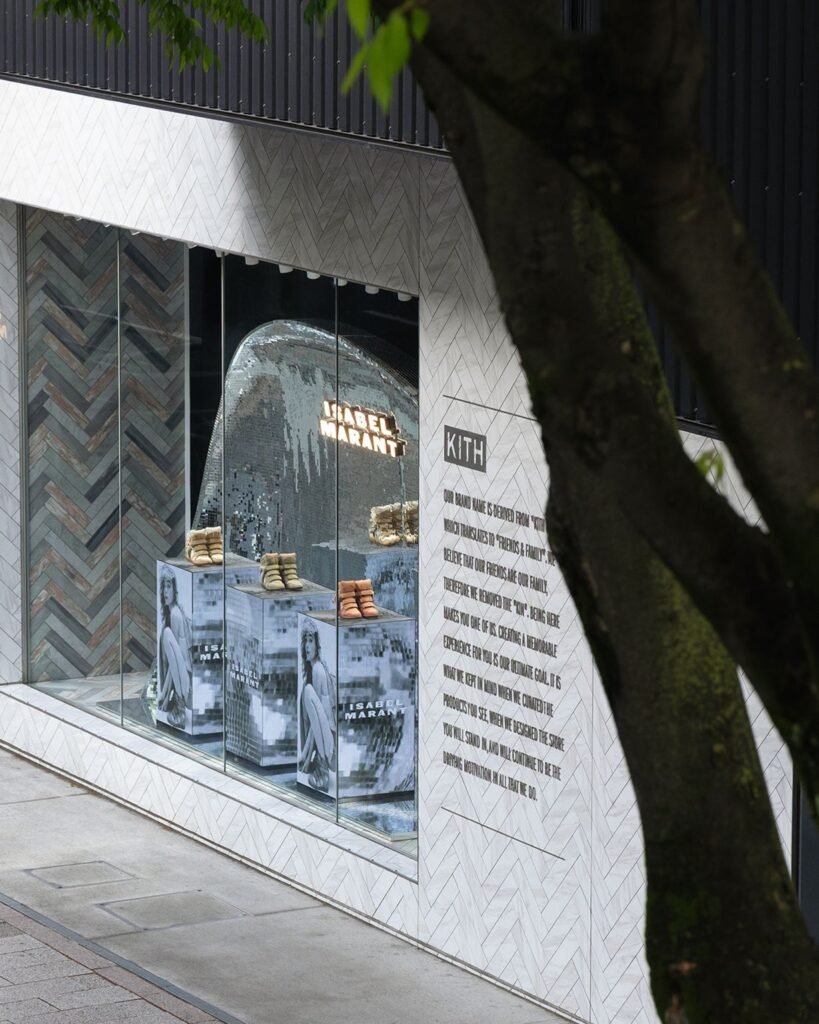
The window at Kith Tokyo is where the decision announces itself most clearly. A full arched dome tiled in mirror mosaic fills the space, with neon signage glowing from inside and LED pedestals running campaign imagery below the shoes on display. It is a window that understands its own context. Kith’s Omotesandō store is already one of the most architecturally distinctive retail locations in the city, and the installation leans into that rather than working against it. The mirror dome amplifies the reflective energy of the space, giving the Bekett a backdrop that feels as much like a club or a concert as a retail environment. The shoe has always lived somewhere between sportswear and nightlife, and the setting crystallises that.
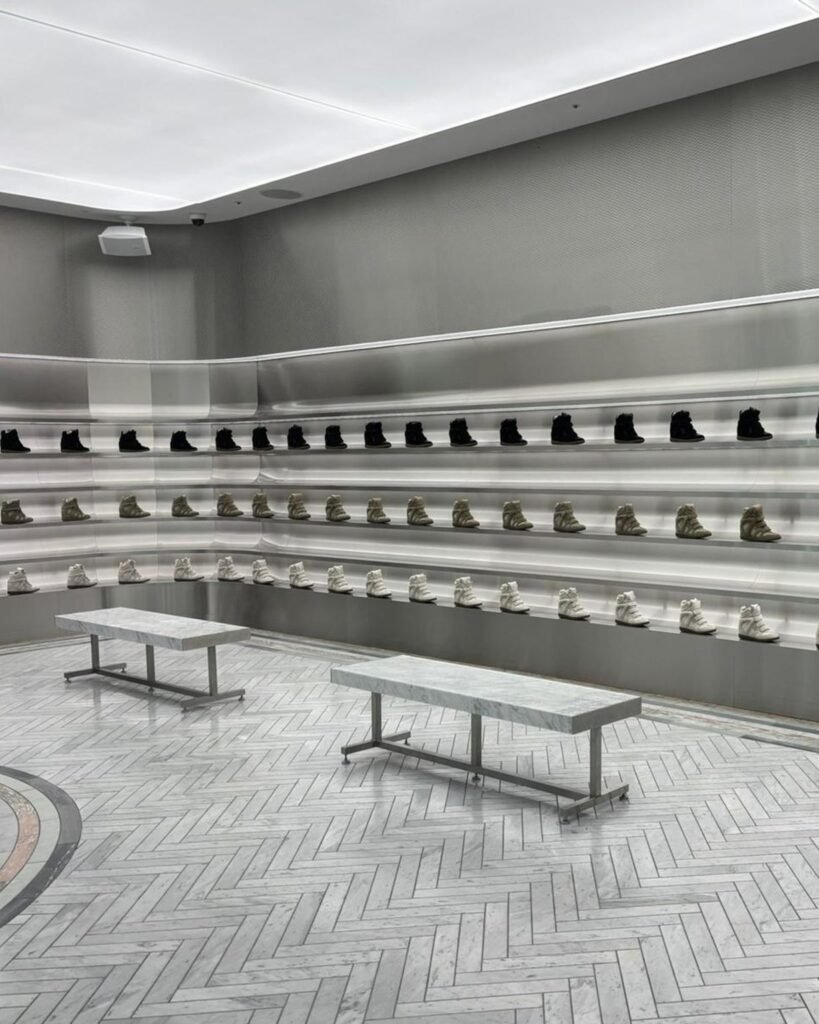
Inside, the approach shifts register completely. A curved circular room presents the full Bekett range across every colourway, pairs arranged along backlit shelving that wraps the entire space, marble benches placed at the centre. After the visual noise of the exterior, the interior is calm and almost curatorial, more akin to an archive than a shop floor. Over 200 pairs line the walls. The effect is cumulative, a single silhouette repeated across shades and seasons until it reads less like product and more like a record of time passing. This is not accidental. The Bekett’s return is not about newness. It is about continuity, about a shoe that has held its shape across cultural shifts and arrived, largely unchanged, in a moment that is ready for it again.
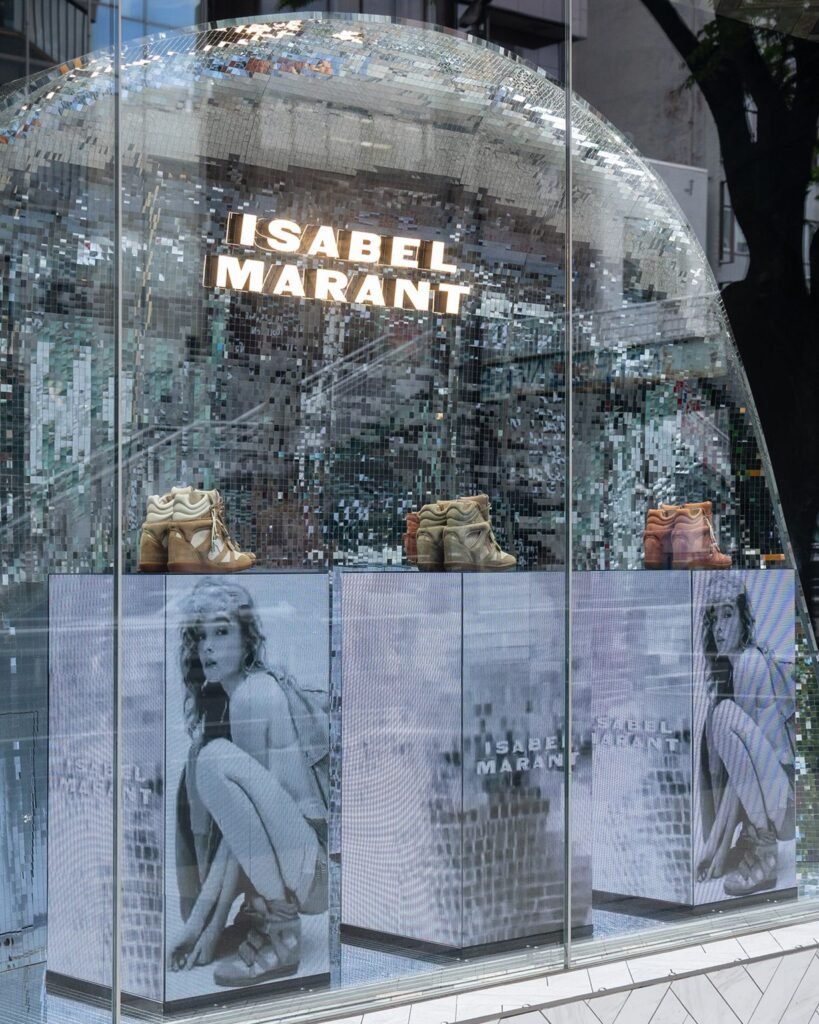
What holds the installation together is the clarity of its idea. Every element, from the disco-inflected window to the archival stillness of the interior, is in conversation with the same question: what does it mean for something to become iconic? The Bekett has not been reinvented for this moment. It has been presented, with full confidence, as something that did not need reinventing. In a landscape where the instinct is often to update, refresh and recontextualise, there is something quietly assured about choosing instead to simply show the thing as it is, and trust that the work has already been done.