The most radical thing a luxury house did this season was ask Paris to stand still.
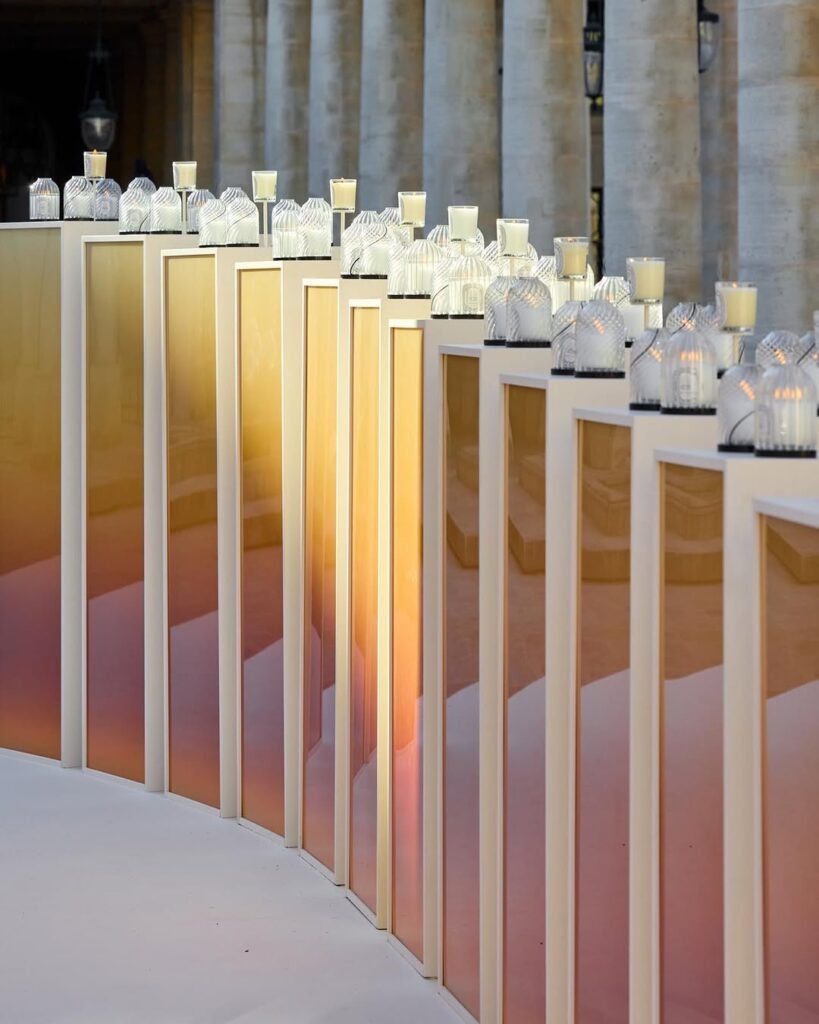
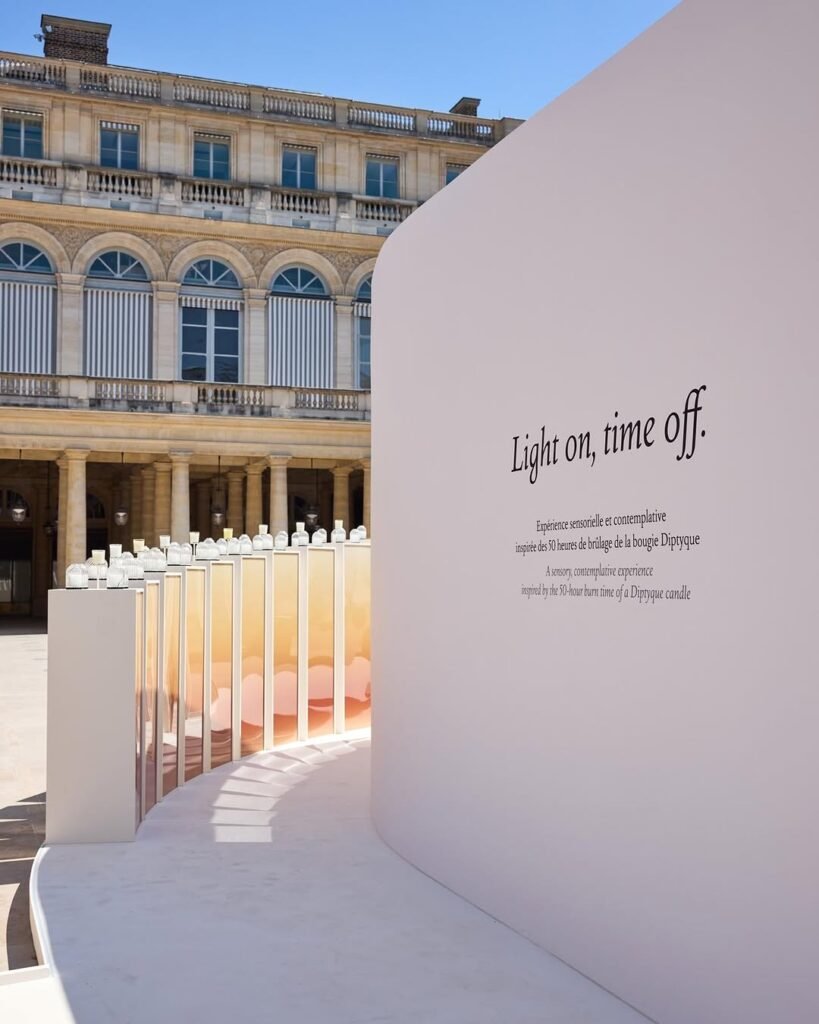
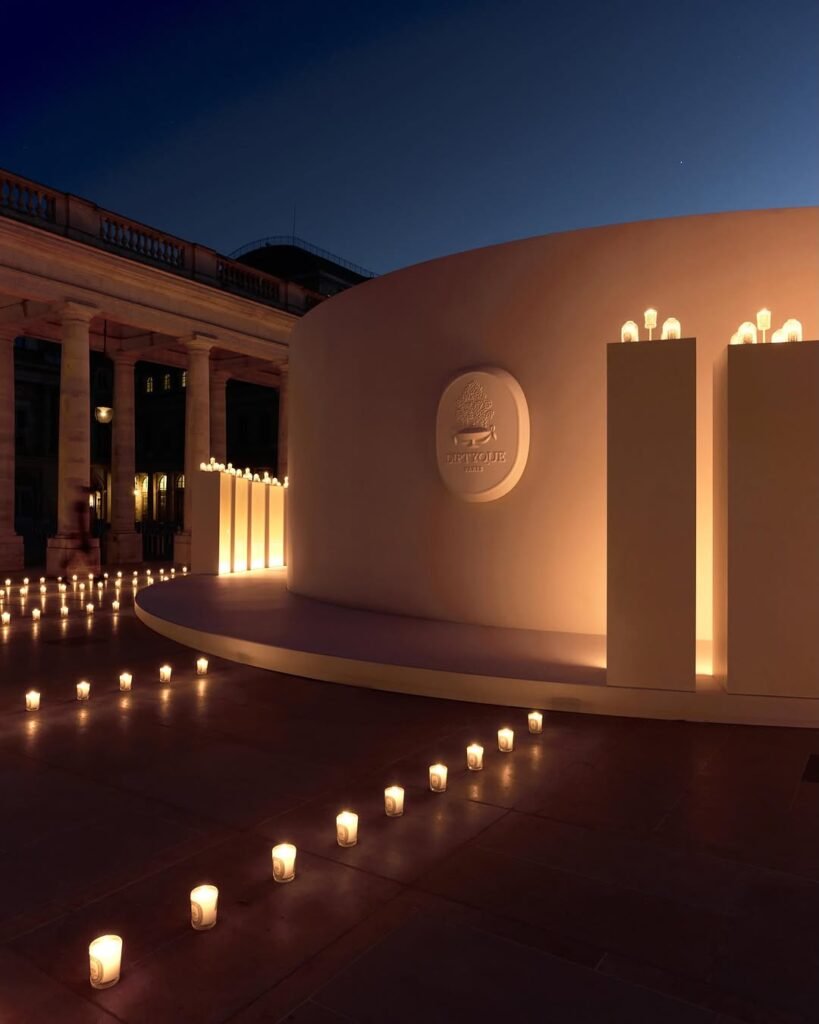
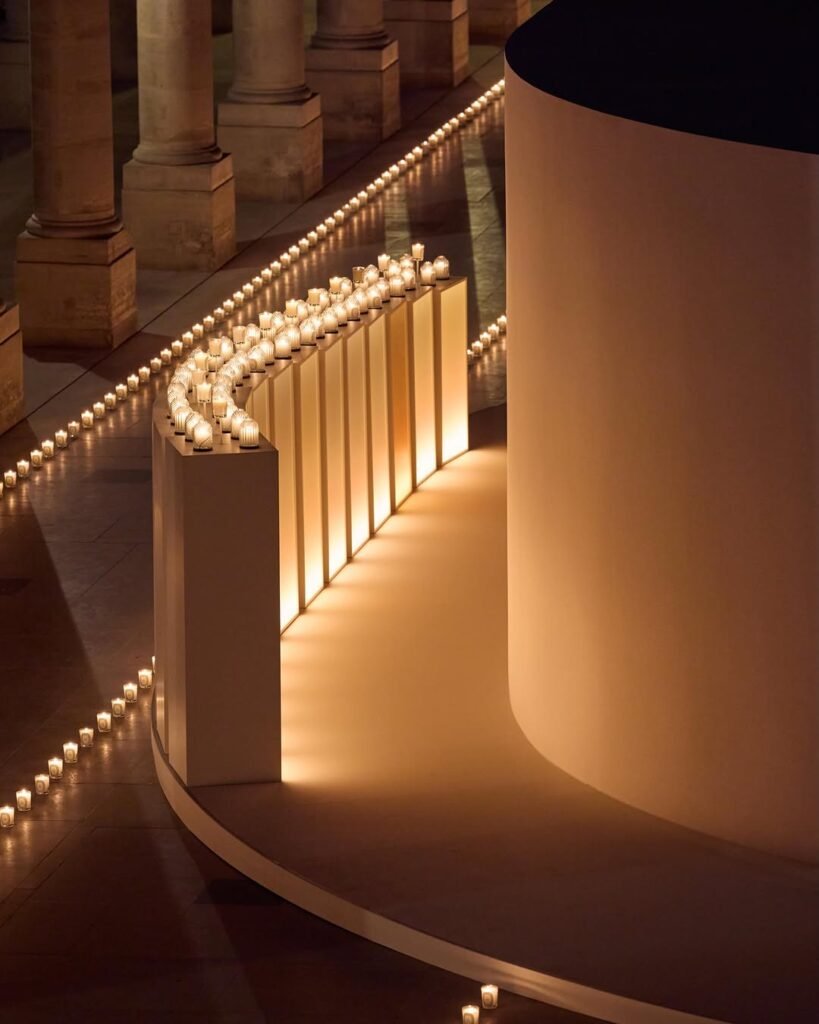
For 50 hours without pause, the precise time it takes one of its classic candles to burn down, Diptyque filled the Cour d’honneur of the Palais-Royal with hundreds of live flames and almost nothing else. No screens shouting, no stage in the theatrical sense, and tellingly, nothing for sale. This was staged as an exhibition, not a pop-up, and that decision turns out to be the whole point.
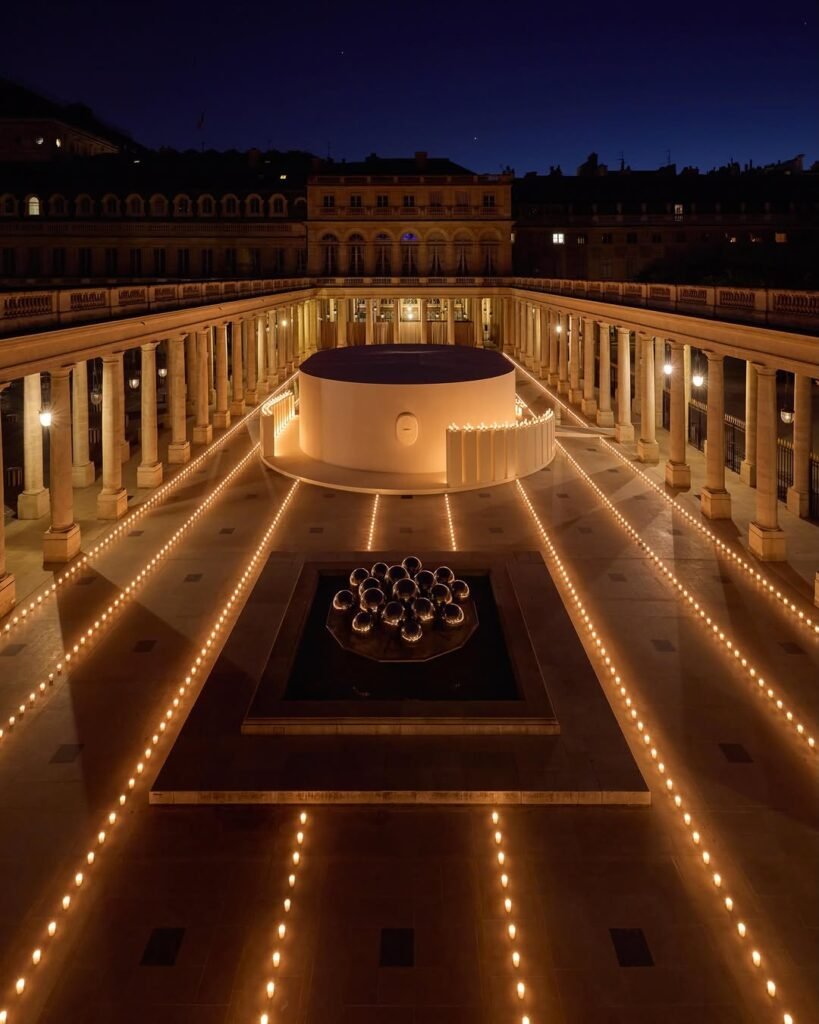
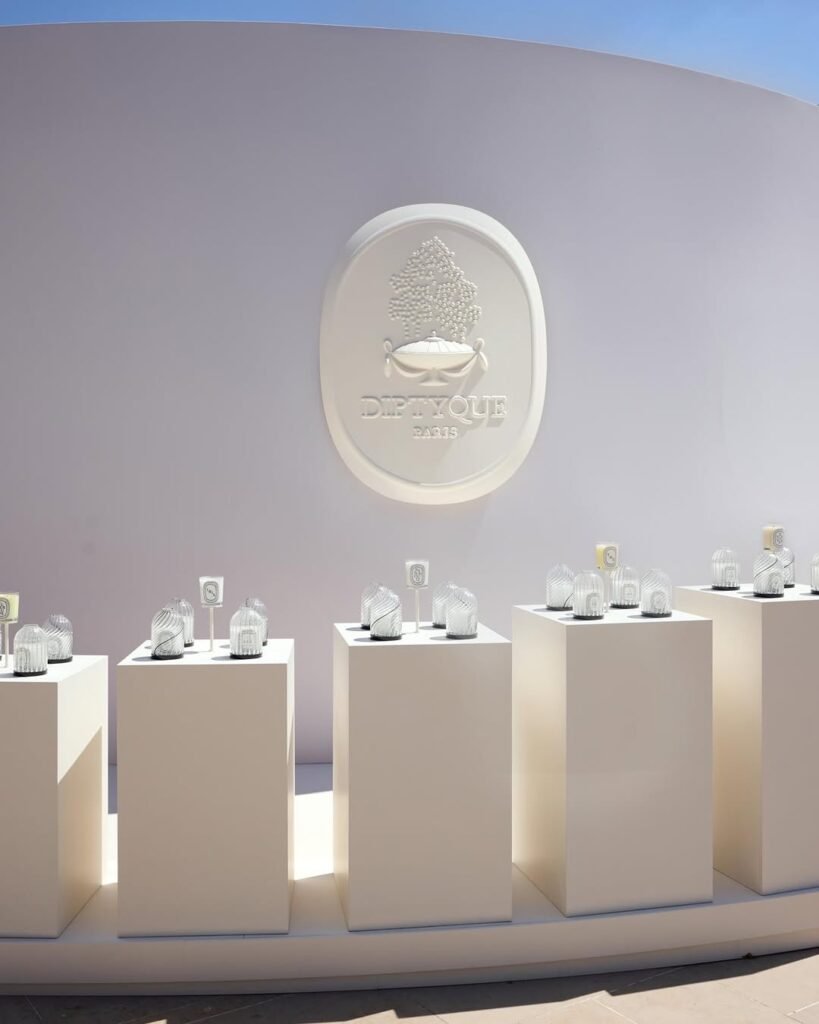
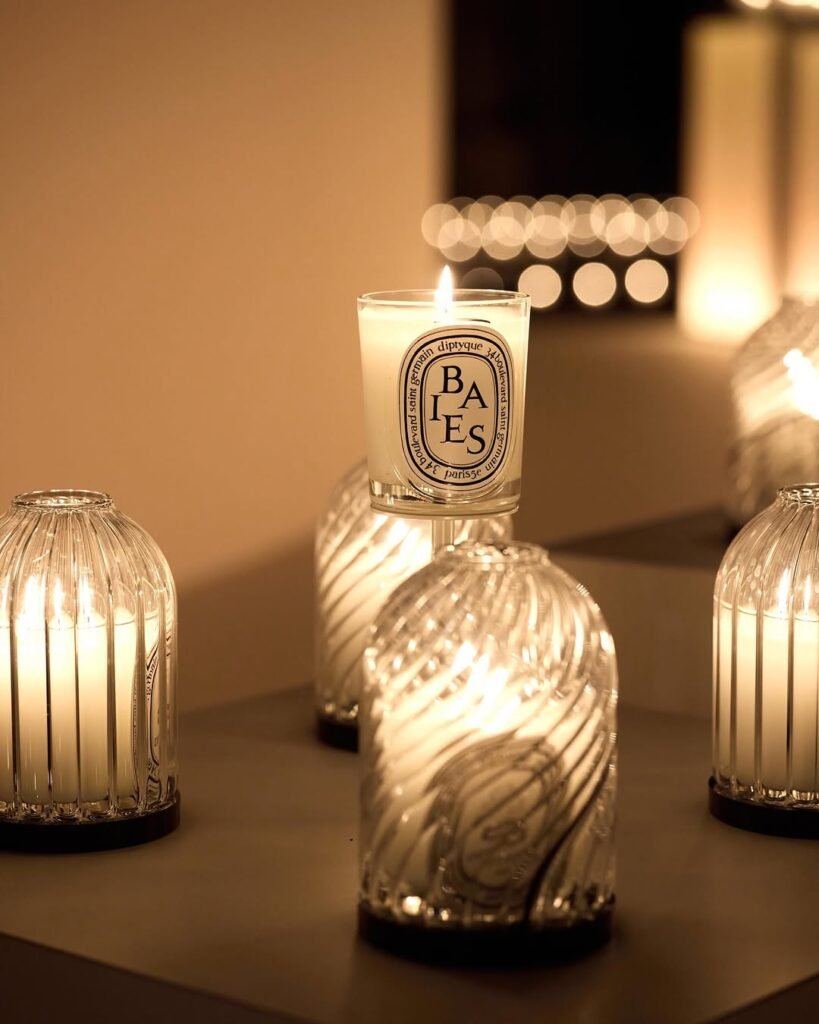
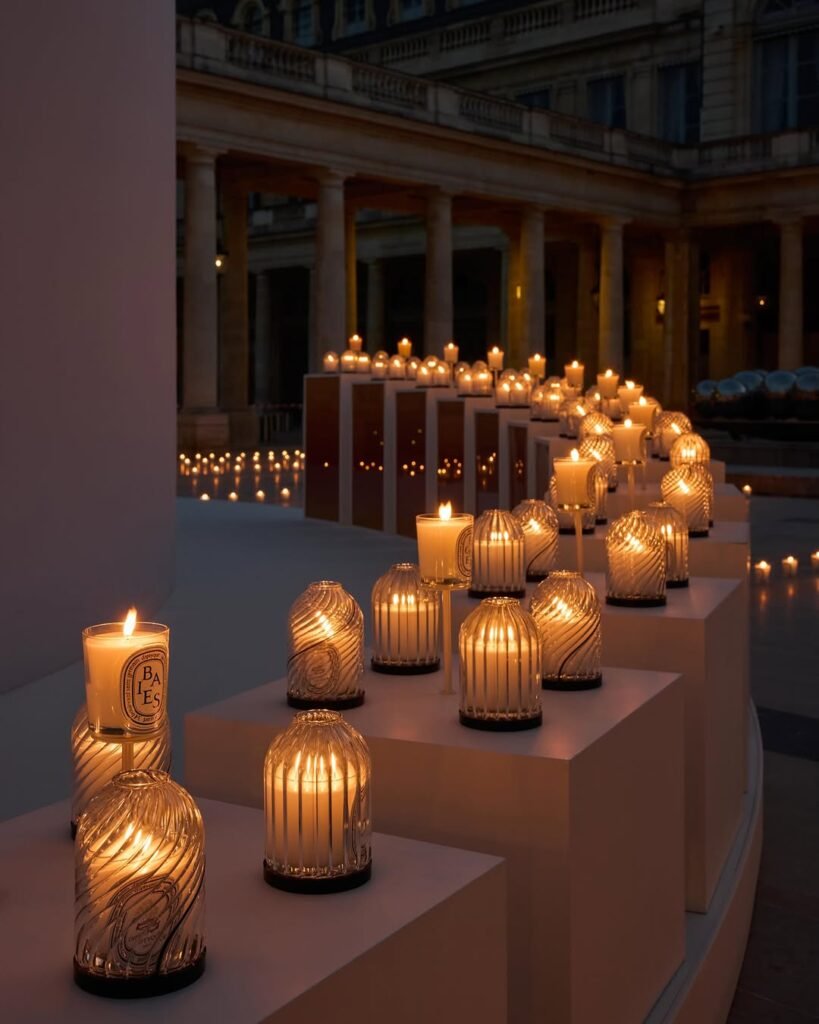
The restraint is everything. Visitors enter through a labyrinthine walk shaped from the brand’s signature oval, its curved walls washed in a soft peach-to-white gradient that glows as the light shifts. Candles sit raised on pale plinths in fluted and swirl-blown glass holders, each one labelled with its scent like wall text in a gallery, Baies, Figuier, Patchouli, Thé. At the centre stands a smooth oval drum stamped with the embossed Diptyque medallion, and inside it a time-lapse film reveals a single candle burning down in its own slow, organic, almost hypnotic temporality. The chrome spheres of Pol Bury’s permanent courtyard fountain catch the light. Black berries, fig and smoked wood drift through the air. The effect is less retail moment and more secular chapel.
What makes it clever is what it refuses to do. This is the year Diptyque reinvented its most sacred object. The classic candle, first poured in 1963 at 34 Boulevard Saint-Germain, has been redesigned for the very first time, by Franco-Swiss designer Julie Richoz, who added a subtle oval ridge to the glass and sharpened the heritage label. More significantly, the vessel is now lighter and refillable, with a lower-carbon insert system arriving later this year. The CEO Laurence Semichon, has called it a soft lifting of the icon.
A redesign and a refill programme are not, on their own, romantic. A sampling booth would have said new candle and little else. So Diptyque built an artwork about time instead, and let the meaning arrive on its own.
That choice is the part worth stealing. By staging an exhibition rather than an activation, with nothing to buy and nothing to queue for, the brand moves the candle’s value from owning it to spending time with it. The luxury is no longer the object on the shelf. It is the ritual, the suspended hour, the permission to do nothing but watch wax become light. And that reframing happens to future-proof a refillable product beautifully. If the ritual is what you treasure, you keep the vessel and rebuy the wax for years. The slowness sells the sustainability, and neither feels like a sales pitch.
It helps that the form is true to the house. Diptyque was founded in 1961 by three artists, a stage designer, an interior designer and a painter, so an exhibition is not a costume here. It is a return to type. The Palais-Royal does the rest, lending centuries of stillness to a courtyard Diptyque barely had to decorate, only to light.
There is a wider shift underneath all of this. As brand experiences everywhere get louder, faster and built for the algorithm, the most covetable thing a luxury house can now offer is the opposite. Calm. Slowness. A reason to put the phone down, even as the candlelight makes you want to pick it back up. Diptyque understood that its oldest product was already selling time, and simply built a world large enough to let people feel it.
Light on, time off. For two days, the greatest luxury in Paris was learning how to wait.
For more of the experiences worth crossing a city for, The Creatives Crush posts a new one every day.