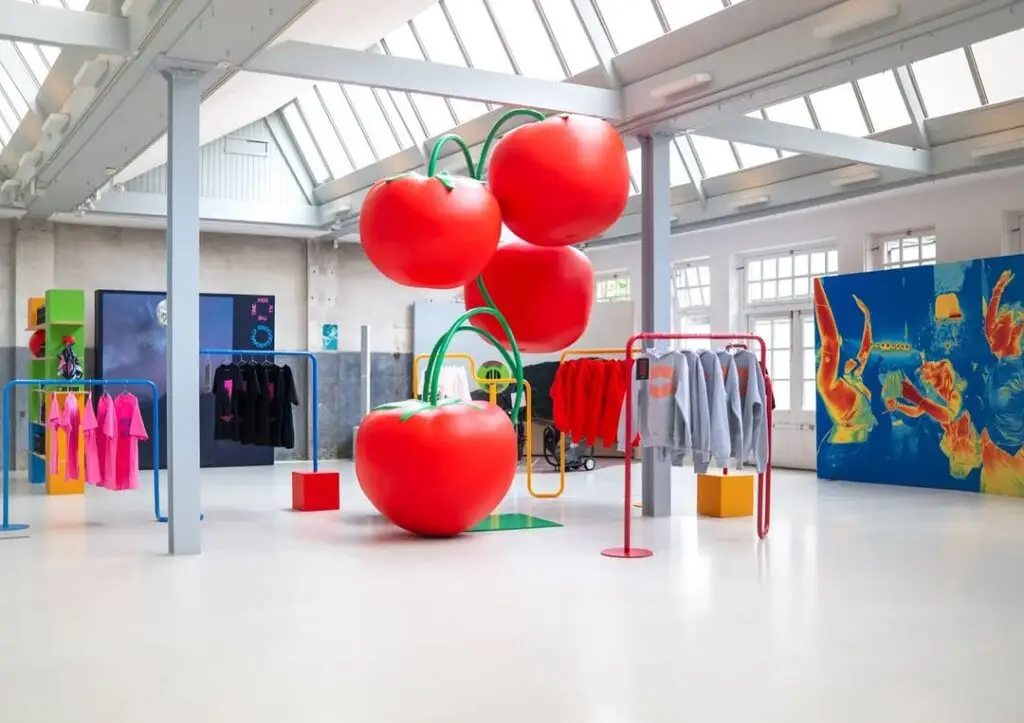
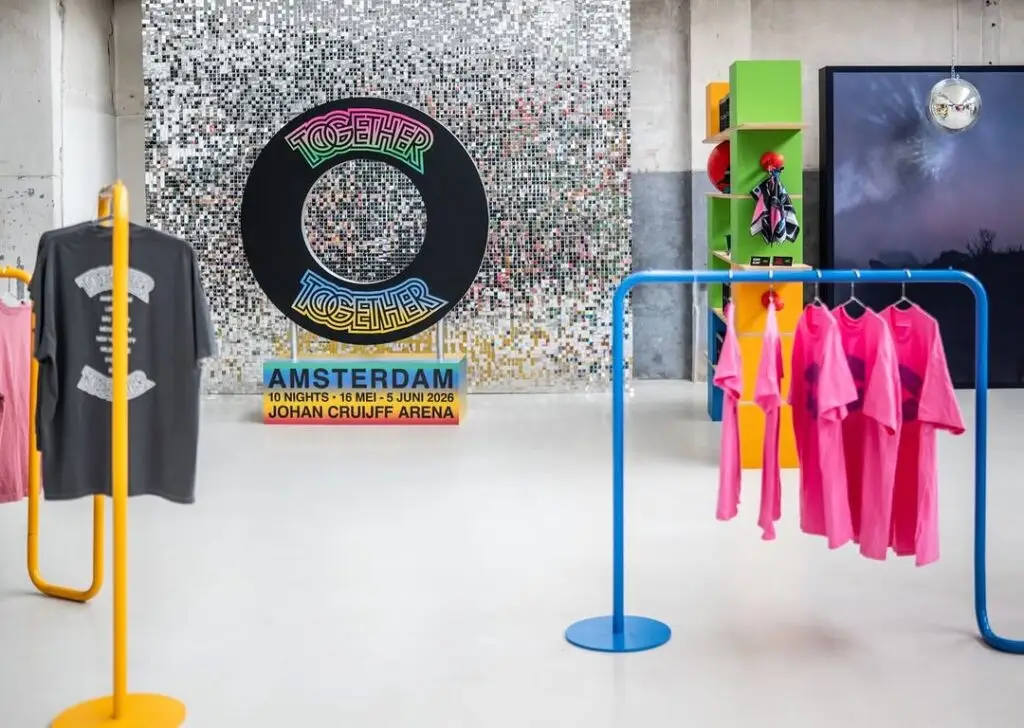
You walk in and a cluster of glossy red tomatoes the size of beach balls is growing straight out of the floor, stem and all, with clothing rails curving around it in primary-coloured tubing. Nothing about that says retail in the conventional sense, and that is exactly the point. This is the official Together, Together tour shop in Amsterdam, the one fans queued five hours to enter on opening day, and it behaves less like a place to buy a hoodie and more like a set you get to walk through.
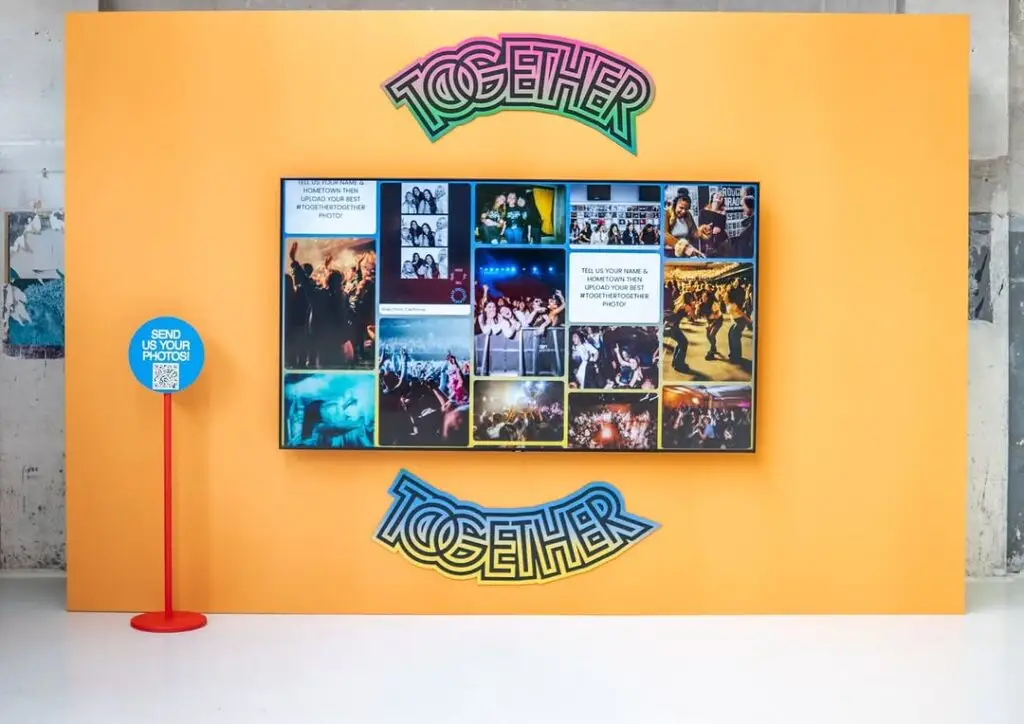
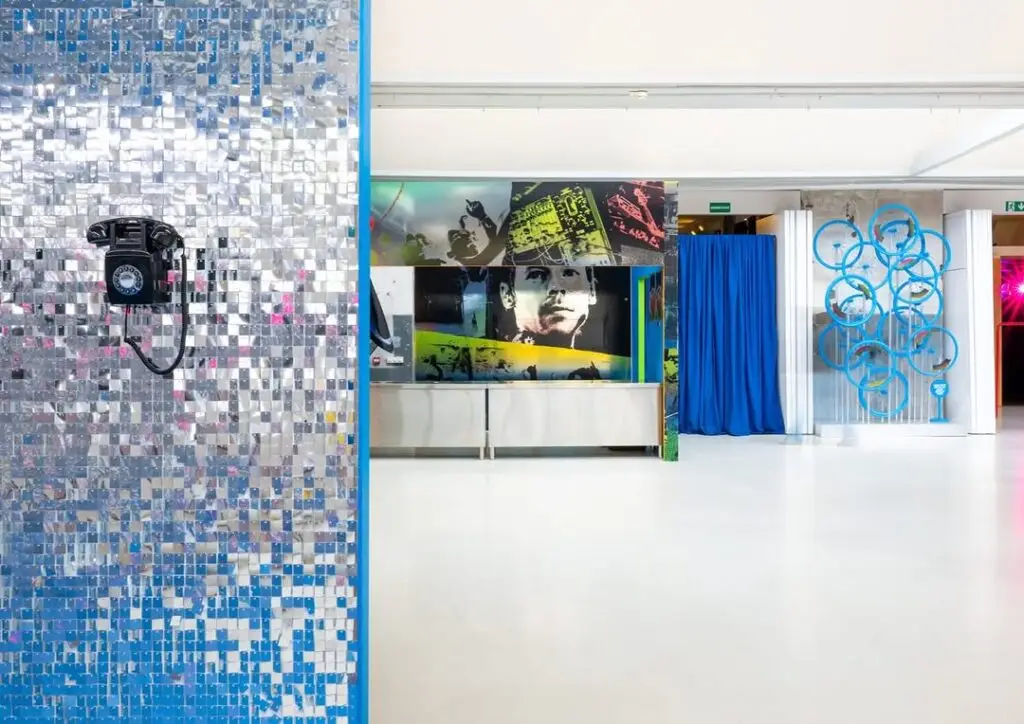
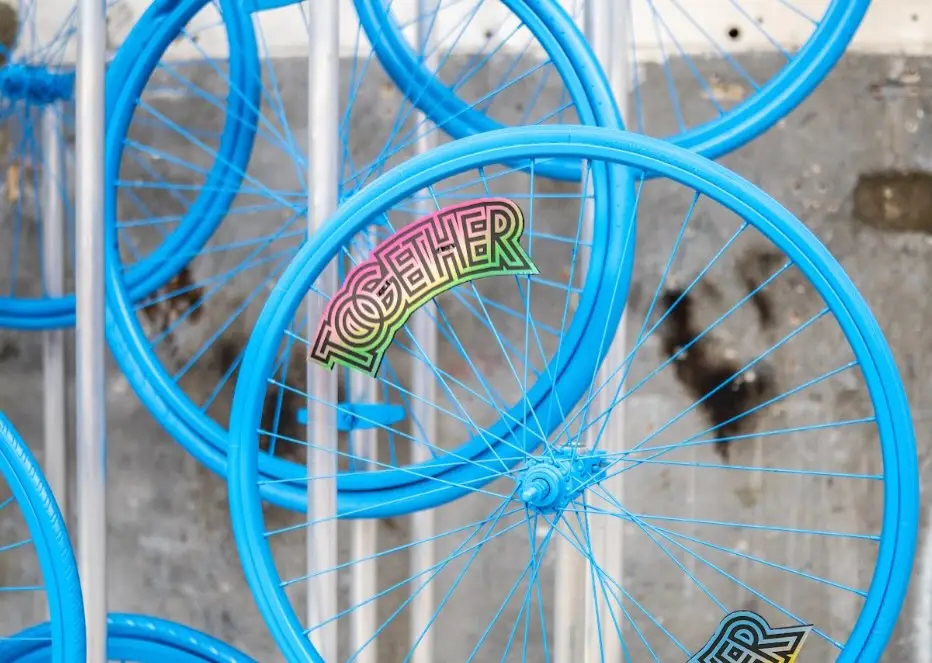
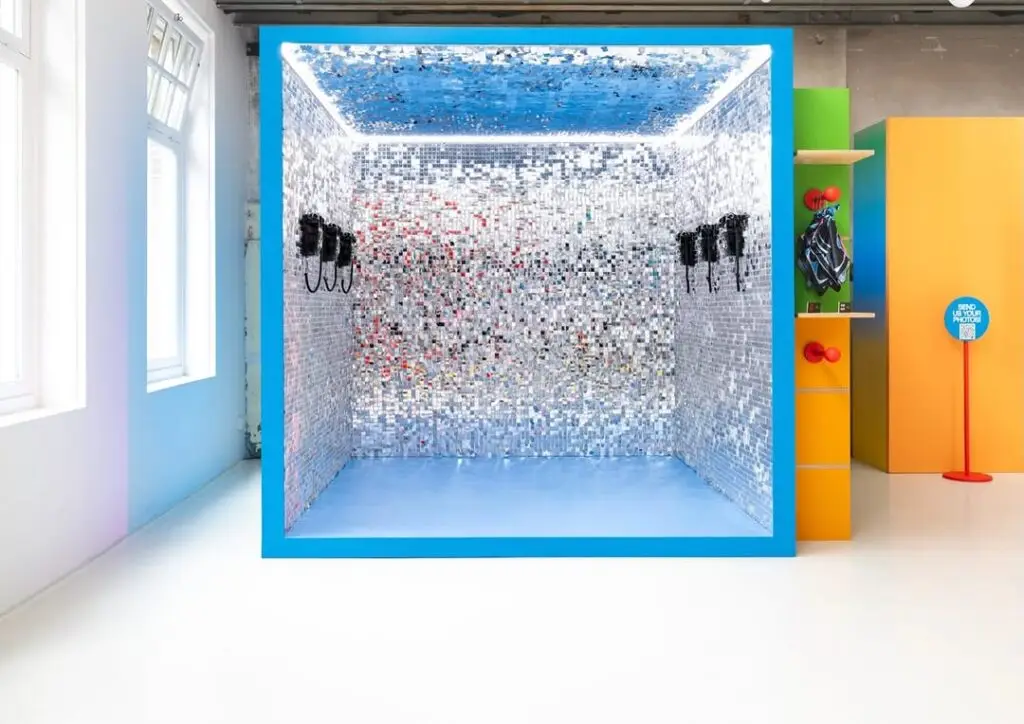
The space keeps escalating. There’s a room tiled top to bottom in shimmering sequins that catch every flicker of light, with vintage black rotary telephones mounted on the wall, the kind of detail that makes you stop and work out whether you’re meant to lift the receiver. A wall of bright blue bicycle wheels stacks into a sculptural grid. A photo board invites visitors to send in their own crowd shots, turning the audience into the content. Across all of it, the word “Together” runs in fat graffiti lettering that shifts from hot pink to acid green, a piece of type that has quietly become the identity of the whole tour.
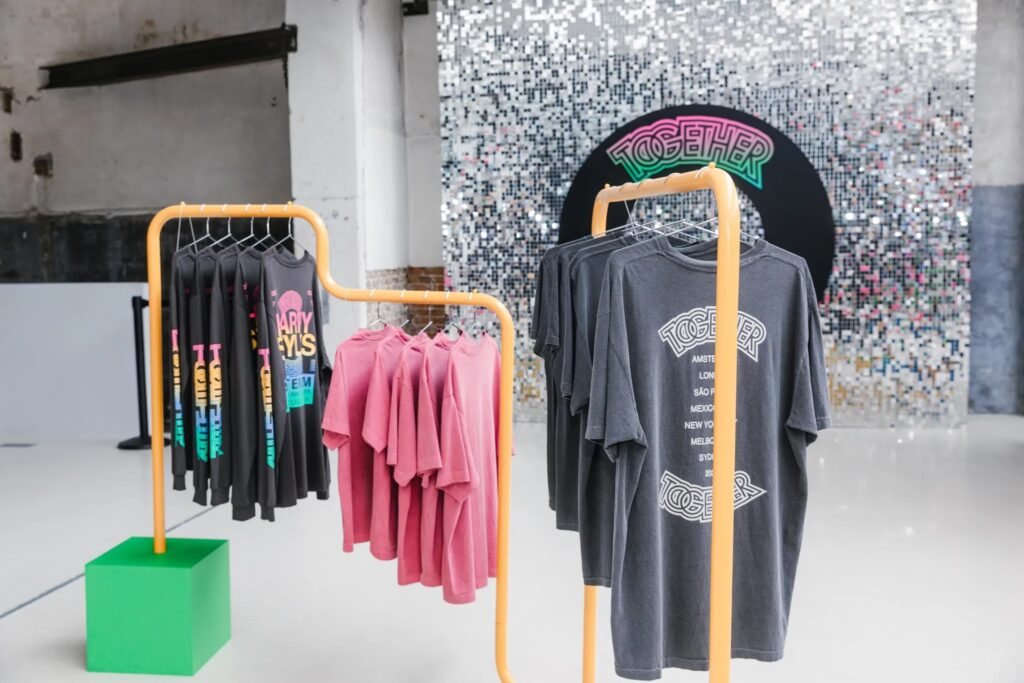
What lifts this above the usual pop-up is how little it leans on the merchandise to do the work. The clothing is there, racked on cheerful yellow and blue rails, the grey tour tees with their city lists, the washed pink crewnecks, the album artwork repeated across hats and totes. But the room never lets the product be the headline. The product is something you find while you are busy being somewhere, and that reordering of priorities is the entire design philosophy on show.
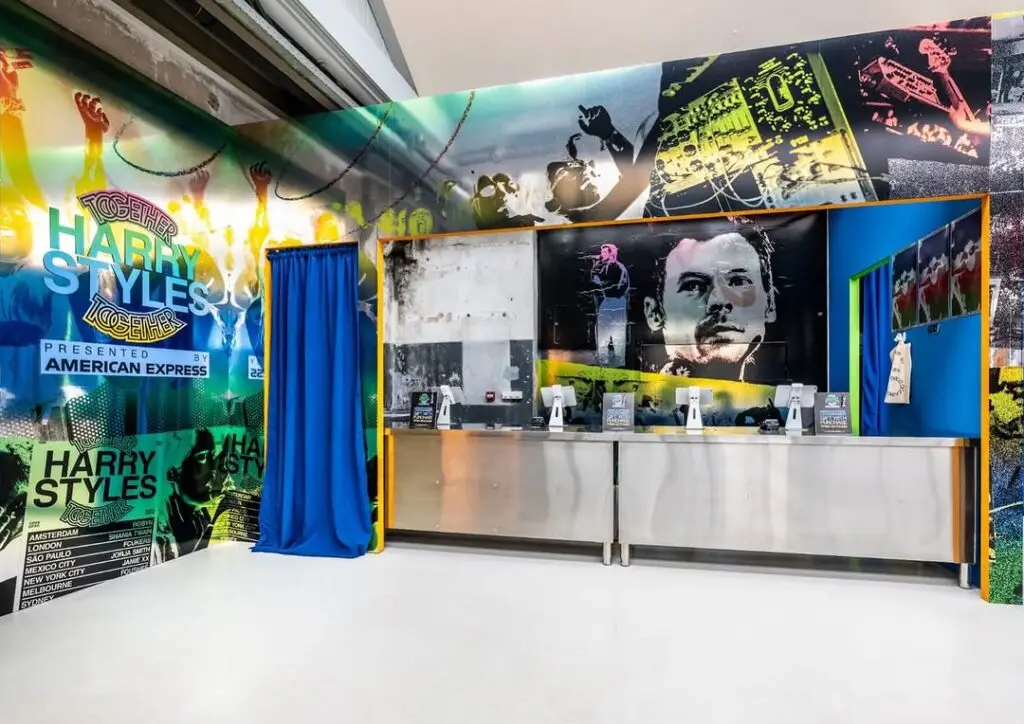
It pays off in the queue. Opening day saw a five-hour line snaking down the street, two days before the residency kicked off at the Johan Cruijff Arena, and midweek waits still ran to around three hours. People did not treat that as dead time. They arrived in sequins, feather boas and DIY tie-dye, some in vintage tees from tours years past, dressing for the shop as though it were the show itself. When the wait becomes part of the fun, you have stopped running a store and started running an event.
There is a real shift underneath the spectacle. For years, tour merch was a back-of-house operation, a trestle table and a card reader designed to move volume as fast as possible. That model still exists, but it is no longer where the cultural energy sits. The energy is in spaces like this, where the architecture is built to be photographed, where every corner is a backdrop, and where the brand understands that a fan who spends an hour inside will carry the place home in their camera roll and post it for free.
The genius is in treating devotion as a design input. This audience was always going to buy the hoodie. So the space spends its effort somewhere more valuable, on giving people a reason to feel something in the room and a hundred images worth sharing once they leave. The merch sells itself. The experience is what travels.
That is the lesson worth taking well beyond the world of pop. Fan retail, brand activations, flagship openings, all of it is converging on the same realisation. People do not queue for products. They queue for places that make them feel part of something, and the smartest brands are building rooms that earn that feeling before they ever ask for the sale.
The most quotable idea here is the simplest one. Design the world first, and let the product live inside it. Harry’s tour shop got that completely right, and the five-hour line is all the proof anyone needs.