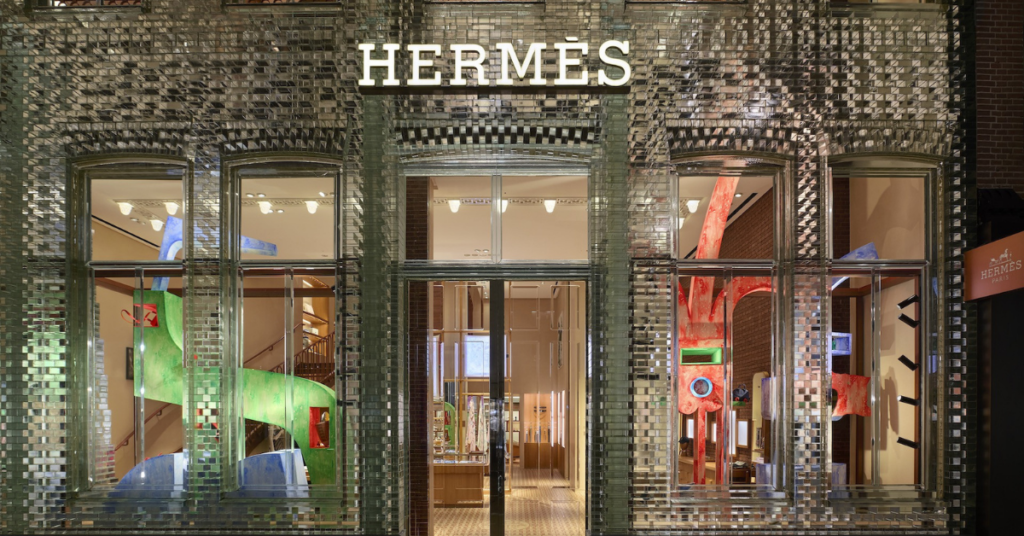
For a brand that famously claims it does not rely on marketing, Hermès continues to understand the power of visual storytelling better than almost anyone in retail. Its latest window installation in Amsterdam transforms the boutique on P.C. Hooftstraat into a dreamlike illustrated world where sculpture, drawing, architecture, and product display merge into one immersive composition. Created in collaboration with Romanian American artist Serban Ionescu, the installation titled The Still City takes over the boutique’s windows with towering hand painted forms in vivid coral, green, and powder blue, creating what feels less like visual merchandising and more like a contemporary public artwork sitting directly inside the retail environment.
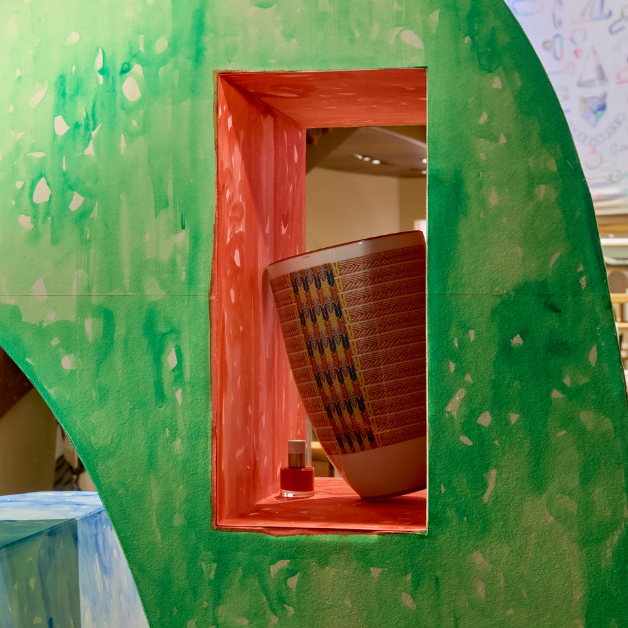
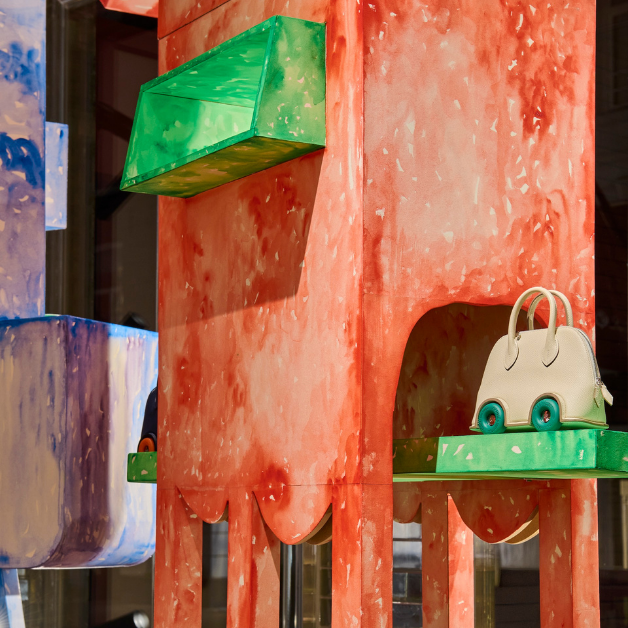
The scale of the installation is what immediately pulls people in. Gigantic abstract structures stretch vertically through the windows and rise behind the boutique’s iconic glass brick façade, their shapes somewhere between architecture, cartoon figures, furniture, and surreal urban monuments. Small carved openings throughout the sculptures hold Hermès bags, shoes, beauty products, and accessories like tiny theatrical stages embedded within the larger forms. The products never feel randomly placed or over styled. Instead, they appear almost discovered within the installation, allowing the windows to maintain their sculptural integrity while still functioning as luxury retail displays. That balance is incredibly difficult to achieve and Hermès makes it look effortless.
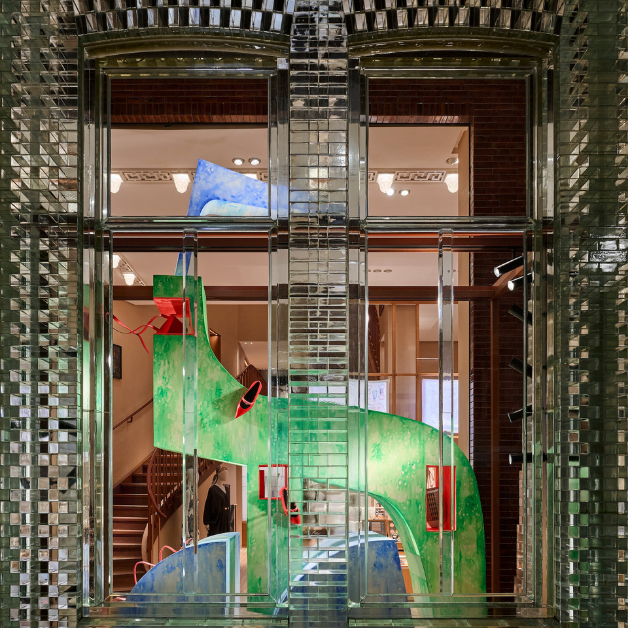
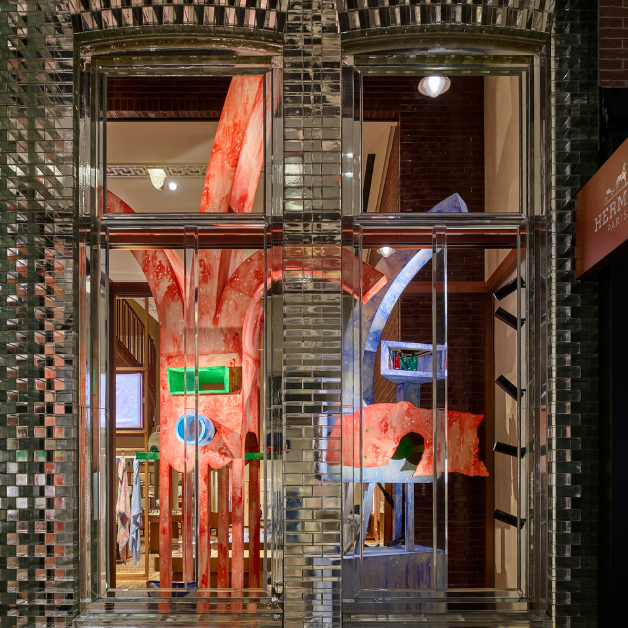
What makes these windows especially compelling is the contrast between the polished permanence of the boutique and the expressive, almost childlike quality of Ionescu’s work. The surfaces are wrapped in hand painted watercolour paper textures that intentionally preserve imperfections, brush marks, and tonal inconsistencies, giving the structures a softness and humanity that feels increasingly rare in luxury retail design. Rather than chasing hyper minimal perfection, the installation leans into imagination, spontaneity, and emotion. The result feels deeply artistic without becoming inaccessible or pretentious. It captures the kind of visual curiosity that makes someone stop walking and genuinely look.
The collaboration also reflects a much larger reason why Hermès continues to hold such cultural relevance beyond product alone. While many luxury brands are heavily focused on celebrity campaigns and digital visibility, Hermès consistently invests in artists, makers, illustrators, and scenographers to shape the physical experience of the brand. Every window, scarf illustration, exhibition, and boutique intervention reinforces the idea that creativity itself sits at the centre of the Hermès universe. These Amsterdam windows are not simply seasonal decorations. They are part of a wider brand philosophy that treats retail as a cultural and artistic platform rather than just a commercial one.
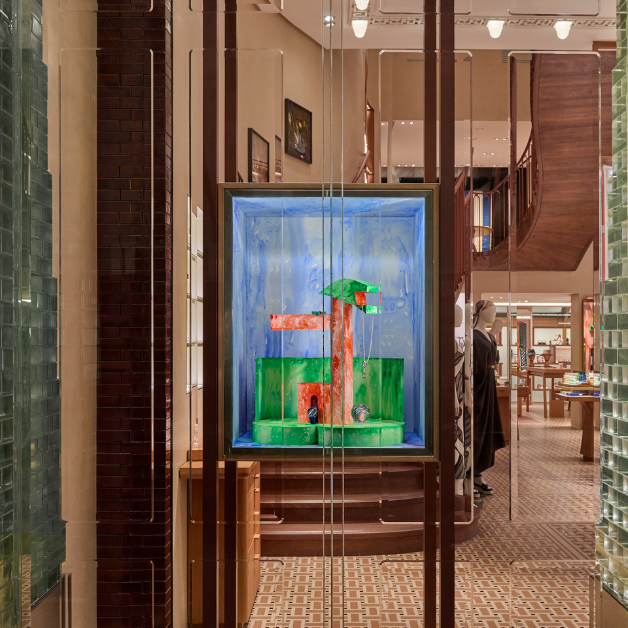
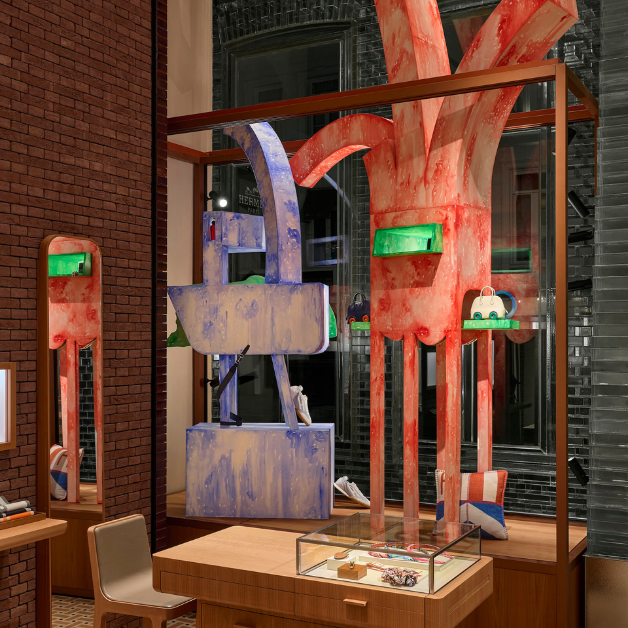
There is also something particularly refreshing about seeing a luxury brand embrace humour and imagination so openly. Ionescu’s work has long explored playful forms inspired by doodles, cartoons, and instinctive drawing, and that energy translates beautifully here. Some structures resemble strange creatures wandering through the windows while others feel like fragments of a fantastical city emerging from another world entirely. Yet despite the surrealism, the installation still feels elegant and unmistakably Hermès. That ability to experiment creatively while maintaining an incredibly strong brand identity is something very few luxury houses manage successfully.
In many ways, The Still City also proves why physical retail still matters so deeply. In an era dominated by screens and endless digital campaigns, there is enormous value in creating moments that people can encounter unexpectedly in the real world. These windows do not ask for attention through noise or spectacle alone. They reward observation. From across the street, the installation reads as monumental abstract sculpture. Up close, you notice tiny product placements, layered textures, reflections bouncing through the glass brick façade, and carefully framed compositions that shift depending on where you stand. It turns a simple act of passing a storefront into something memorable.
That is ultimately what makes Hermès so consistently strong in the world of visual merchandising. The brand understands that retail environments should not only sell products. They should create atmosphere, spark emotion, and build desire through imagination. The Amsterdam installation succeeds because it feels culturally driven rather than commercially forced. It trusts creativity to do the work, and in doing so, reminds everyone why Hermès windows remain some of the most influential in luxury retail today.