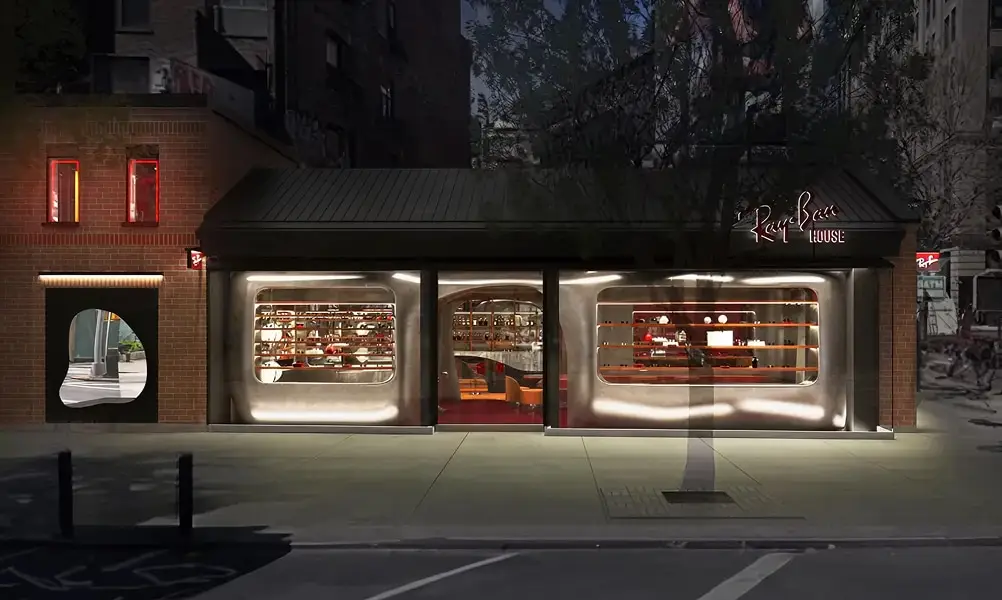
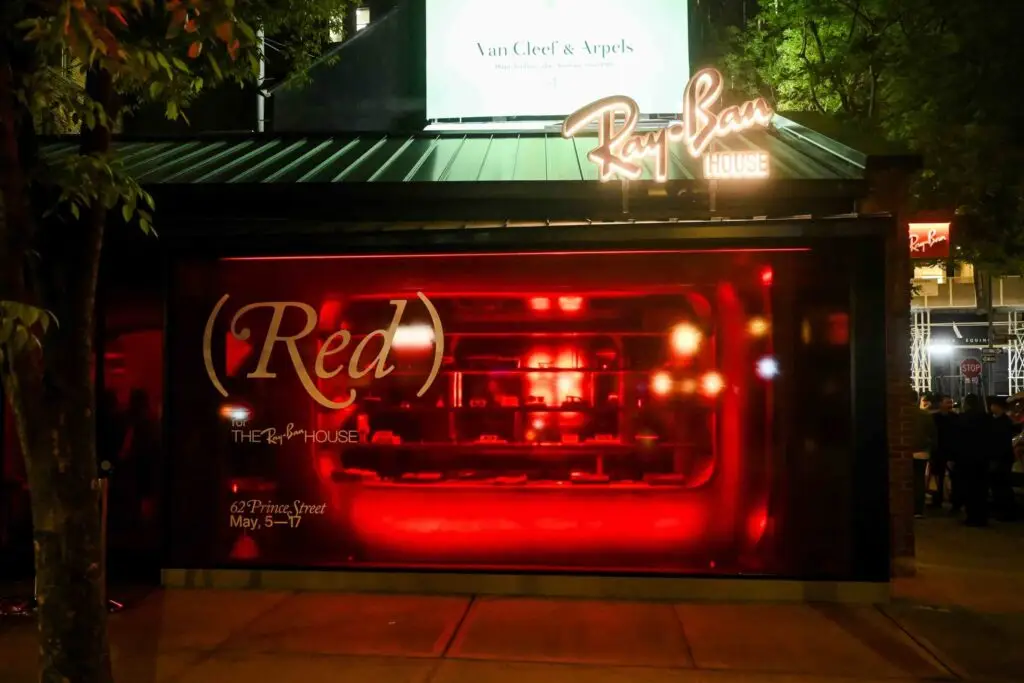
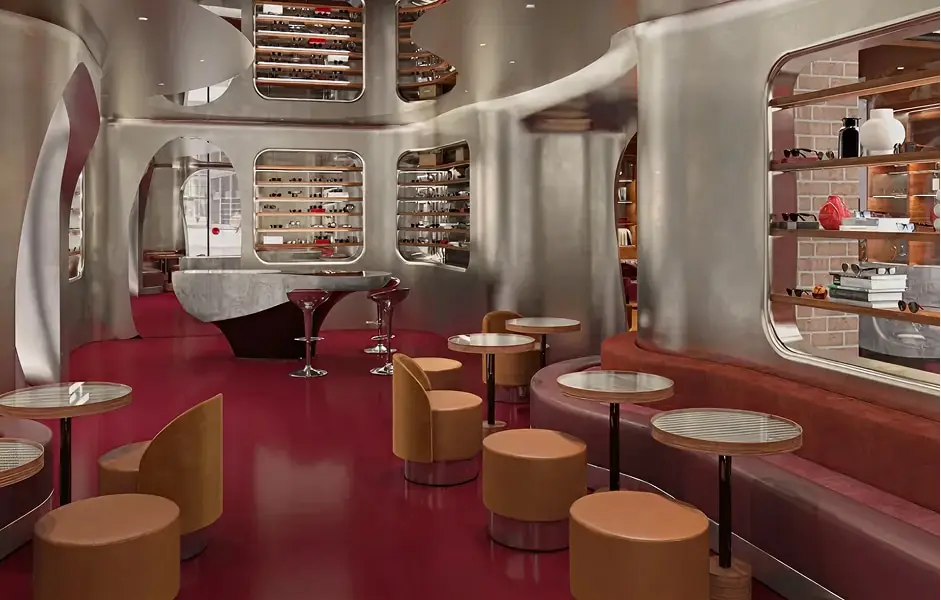
Soho has seen its fair share of brand takeovers, but Ray-Ban House feels different. Sitting on the corner of Prince and Lafayette, the eyewear giant’s new experiential concept pushes far beyond the idea of a flagship store. From the street, the space glows like a neon red portal dropped into downtown Manhattan. The windows pulse with saturated light, mirrored surfaces bounce reflections across the interior and curved metallic walls create something that feels part retro lounge, part sci-fi film set, part private members club. It’s immersive from the second you walk past it, which is exactly the point.
The concept opened during Met Gala week and immediately positioned itself as one of the city’s most talked about brand destinations. Ray-Ban launched the space with an exclusive afterparty attended by JENNIE alongside a live performance from Oscar and the Wolf, turning the opening into a cultural moment rather than a standard retail debut. The decision says a lot about how the brand sees itself evolving. This is no longer simply about eyewear. It’s about creating a complete world around the brand and inviting people to spend time inside it.
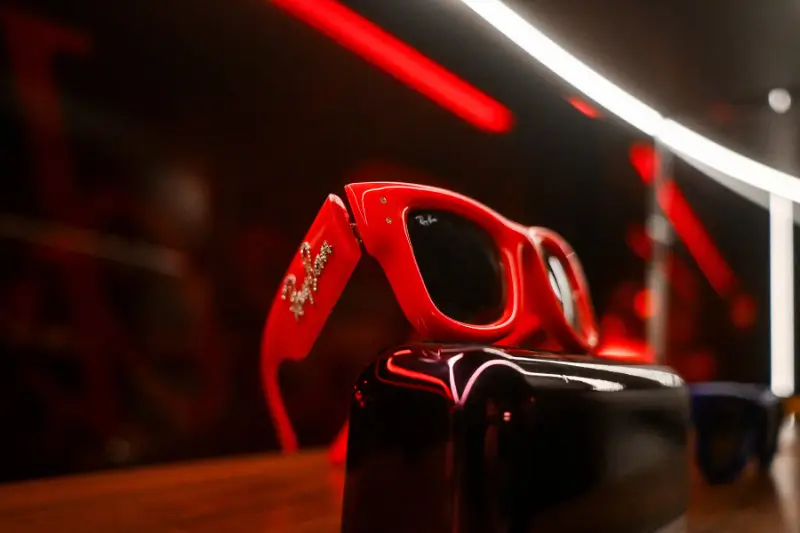
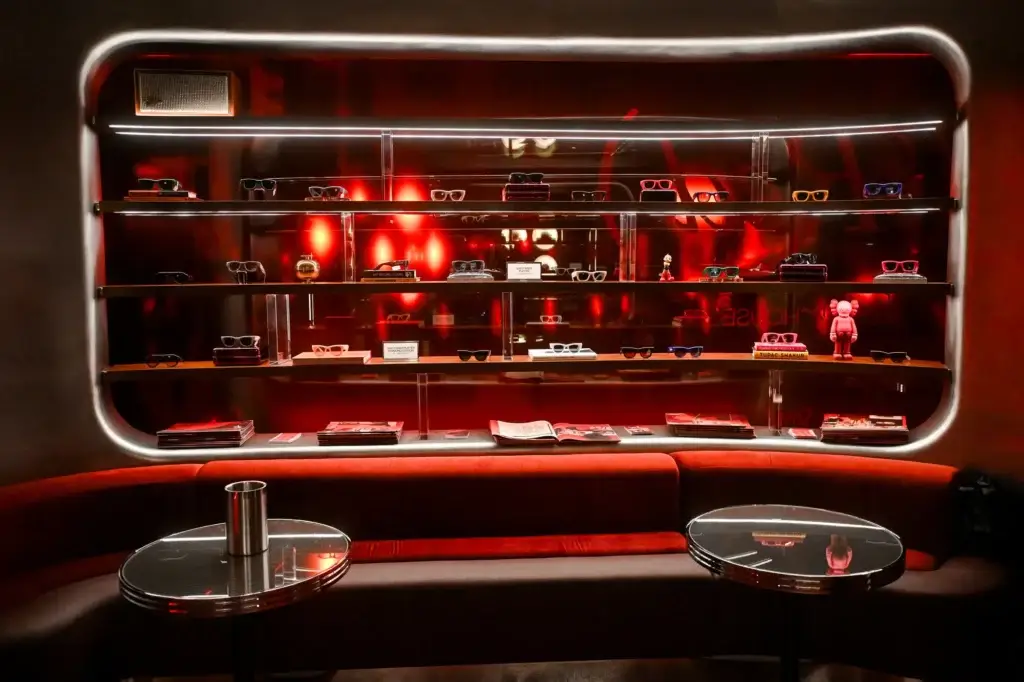
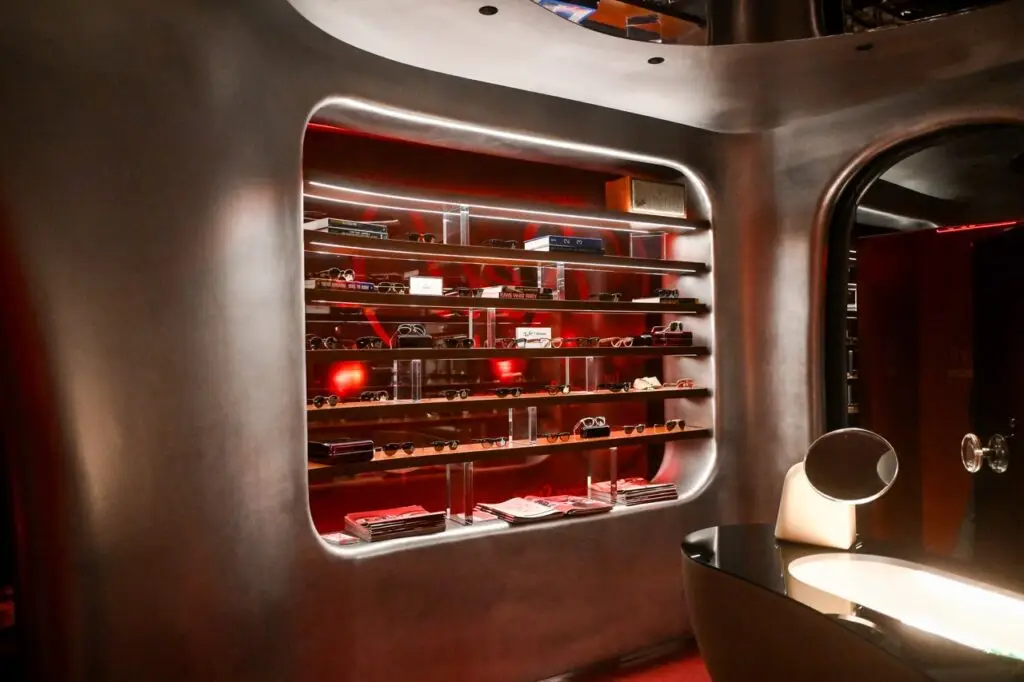
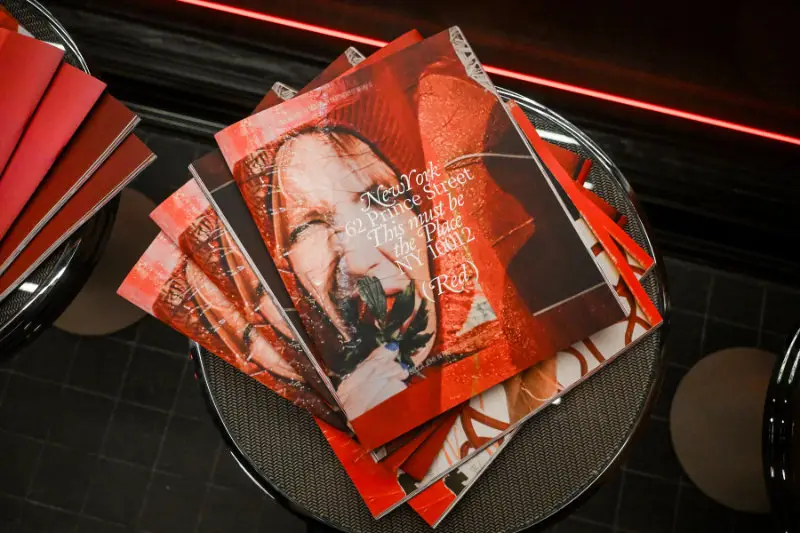
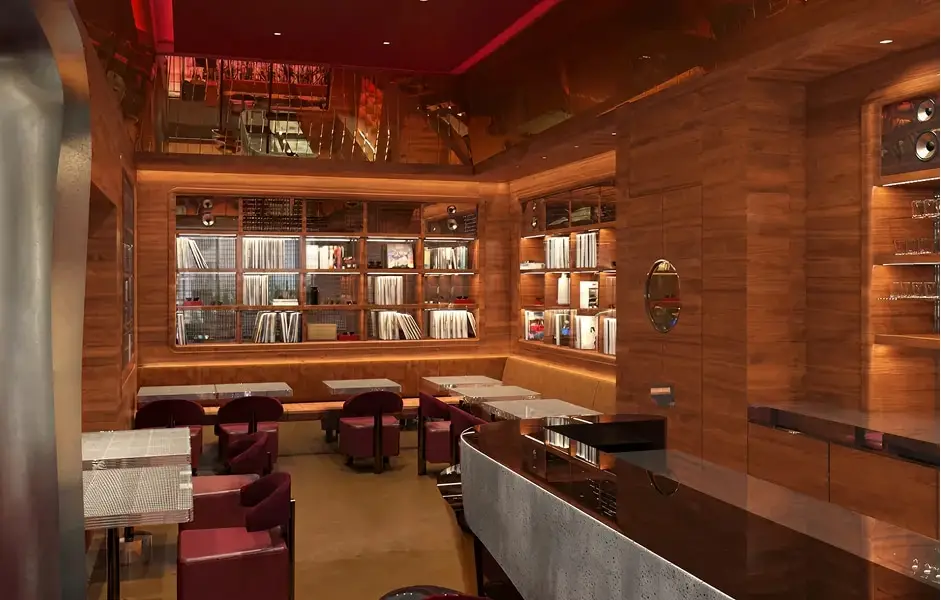
The two-storey Soho townhouse has been designed as a hybrid environment where retail, hospitality, music and culture collide under one roof. Sunglasses sit alongside vinyl records, design books and curated objects, creating an atmosphere that feels intentionally lived in rather than overly merchandised. The product becomes part of the environment instead of dominating it. Every detail inside the space has been considered through the lens of mood and experience rather than traditional retail functionality.
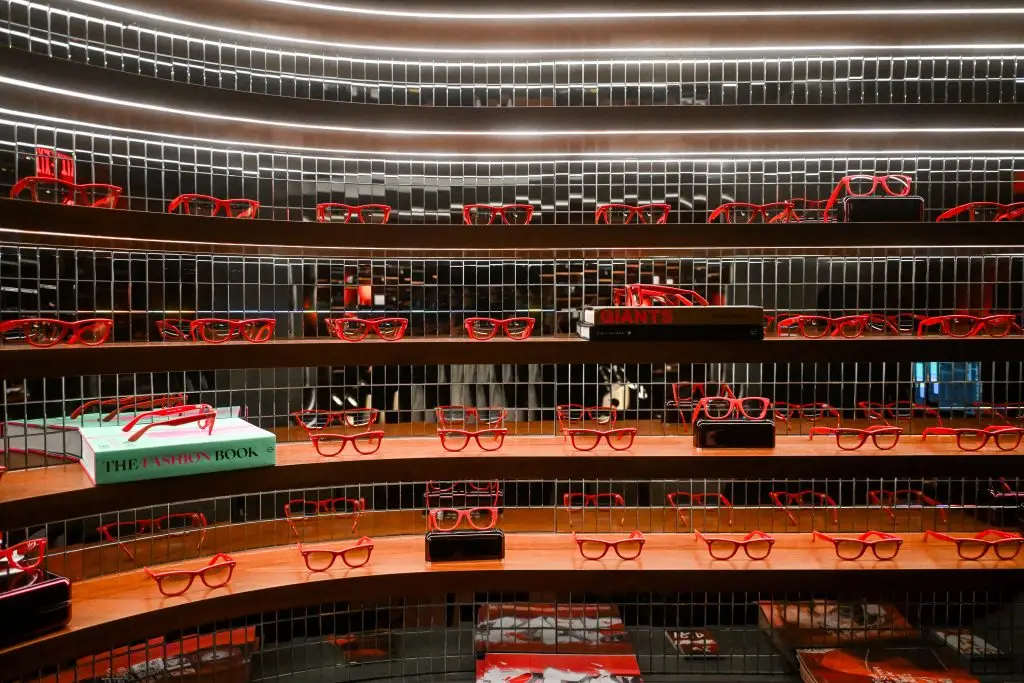
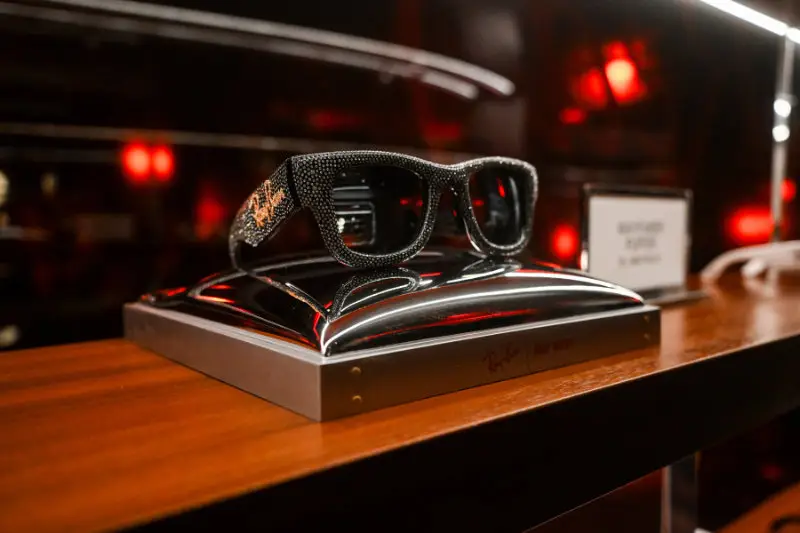
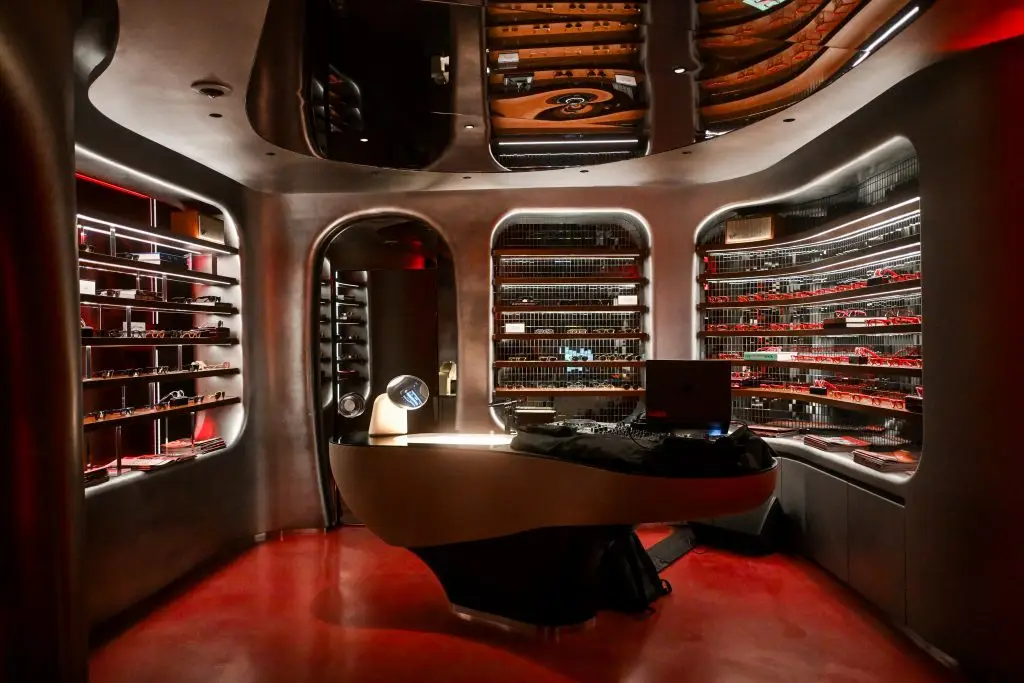
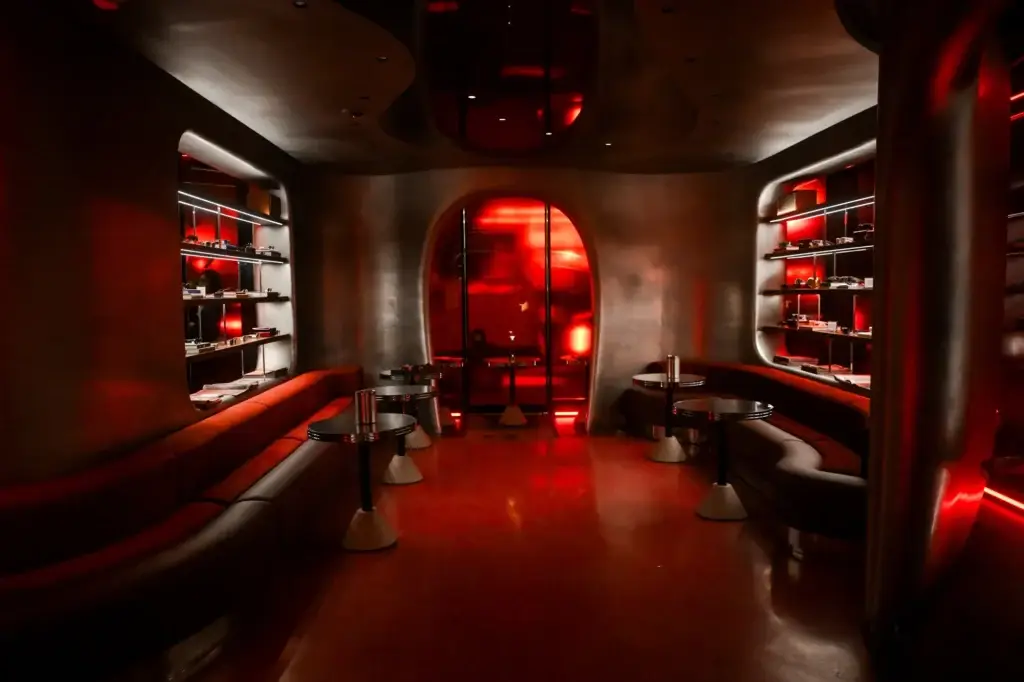
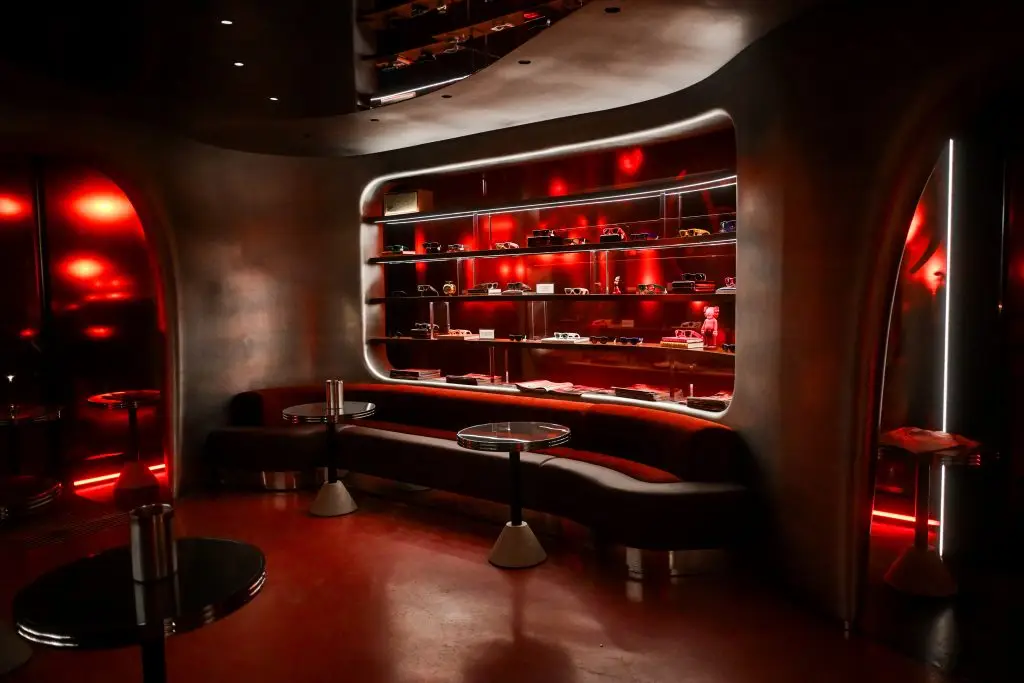
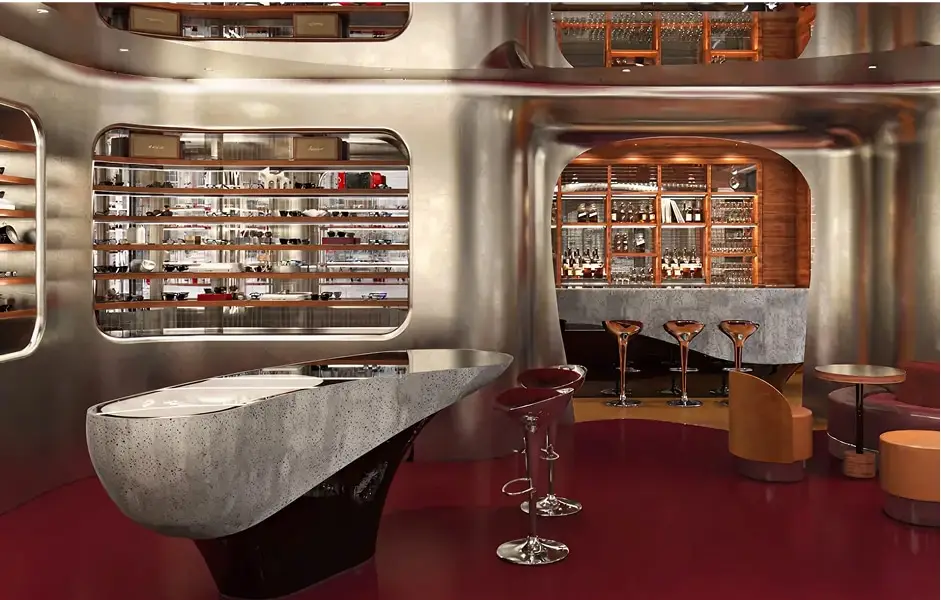
Visually, the interiors lean heavily into deep crimson tones, reflective chrome finishes and soft futuristic curves. Display shelving is embedded directly into sculptural walls outlined with glowing light strips, while rounded seating booths and mirrored ceilings make the entire space feel cinematic and slightly surreal. There’s a strong nod to downtown New York nightlife running throughout the concept. It feels moody, seductive and unapologetically cool without ever crossing into feeling forced or overly theatrical. Even the lighting has been designed to feel atmospheric rather than purely practical, casting reflections and shadows across the metallic finishes in a way that constantly shifts as people move through the space.
The layout itself encourages visitors to slow down and spend time there. Rather than moving customers quickly through a conventional sales floor, Ray-Ban House invites people to sit, browse, eat, socialise and absorb the environment around them. Guests can book private styling appointments, explore limited-edition frames or simply settle into the lounge areas while music moves through the space. It reflects the wider shift happening across fashion and luxury retail where stores are increasingly being designed as destinations built around emotional connection and cultural relevance rather than straightforward transactions.
The hospitality offering pushes that strategy even further. Inside the space, Ribalta founder and chef Pasquale Cozzolino leads an all-day food concept centred around Japanese milk bread sandos reinterpreted through an Italian lens. Guests can order everything from prosciutto and burrata sandwiches to raw bar dishes, carpaccios, matcha and cold-pressed juices. It’s the kind of menu designed for the rhythm of Soho itself, working equally well as a quick daytime stop or somewhere to settle into later in the evening. Instead of feeling like an added extra, the food concept has been integrated naturally into the overall experience of the space.
What makes Ray-Ban House particularly interesting is that it doesn’t rely purely on visual spectacle. While the interiors are undeniably striking, the real success of the concept lies in how usable and inviting the environment feels. A lot of experiential retail today still feels heavily built for social media, designed more for quick content capture than genuine connection. Ray-Ban House manages to avoid that trap by creating a space people would actually want to return to. The curved seating, intimate lighting and layered materials stop the interiors from feeling cold or gallery-like, giving the concept a sense of warmth underneath all of the futuristic design references.
There’s also something notable happening in the way eyewear brands are beginning to approach physical retail spaces more broadly. Over the last few years, brands like Gentle Monster have transformed stores into immersive art installations, blurring the line between retail and exhibition design. Ray-Ban’s approach feels slightly different. Instead of leaning fully into surrealism, the brand has built a lifestyle-focused environment that feels grounded in hospitality, music and community. The result is a concept that feels more connected to everyday city life rather than existing purely as a visual installation people visit once for photos.
The Soho location plays a huge role in why the concept works so well. The neighbourhood already thrives on the overlap between fashion, nightlife, food and culture, making it the ideal backdrop for a space like this. Ray-Ban House doesn’t feel disconnected from its surroundings or dropped into the area as a marketing stunt. It feels designed specifically for the energy of Soho and the people moving through it every day. That connection to place gives the project far more authenticity than many experiential retail concepts manage to achieve.
More than anything, Ray-Ban House signals where physical retail is continuing to move next. Brands are recognising that consumers no longer visit stores simply to purchase products. They visit for atmosphere, entertainment, interaction and emotional connection. The spaces people remember now are the ones that create a feeling, not just a transaction. Ray-Ban understands that shift completely. Because while the sunglasses may still be the reason people walk through the door, the experience of being inside the space is ultimately what leaves the lasting impression.