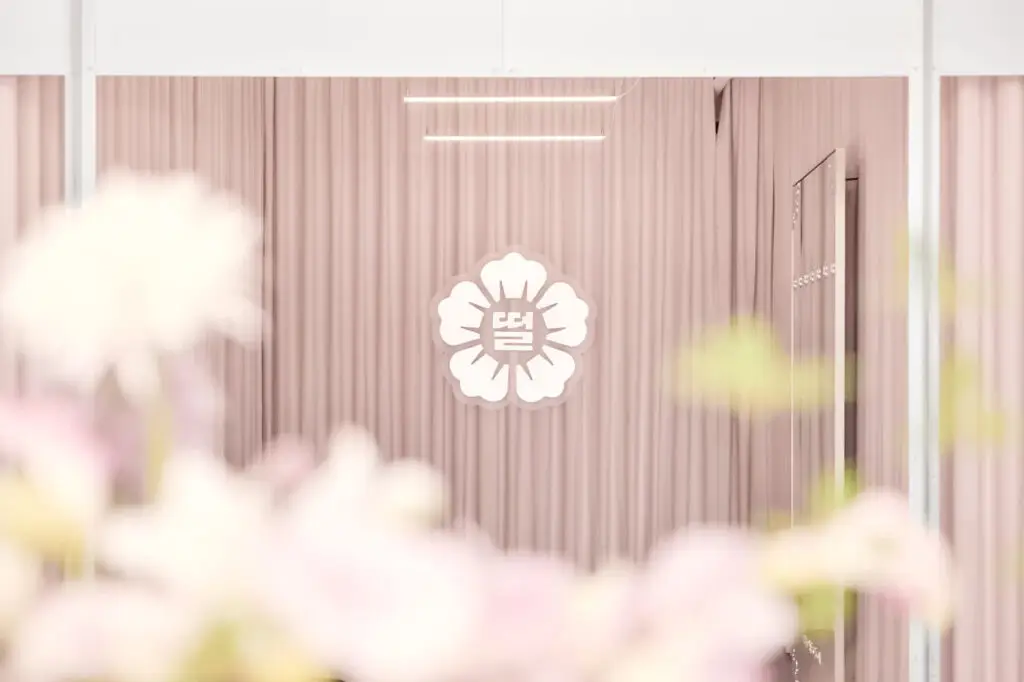
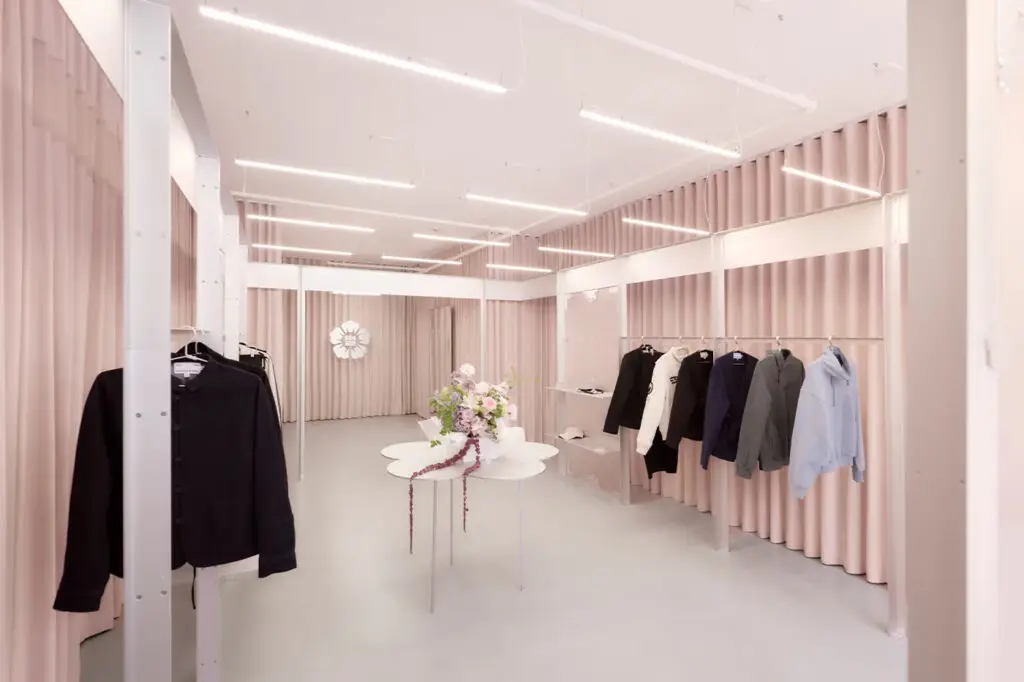
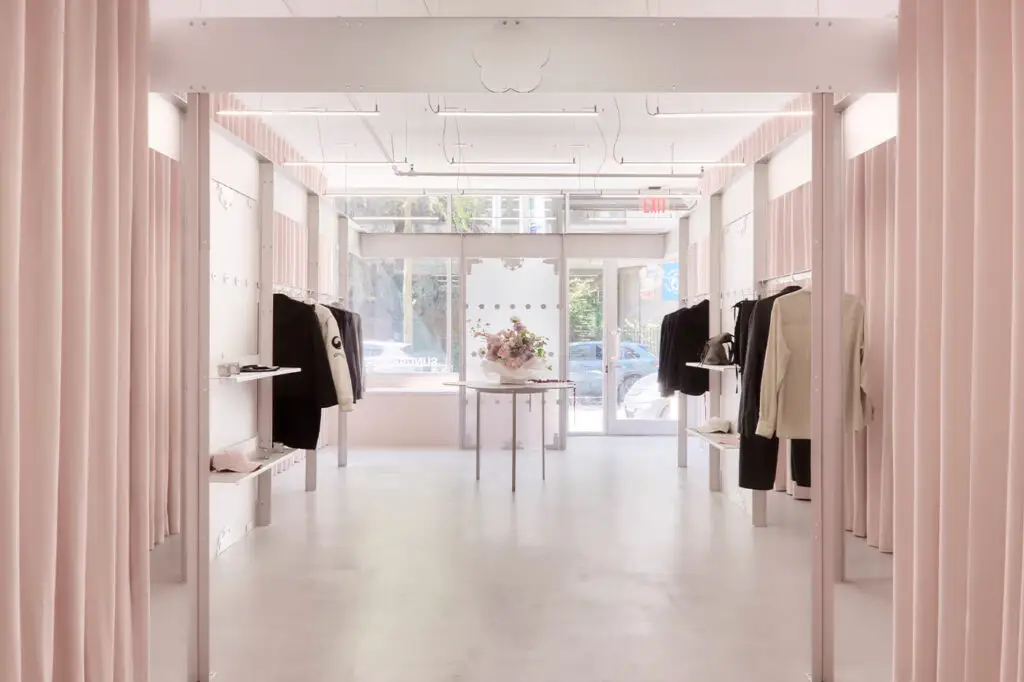
There’s a space in Chinatown that stops you before you even get through the door. Floor-to-ceiling pastel pink curtains visible from the street. Metal pillars and gates framing the entrance like a threshold you’re supposed to notice. It doesn’t look like retail. It doesn’t feel like retail. That’s entirely the point.
Sundae School, the Korean American streetwear label founded by Dae Lim in 2018, just opened its first permanent physical location, and it’s about as far from a typical brand flagship as you can get. No maximalist product walls. No hype-fuelled drop energy. Just 500 square feet of quiet intention in the middle of one of New York’s most chaotic neighbourhoods.
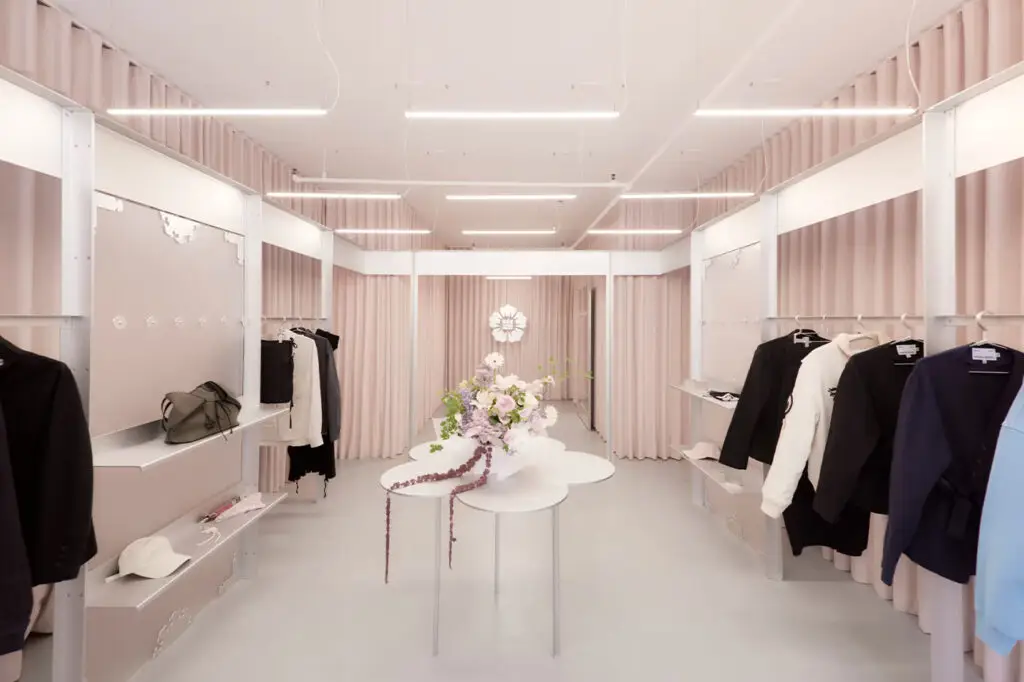
Lim launched Sundae School just three blocks from where this store now stands. That proximity feels meaningful. This isn’t a brand expanding into new territory; it’s a brand coming home on its own terms. Three years in the making, the space was designed in partnership with architect Nohar Lim Zask-Agadi and sculptor Andy Kim, who conceived the metal pillars and gates that mirror the transitional courtyards of a Korean Buddhist temple. Lim has spoken openly about growing up in Korea and visiting temples monthly as a form of pause, a break from the noise of everyday life. That experience is the direct blueprint for what he built here. We love when a retail concept has a real origin story, not a mood board.
The space itself is deliberately minimal. The pastel pink curtains give it an otherworldly softness, and the metal architectural details bring just enough structure to stop it feeling precious. It’s a specific combination: serene but considered, quiet but not empty. The walls carry Sundae School’s latest designs, all small-batch production, the kind of pieces that reward closer inspection. Embroidered hoodies. Tie-clasp outerwear. Hanbok-inspired garments sitting in an interesting space between heritage and contemporary streetwear. And then there are the details you’d only find out if you asked: the brand’s quarter zips go through three separate washes before they reach the floor. That level of process in a label this size is genuinely impressive.
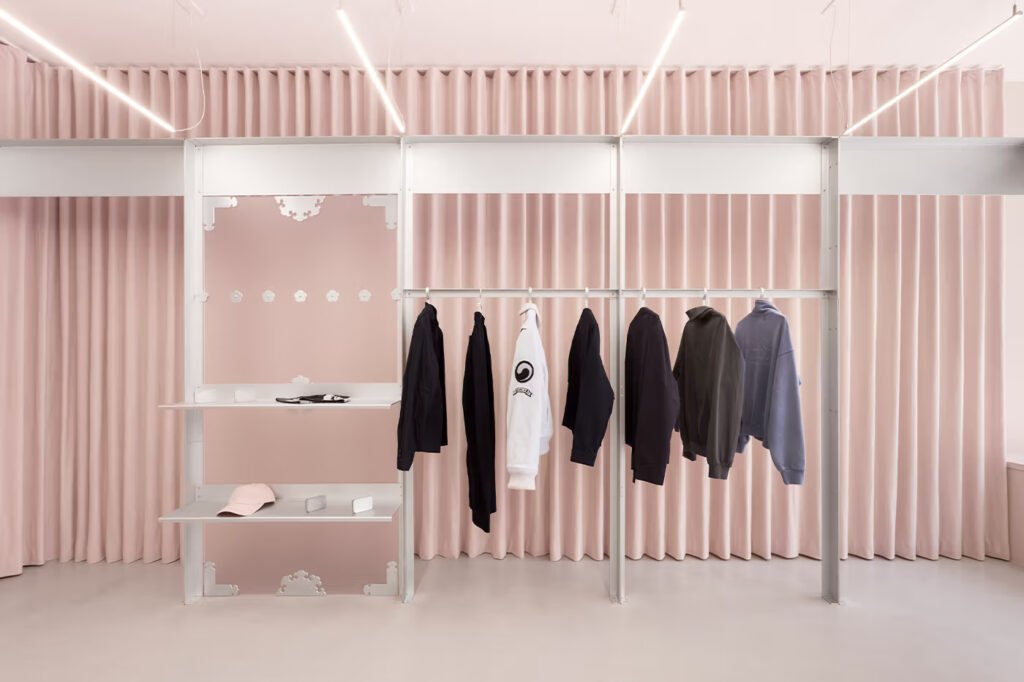
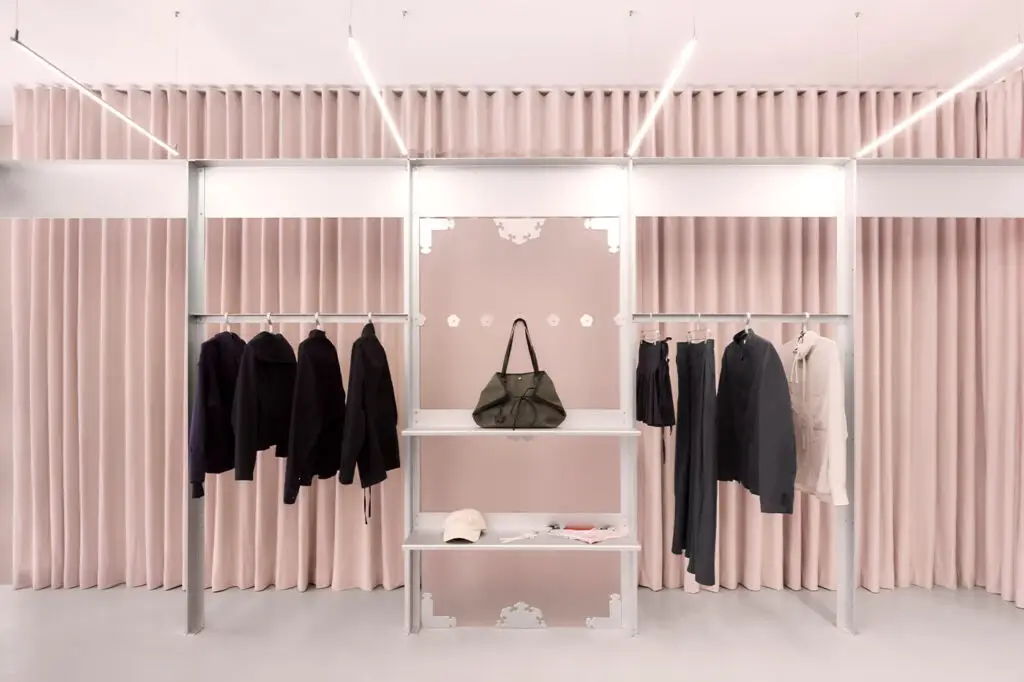
Lim has been refreshingly honest about what this store is and isn’t. He’s not chasing scale or measuring success by footfall. The ambition is more interesting than that. He describes the space as a community centre, a place where people can come to hang out, to connect, to feel like they’re on a small break from city life. In a place like New York, where loneliness is a real and underdiscussed side effect of density, that framing actually lands. The store is already planning to host pop-ups, collaborations and events for independent brands and creatives, which tells you everything about where Lim’s priorities sit.
The conversation around physical retail has shifted a lot in recent years. Brands are opening stores again, but the good ones are opening them with a reason beyond sales per square foot. Sundae School’s Chinatown debut is a clear example of what that looks like in practice: a founder with a genuine point of view, a design language rooted in personal history, and a definition of success that isn’t tied to volume. It’s also a quietly significant moment for Korean American culture in fashion. A permanent physical space brings that identity into the neighbourhood in a more grounded way than any pop-up could, and Chinatown as a location connects the brand to a broader community of Asian American culture in downtown New York.
Lim calls it a “mental vacation wherever you are.” Standing in 500 square feet of pink curtains and temple gates, we think he might actually be right.