Last year, YSL Beauté built a bar inside a Shanghai warehouse. Guests arrived, ordered cocktails poured beside marble beauty counters, sampled the Lovenude collection and left. It was sharp, it was immersive, and it worked. This year, the brand looked at what it had created and asked a simple question: what if you didn’t have to leave?
The answer is the YSL Lovenude Hotel, and it is one of the most ambitious beauty brand activations we have seen in China this year.
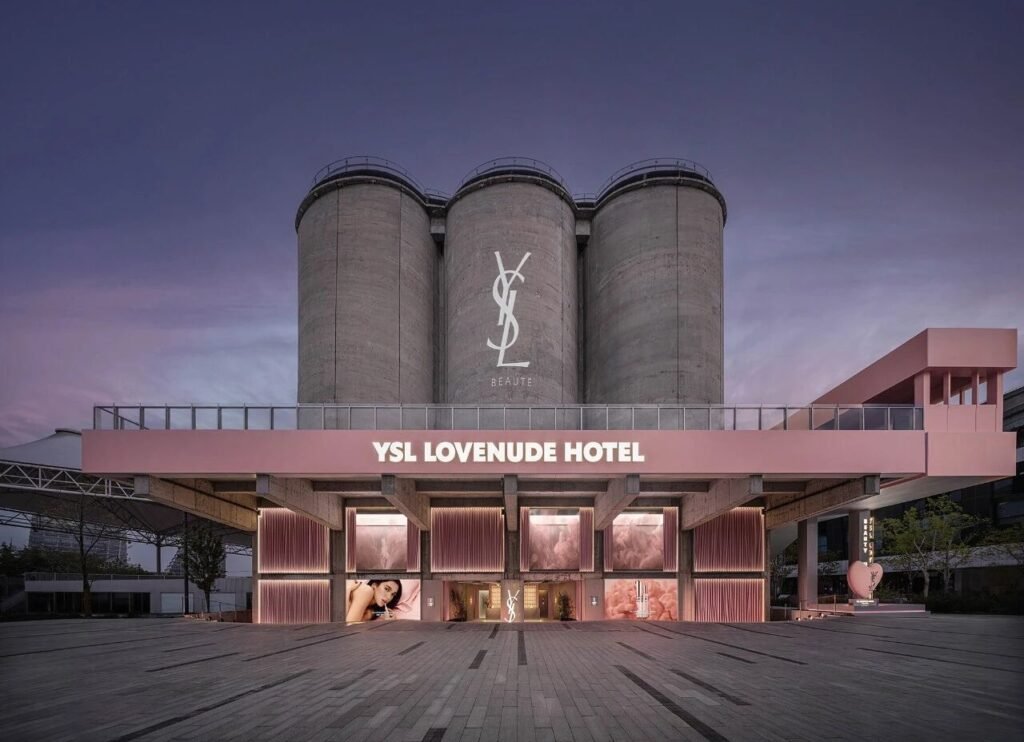
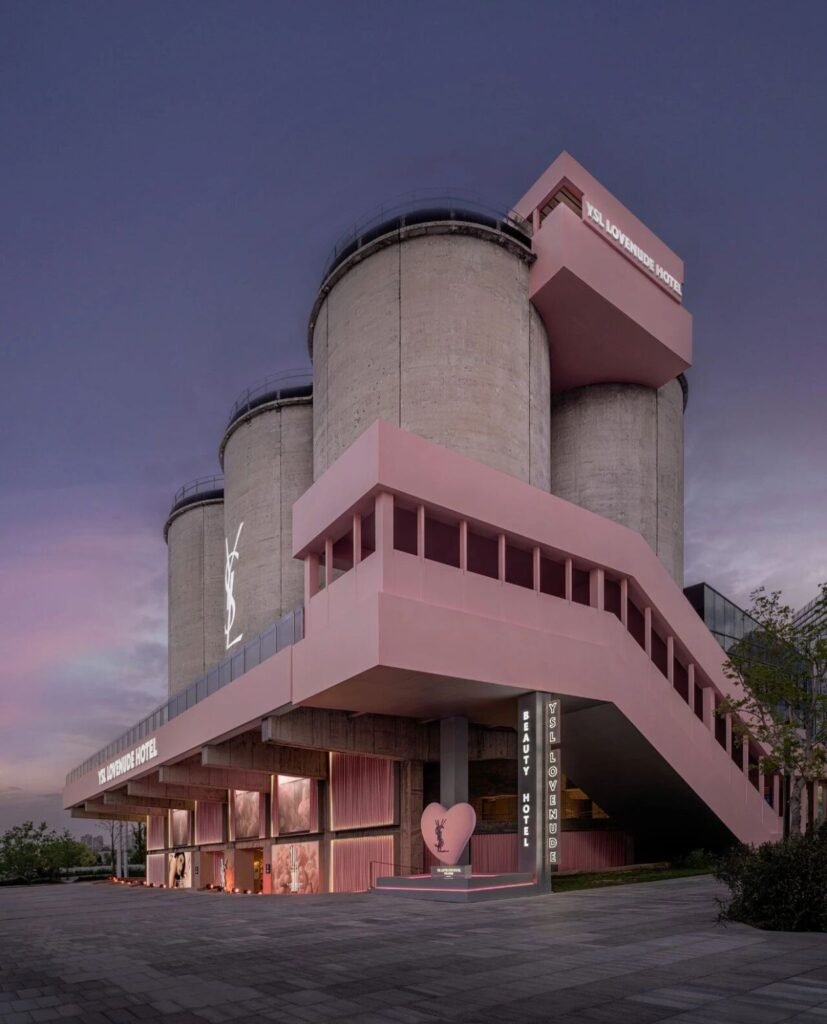
The setting is a former industrial silo complex, its brutalist concrete towers wrapped in blush pink and lit at dusk with the YSL monogram projected across the raw concrete. Outside, a neon sign reads Beauty Hotel in vertical letters. A large pink sculptural heart bearing the cassandre logo stands at the entrance. The tension between the building’s raw industrial bones and the softness of everything applied to it is deliberate and effective. It makes the whole thing feel dramatic without being precious.
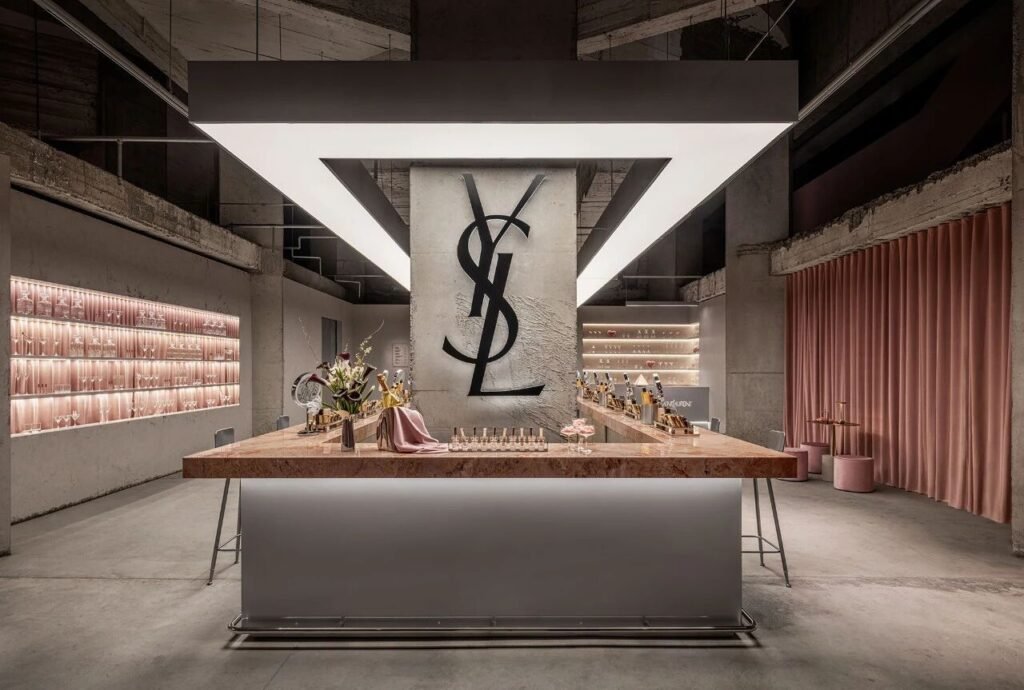
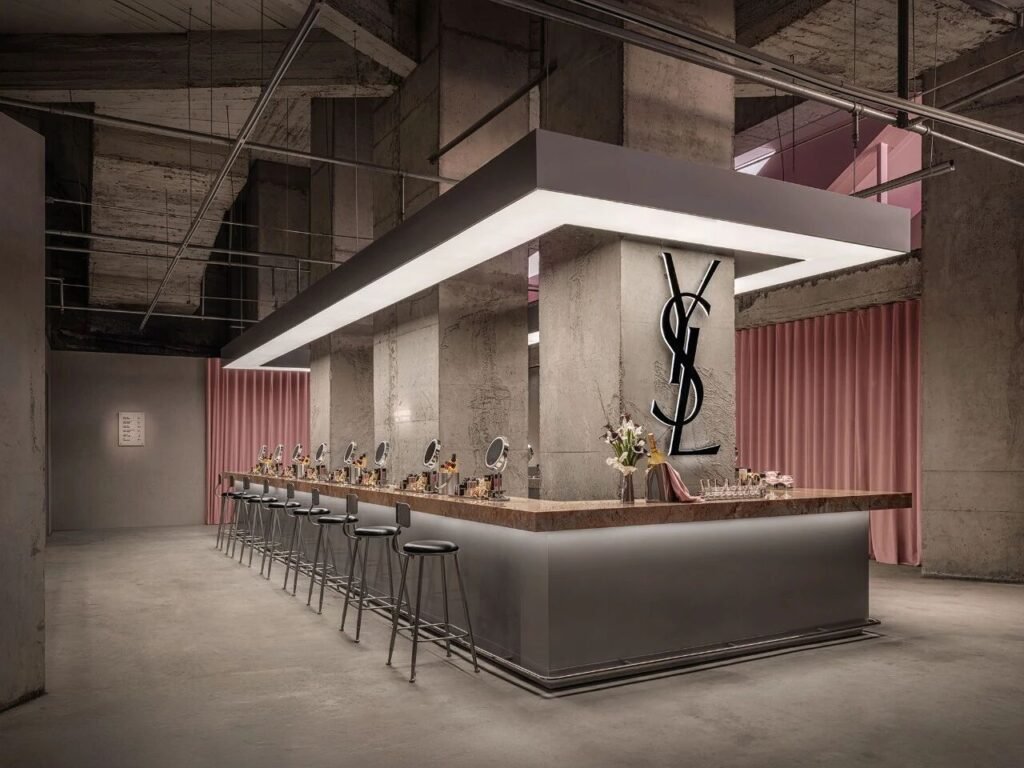
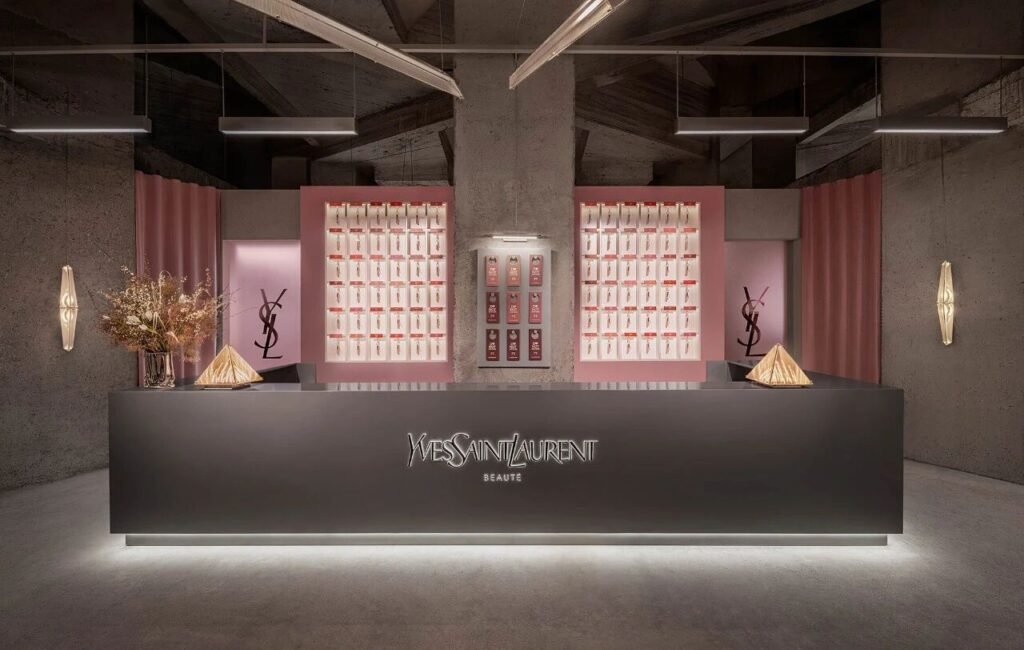
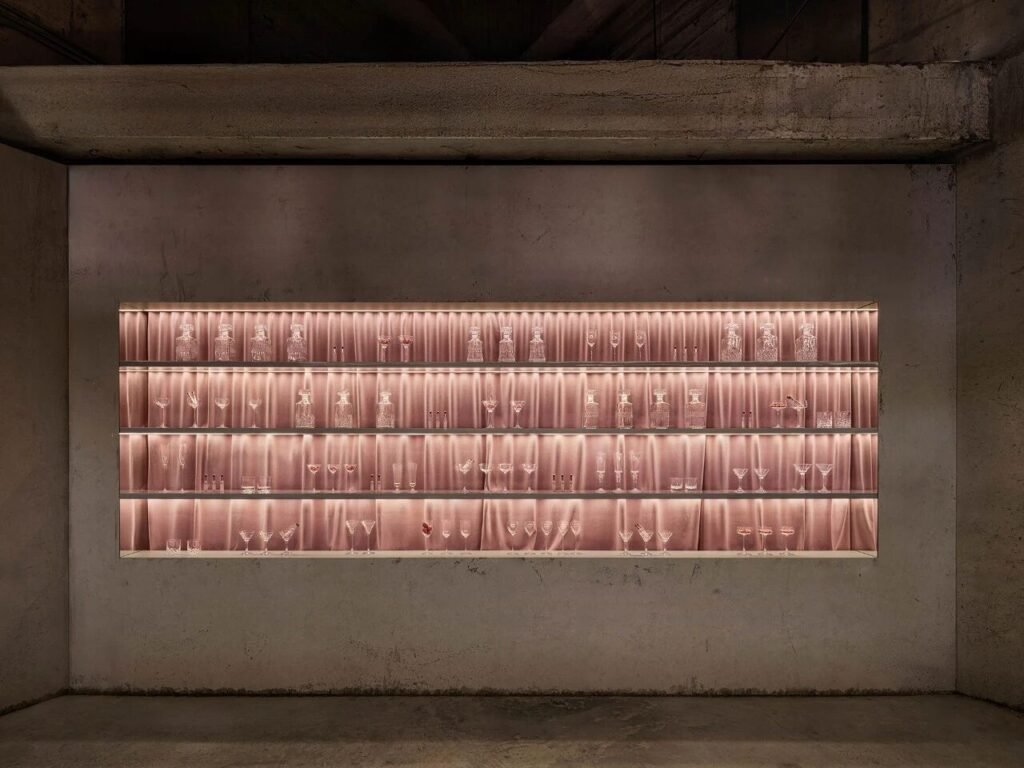
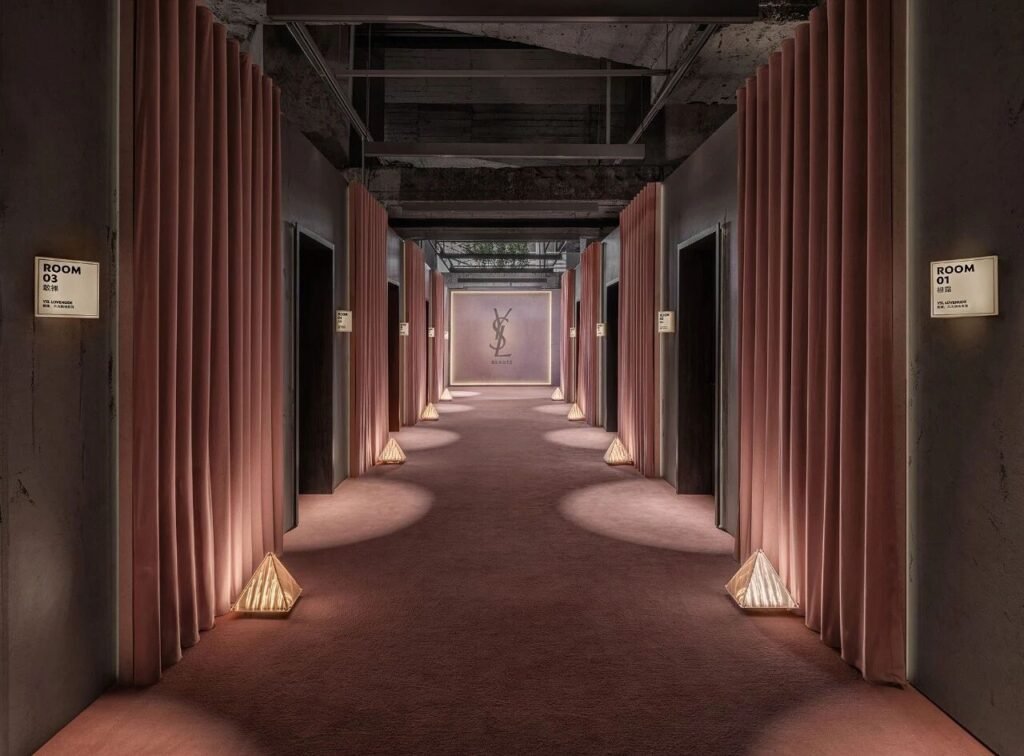
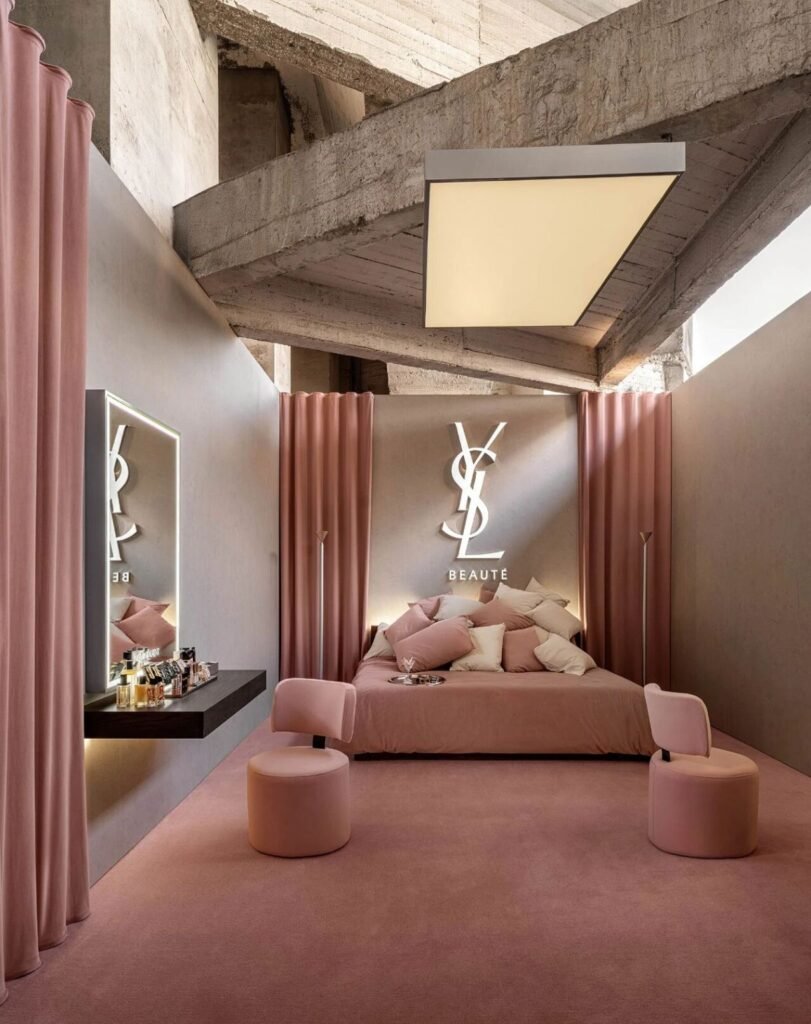
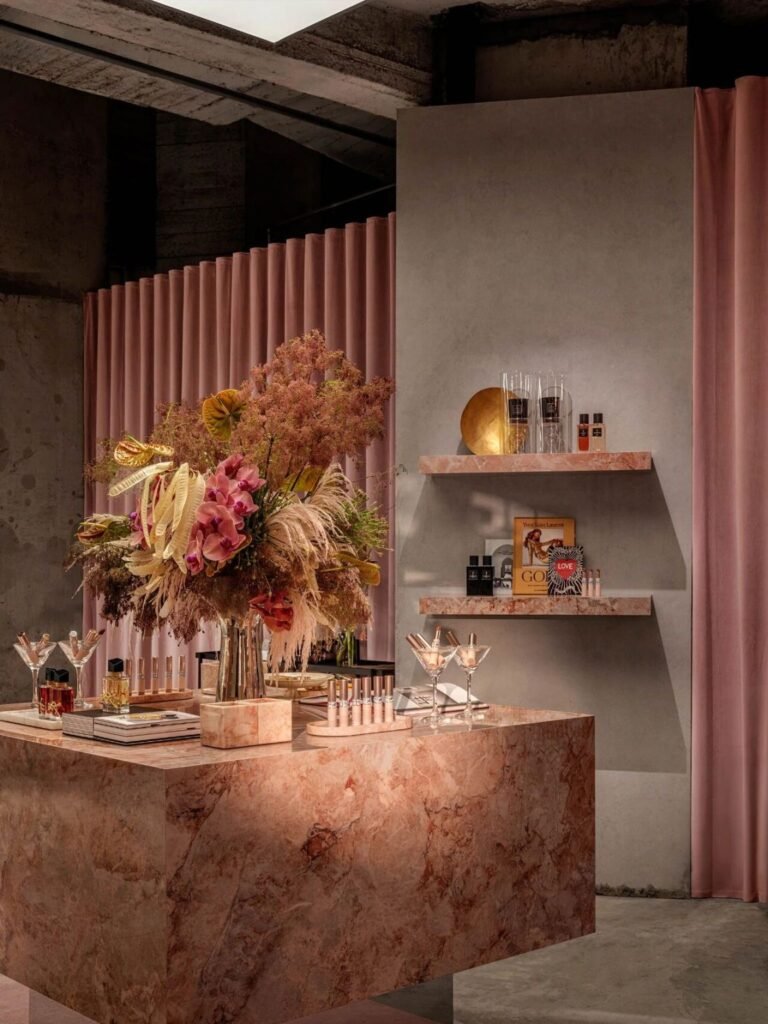
Inside, the experience is structured exactly as a hotel would be. You check in at a reception desk, collect a numbered room key, and move through the building at your own pace. Each space has a different register. There is a beauty bar on a rose marble countertop where the Lovenude collection is laid out for application, with rows of product lit behind frosted pink glass against a concrete wall. A vinyl and book-lined library in dusty rose and gunmetal offers a quieter moment, black velvet chairs and shelves of carefully curated records and art books making it feel less like a brand space and more like a private salon. A corridor lined in floor-to-ceiling pink velvet drapes leads to numbered rooms, lit by low gold pyramid lamps, each door bearing a hotel placard. The rooms themselves are dressed in a full palette of nude and blush, beds styled with the product sitting naturally on dressing tables beside mirrors, as though someone has actually been staying there.
What YSL Beauté has understood here is something that very few beauty brands have cracked at this scale: the difference between a product moment and a narrative journey. The bar format, as successful as it was, was a single beat. You arrived, you experienced, you left. The hotel format builds something longer. There is arrival, transformation, exploration and memory. Each room adds a layer to the story rather than repeating the same one. Guests leave not just with samples but with the sense of having moved through a world, of having spent time inside an idea rather than simply being shown a product.
The format also echoes what the brand has been testing in other markets, with hotel-style activations rolling across cities globally. But Shanghai has its own script. The silo complex gives the space a scale and a rawness that softer locations cannot offer. The contrast between the building and the brand aesthetic does a lot of storytelling on its own, before a visitor even steps inside.
There is a broader point here about where beauty brand building is heading, particularly in China where domestic brands are moving fast and setting ambitious new standards for experiential retail. Visibility is no longer enough. Relevance requires depth, and depth requires formats that can hold a consumer’s attention across multiple touchpoints and emotional registers, not just a single striking image. The Lovenude Hotel is a direct response to that shift. It is designed to live in your feed, yes, but it is also designed to live in your memory. Those are two different things, and the brands getting it right are the ones building for both.